
當逗貓棒不再起舞:20年老僕解密貓咪玩心喪失的無聲訊號與2026互動式心流遊戲新哲學
When the Wand Toy No Longer Dances: A 20-Year Cat Servant Deciphers the Silent Signals of Lost Playfulness and the 2026 Interactive Flow-Game Philosophy
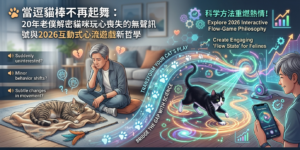
清晨,微曦輕柔地灑落在窗台上,空氣中瀰漫著淡淡的咖啡香。我的目光卻不在那溫暖的光暈,而是落在沙發一角,那團曾經活潑跳躍的橘色身影。牠不再像往常一樣,在聽到我的腳步聲時,便會興奮地搖晃尾巴,準備迎接一場與逗貓棒的「獵捕」遊戲。現在,牠只是靜靜地臥著,眼神有些空洞地望向窗外,那裡並沒有任何吸引牠的事物。我手中的逗貓棒,那根曾經讓牠瘋狂追逐、跳躍、翻滾的羽毛,此刻顯得如此寂寞。輕輕揮動,羽毛在空中劃出優雅的弧線,卻只換來牠緩慢地眨了眨眼,然後將頭撇開。一股複雜的情緒湧上心頭,是失落,是擔憂,更是身為老僕的自責。牠曾是家中最耀眼的明星,每天上演著無數精彩的狩獵大戲,如今卻像被抽走了靈魂,失去了對世界的好奇與熱情。我知道,這不單純是「長大了」或「玩膩了」這麼簡單,牠眼底深處那抹不易察覺的平靜,其實是一種無聲的求救訊號。那是我身為20年貓奴,用歲月與觀察累積出的直覺。許多貓奴或許也曾有過類似的困惑,面對心愛的貓咪日漸消沉,對曾讓牠們瘋狂的玩具興趣缺缺,甚至連最愛的小零食也提不起勁。我們試過各種新奇的玩具,換過不同口味的食物,但牠們彷彿築起了一道心牆,將所有刺激隔絕在外。那種「牠不快樂」的焦慮感,像漣漪般擴散開來,讓人夜不成寐。這不僅僅是行為問題,更是牠們內心世界的一場風暴,而作為最親近的家人,我們有責任去理解,去幫助牠們找回那份失去的玩心。因為,玩耍不只是娛樂,更是貓咪生命力的展現,是牠們身心健康的基石。Early morning, the gentle dawn light spilled onto the windowsill, filling the air with the faint aroma of coffee. My gaze, however, wasn’t on that warm glow, but on a corner of the sofa where a once lively, jumping orange figure lay. It no longer wagged its tail excitedly at the sound of my footsteps, ready to pounce into a “hunt” with the wand toy. Now, it just lay quietly, its eyes somewhat vacant as it stared out the window, where nothing seemed to capture its interest. The wand toy in my hand, that feather which once drove it to frantic chases, leaps, and rolls, now felt utterly forlorn. I gently waved it, the feather drawing an elegant arc in the air, but it only elicited a slow blink from my cat, who then turned its head away. A complex wave of emotions washed over me: disappointment, worry, and most of all, the self-reproach of a long-time servant. It used to be the brightest star in our home, staging countless thrilling hunting dramas every day. Now, it seemed as if its soul had been drawn out, losing its curiosity and passion for the world. I knew this wasn’t simply a matter of “growing up” or “getting bored”; the subtle calm deep in its eyes was, in fact, a silent cry for help. That was my intuition, honed over 20 years as a cat parent, accumulated through time and observation. Many cat parents may have experienced similar confusion, facing their beloved cat’s gradual listlessness, disinterest in toys that once drove them wild, and even a lack of enthusiasm for their favorite treats. We tried various new and exotic toys, switched to different food flavors, but they seemed to have built a mental wall, isolating themselves from all stimuli. That anxiety of “it’s not happy” spread like ripples, keeping one awake at night. This isn’t merely a behavioral issue; it’s a storm brewing in their inner world, and as their closest family, we have a responsibility to understand and help them reclaim that lost playfulness. Because play isn’t just entertainment; it’s an expression of a cat’s vitality and the cornerstone of its physical and mental well-being.
【深度行為解析】
此外,壓力與焦慮也是玩心喪失的重要推手。環境變動(搬家、新成員加入)、多貓家庭的衝突、甚至主人自身情緒的波動,都可能讓貓咪感到不安。在壓力狀態下,貓咪會將能量用於自我保護和適應,玩耍這種「非必要」的行為便會被抑制。牠們可能會選擇躲藏、過度理毛,或是表現出攻擊性,而不是參與遊戲。生理層面,慢性疼痛、牙齒問題、消化不良等健康狀況,也會讓貓咪因不適而失去玩耍的動力。牠們或許無法用言語表達疼痛,但精神不濟、食慾不振、對遊戲失去興趣,卻是明確的身體求救訊號。身為老僕,我學會了透過牠們眼神中的光芒、身體姿態的變化,去解讀這些無聲的語言。理解這些深層次的機制,是我們幫助貓咪重拾玩心的第一步。
The loss of a cat’s playfulness is by no means a simple matter of “boredom.” Behind it lie profound biological and behavioral roots. Firstly, we must understand that cats are innate predators. For their ancestors, whether wildcats in the desert or formidable beasts in the jungle, precise hunting skills were crucial for survival. Even after millennia of domestication, this “hunting instinct” remains etched in the domestic cat’s genes. Play, for a cat, is the most primitive and pure release and practice of this instinct. A feather on a wand toy, the dot of a laser pointer, a rolling ball—all are perceived as potential prey in a cat’s eyes. Chasing, pouncing, biting—this series of actions serves as a channel for them to hone their hunting skills, maintain physical function, and release excess energy. When this instinct is not satisfied, they experience deep frustration and stress. This is akin to humans losing their career goals or social connections, which, over time, can lead to burnout, anxiety, and even symptoms of depression.
From a behavioral perspective, the loss of playfulness in cats can stem from multiple factors. The most common is “Environmental Enrichment Deficiencies.” In modern urban living, many cats are confined indoors, lacking sufficient sensory stimulation and exploratory space. A monotonous environment and repetitive toys quickly lead to “Sensory Fatigue.” Imagine watching the same play and eating the same food every day; even the most delicious meal would become bland. For intelligent and highly curious cats, such a dull and unstimulating life is a tremendous mental torment. Over the long term, they become passive, withdrawn, sluggish in response to external stimuli, and may even exhibit “Learned Helplessness” behavioral patterns.
Furthermore, stress and anxiety are significant drivers of lost playfulness. Environmental changes (moving, new family members), conflicts in multi-cat households, and even fluctuations in the owner’s own emotions can make cats feel uneasy. Under stress, cats allocate their energy to self-preservation and adaptation, suppressing “non-essential” behaviors like play. They might choose to hide, over-groom, or display aggression instead of engaging in games. On a physiological level, chronic pain, dental issues, indigestion, and other health conditions can also cause cats to lose the motivation to play due to discomfort. They may not be able to express pain verbally, but lethargy, poor appetite, and disinterest in play are clear physical distress signals. As a seasoned servant, I have learned to interpret these silent languages through the sparkle in their eyes and changes in their body posture. Understanding these deep-seated mechanisms is our first step in helping cats rediscover their joy of play.
【老僕實戰心法】
貓咪的狩獵行為分為四個階段:觀察(Stalking)、追逐(Chasing)、捕捉(Catching)、享用(Consuming)。我們的遊戲必須模擬這個完整循環。
* **觀察與追逐:** 使用逗貓棒時,不要一開始就猛烈揮舞。讓玩具若隱若現,模仿獵物躲藏的姿態。輕輕地從角落、家具後方拉出,停頓、小跑,讓牠們有機會「觀察」並「規劃」攻擊路線。讓獵物(玩具)偶爾逃脫,增加挑戰性,但也要讓牠們有成功捕捉的機會。
* **捕捉與享用:** 當貓咪成功捕捉到玩具時,不要立刻抽走。讓牠們短暫地「制服」獵物,進行「補殺」動作(抱住、啃咬)。遊戲結束時,立即給予小份零食或正餐,讓牠們連結「成功狩獵」與「食物獎勵」,完成「享用」階段。這能帶來深層的滿足感。
**2. 多樣化「獵物」:輪替與感官刺激**
貓咪很容易對單一玩具感到厭倦。建立一個「玩具庫」,每天或每隔幾天輪替不同材質、形狀、動作模式的玩具。
* **材質多樣性:** 羽毛、絨布、毛線球、雷射筆、響紙、橡膠蟲等。不同的質地能刺激牠們的觸覺和聽覺。
* **動作模式:** 有些玩具適合空中追逐,有些適合地面撲擊,有些則能滾動。
* **智力玩具:** 貓咪益智餵食器、藏食玩具,能讓牠們動腦筋,運用智慧來獲取食物,滿足牠們的解決問題本能。
**3. 環境改造:打造垂直與水平的狩獵場**
* **垂直空間:** 貓咪喜歡高處,因為那給牠們安全感和廣闊的視野。設置貓跳台、貓樹、牆面跳板,讓牠們可以在不同高度進行探索和跳躍,這本身就是一種「遊戲」。
* **水平探索:** 準備一些紙箱、紙袋,定期更換位置,營造臨時的藏身處和隧道,激發牠們的探索欲。
* **嗅覺豐富化:** 定期在特定區域噴灑貓薄荷或蟲癭草(catnip/silvervine),或者藏一些帶有牠們氣味的布料,提供嗅覺上的刺激。
**4. 固定的遊戲時間與頻率**
每天安排2-3次,每次10-15分鐘的集中遊戲時間。短而頻繁的遊戲比一次長時間的遊戲更有效。讓貓咪預期到遊戲時間的到來,這也是一種正向的期待。
**5. 觀察與調整:讀懂貓咪的「心流」狀態**
注意貓咪在遊戲中的肢體語言:瞳孔放大、尾巴微擺、身體前傾、專注凝視,這些都是進入「心流」狀態的表現。當牠們開始打哈欠、舔毛、失去興趣時,就該結束遊戲,讓牠們帶著滿足感休息。強迫遊戲反而會讓牠們更反感。
**6. 排除生理不適:定期健康檢查**
如果貓咪突然性情大變,對所有遊戲都失去興趣,請務必帶牠們去看獸醫,排除任何潛在的生理疾病或疼痛。健康的身體是玩耍的基礎。
Reclaiming a cat’s playfulness is a long-term battle requiring patience, observation, and strategy. I summarize this approach as the “Interactive Flow-Game Philosophy,” aiming to create a hunting experience where cats can fully immerse themselves and feel satisfied.
**1. Simulating the Hunting Cycle: From Anticipation to Satisfaction**
A cat’s hunting behavior consists of four stages: Stalking, Chasing, Catching, and Consuming. Our play must simulate this complete cycle.
* **Stalking and Chasing:** When using a wand toy, don’t just wave it wildly from the start. Make the toy appear and disappear, mimicking a prey animal hiding. Gently pull it out from behind corners or furniture, pause, and make it dart briefly, giving them a chance to “observe” and “plan” their attack route. Let the “prey” (toy) occasionally escape to increase the challenge, but also ensure they have opportunities to successfully capture it.
* **Catching and Consuming:** When the cat successfully catches the toy, don’t immediately pull it away. Allow them to briefly “subdue” the prey and perform “the kill” actions (holding, biting). At the end of the game, immediately offer a small portion of treats or their meal, linking “successful hunting” with “food reward,” completing the “consuming” stage. This provides a deep sense of satisfaction.
**2. Diversifying “Prey”: Rotation and Sensory Stimulation**
Cats can easily become bored with a single toy. Establish a “toy library” and rotate toys of different materials, shapes, and movement patterns daily or every few days.
* **Material Variety:** Feathers, plush fabric, yarn balls, laser pointers, crinkle paper, rubber bugs, etc. Different textures stimulate their touch and hearing.
* **Movement Patterns:** Some toys are suited for aerial chases, others for ground pouncing, and some can roll.
* **Puzzle Toys:** Cat puzzle feeders and treat-dispensing toys encourage them to use their intellect to obtain food, satisfying their problem-solving instincts.
**3. Environmental Modification: Creating Vertical and Horizontal Hunting Grounds**
* **Vertical Space:** Cats love high places because it gives them security and a wide vantage point. Install cat trees, cat perches, and wall-mounted shelves, allowing them to explore and jump at different heights—this itself is a form of “play.”
* **Horizontal Exploration:** Provide cardboard boxes and paper bags, changing their positions regularly to create temporary hiding spots and tunnels, stimulating their urge to explore.
* **Olfactory Enrichment:** Periodically spray catnip or silvervine in specific areas, or hide some fabric with their scent, to provide olfactory stimulation.
**4. Consistent Play Schedule and Frequency**
Schedule 2-3 focused play sessions daily, each lasting 10-15 minutes. Short, frequent play is more effective than one long session. Let the cat anticipate playtime, which also creates positive expectation.
**5. Observe and Adjust: Understanding the Cat’s “Flow” State**
Pay attention to your cat’s body language during play: dilated pupils, slightly twitching tail, forward-leaning posture, focused gaze—these are signs of entering a “flow” state. When they start to yawn, groom themselves, or lose interest, it’s time to end the game, allowing them to rest with a sense of satisfaction. Forcing play will only make them more averse.
**6. Rule Out Physical Discomfort: Regular Health Check-ups**
If your cat suddenly undergoes a significant personality change and loses interest in all forms of play, it is crucial to take them to the vet to rule out any underlying physical illnesses or pain. A healthy body is the foundation for play.
【智商稅警示區】
1. **高質量可替換式逗貓棒 ([AFFILIATE_LINK]):** 投資一組堅固耐用的逗貓棒桿,搭配多種可替換的頭部附件(羽毛、蟲、絨毛球等)。這樣不僅能頻繁更換「獵物」種類,保持新鮮感,也能讓主人手動操作,完美模擬獵物的行徑。選擇材質天然、不含化學染料的產品,避免貓咪啃咬時誤食。
2. **互動式藏食益智玩具 ([AFFILIATE_LINK]):** 這類玩具透過設計巧妙的機關,讓貓咪需要動腦筋、用爪子或鼻子才能取出裡面的零食。它不僅滿足了貓咪的狩獵本能(獲取獎勵),也提供了心智刺激,是「用腦袋捕獵」的絕佳方式。選擇清潔方便、不易破損的材質,並確保難度適中,避免挫折感。
In the vast market of cat toys, there are many “intelligence tax” products. Some are touted as smart and interactive, yet they offer only sound and light effects, failing to genuinely simulate the hunting process, leading to cats losing interest after a few plays. These expensive products often only satisfy human imagination, not the cat’s actual needs. For example, some fully automatic laser pointer robots, claiming 24/7 companionship, cause cats to chase light dots they can never “catch,” leading to long-term frustration and even behavioral issues.
My advice is to return to the essence: mimicking “prey.” What truly solves the problem are toys that simulate prey behavior, offer interactive engagement, and allow cats to feel a successful “capture.” I recommend two categories:
1. **High-Quality Interchangeable Wand Toys ([AFFILIATE_LINK]):** Invest in a durable wand pole with multiple interchangeable attachments (feathers, bugs, plush balls, etc.). This not only allows frequent rotation of “prey” types to maintain novelty but also enables the owner to manually manipulate it, perfectly mimicking prey movements. Choose products made from natural materials, free from chemical dyes, to prevent accidental ingestion when cats bite them.
2. **Interactive Puzzle Feeders ([AFFILIATE_LINK]):** These toys feature cleverly designed mechanisms that require cats to use their brains, paws, or nose to extract treats hidden inside. They not only satisfy the cat’s hunting instinct (obtaining a reward) but also provide mental stimulation, serving as an excellent way to “hunt with their minds.” Choose materials that are easy to clean and durable, and ensure the difficulty level is appropriate to avoid frustration.