
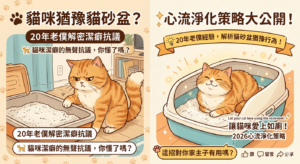
當貓咪猶豫徘徊於貓砂盆前:20年老僕解密貓咪潔癖的無聲抗議與2026心流淨化策略
When Your Cat Hesitates at the Litter Box: A 20-Year Servant Deciphers the Silent Protest of Feline Fastidiousness and the 2026 Flow-State Purification Strategy
清晨的第一縷陽光輕柔地灑落在客廳,我一如往常地準備著咖啡,享受這片刻的寧靜。突然,我的視線被角落裡的一抹橘色身影吸引。那是我的老夥計,阿虎,他輕巧地跳下沙發,緩緩走向那個他每天都會造訪的「聖地」——貓砂盆。然而,今天的畫面卻有些不同。他沒有像往常一樣俐落地跳進去,而是停在盆邊,鼻子輕輕嗅了嗅,前爪猶豫地提起又放下。那雙琥珀色的眼睛,平時總是充滿了好奇與傲嬌,此刻卻透露出一絲不易察覺的焦慮與嫌惡。他輕輕搖了搖頭,像是對什麼東西不滿意,然後轉身,緩慢而堅決地走向了客廳的另一端。幾分鐘後,我發現了一灘濕漉漉的印記,靜靜地躺在我最愛的地毯上。那不是頑皮,也不是故意,而是一種無聲的抗議,一種只有資深貓奴才能讀懂的,關於「潔癖」的控訴。那瞬間,我感覺我的心被他輕聲地敲了一下,他用最原始的方式告訴我:「老僕,你懂我的,對嗎?」The first rays of dawn gently kissed the living room, and as usual, I was brewing coffee, savoring the momentary tranquility. Suddenly, my gaze was drawn to a splash of orange in the corner. It was my old buddy, A-Hu, who gracefully jumped off the sofa and slowly made his way towards his daily “sanctuary”—the litter box. However, today’s scene was slightly different. Instead of neatly hopping in as usual, he paused at the edge of the tray, sniffing lightly with his nose, his front paws hesitantly lifting and setting down. Those amber eyes, usually filled with curiosity and a touch of haughtiness, now revealed a hint of subtle anxiety and disgust. He gently shook his head, as if displeased with something, then turned and walked slowly but resolutely to the other end of the living room. Minutes later, I discovered a damp stain quietly resting on my favorite rug. It wasn’t mischief, nor was it deliberate; it was a silent protest, a complaint of “fastidiousness” that only a seasoned cat servant could decipher. In that moment, I felt my heart being gently tapped by him, as he told me in the most primal way: “Old servant, you understand me, don’t you?”
【深度行為解析】
【老僕實戰心法】
* **步驟:** 如果你家有一隻貓,請準備至少兩個貓砂盆;兩隻貓則至少三個。將它們放置在不同的房間或角落,分散風險。不要將所有貓砂盆集中在同一處,這樣反而會讓貓咪覺得可選擇的空間變小,尤其是在多貓家庭中,資源爭奪會導致壓力。
* **心法:** 每個貓砂盆都應被視為一個獨立的「私人領域」,提供牠們多樣的選擇,減少競爭與壓力。* **Steps:** If you have one cat, prepare at least two litter boxes; for two cats, at least three. Place them in different rooms or corners to diversify options. Do not concentrate all litter boxes in one area, as this can make cats feel that their available space is smaller, especially in multi-cat households, where resource competition can lead to stress.
* **Principle:** Each litter box should be considered an independent “private territory,” offering them diverse choices to reduce competition and stress.
2. **尺寸與設計:寬敞無壓的奢華 (Size and Design: Spacious and Stress-Free Luxury)**
* **步驟:** 選擇貓咪身長1.5倍以上的超大尺寸貓砂盆,讓牠們能輕鬆轉身、挖掘。優先選擇開放式設計,避免有蓋或入口狹窄的貓砂盆,因為這會讓貓咪感到幽閉恐懼,也容易積聚氣味。
* **心法:** 想像一下你在狹小的公廁裡,會有多不自在?給予貓咪足夠的空間,是對牠們基本尊重的體現。
* **Steps:** Choose an extra-large litter box, at least 1.5 times the length of your cat, allowing them to turn around and dig comfortably. Prioritize open-top designs, avoiding covered litter boxes or those with narrow entrances, as these can make cats feel claustrophobic and easily trap odors.
* **Principle:** Imagine how uncomfortable you’d feel in a cramped public restroom. Providing cats with ample space is a sign of basic respect for them.
3. **貓砂選擇:回歸自然的誘惑 (Litter Choice: The Allure of Natural Simplicity)**
* **步驟:** 選擇無香、質地柔軟、顆粒細小的凝結型礦砂或豆腐砂。避免有香味的貓砂,這對貓咪敏感的嗅覺是極大的負擔。保持貓砂深度至少5-7公分,讓牠們有足夠的空間挖掘和掩埋。
* **心法:** 貓咪的腳掌極為敏感,粗糙的貓砂或不足的深度會讓牠們感到不適,進而拒用。回歸自然,提供最接近泥土的觸感。
* **Steps:** Choose unscented, soft-textured, finely granulated clumping clay litter or tofu litter. Avoid scented litters, as these are a huge burden on a cat’s sensitive sense of smell. Maintain a litter depth of at least 5-7 cm, giving them enough space to dig and bury.
* **Principle:** A cat’s paws are extremely sensitive; rough litter or insufficient depth will make them uncomfortable, leading to refusal. Revert to nature, providing a texture closest to soil.
4. **清潔頻率:極致潔癖的堅持 (Cleaning Frequency: The Persistence of Extreme Fastidiousness)**
* **步驟:** 每日至少清理兩次以上(早晚各一次,或貓咪如廁後立刻清理)。每週至少一次將所有貓砂倒掉,徹底清洗貓砂盆,並用清水或溫和的肥皂水消毒,再重新倒入新鮮貓砂。
* **心法:** 貓咪對氣味的敏感度是人類的14倍。一丁點殘留氣味,對牠們而言都是無法忍受的「髒亂」。勤勞的清潔是愛貓的表現。
* **Steps:** Scoop at least twice a day (once in the morning and once in the evening, or immediately after your cat uses it). At least once a week, empty all the litter, thoroughly wash the litter box, disinfect it with water or mild soapy water, and then refill with fresh litter.
* **Principle:** Cats’ sensitivity to smell is 14 times that of humans. Even a trace of residual odor is unbearable “mess” for them. Diligent cleaning is an expression of love for your cat.
5. **戰略佈局:安靜隱蔽的聖地 (Strategic Placement: A Quiet, Secluded Sanctuary)**
* **步驟:** 將貓砂盆放置在安靜、隱蔽且易於接近的地方,遠離食碗、水碗和吵雜的家電(如洗衣機)。確保貓咪在使用時不會受到打擾或驚嚇。
* **心法:** 想像牠們在野外會選擇怎樣的地點如廁?安全、有掩護、視野開闊但又不會被輕易打擾,是牠們尋求的理想「廁所」。
* **Steps:** Place litter boxes in quiet, secluded, and easily accessible locations, away from food and water bowls and noisy appliances (like washing machines). Ensure your cat won’t be disturbed or startled while using it.
* **Principle:** Imagine what kind of location they would choose to relieve themselves in the wild? Safe, sheltered, with an open view but not easily disturbed – this is their ideal “restroom.”
遵循這些原則,你將會發現貓咪的如廁問題能得到顯著改善,因為你回應了牠們最原始、最深層的需求。
By following these principles, you will find that your cat’s toileting issues can significantly improve, because you are responding to their most primal and deepest needs.
【智商稅警示區】
1. **大容量開放式貓砂盆 (Large, Open-Top Litter Box):** 選擇一個尺寸足夠大的開放式整理箱或專用貓砂盆。它們便宜、易清潔、無死角、無聲響,最符合貓咪天性。
* [AFFILIATE_LINK]
2. **高品質無香凝結貓砂 (High-Quality, Unscented Clumping Litter):** 投資於好品質、細顆粒、無香的凝結型貓砂。雖然單價可能稍高,但其優異的凝結力和吸臭效果能讓你每次鏟屎都事半功倍,長期下來反而更省心省力。
* [AFFILIATE_LINK]
勤勞的雙手和一顆理解貓咪的心,才是解決貓咪如廁問題最有效的「智能裝置」。
Diligence and a heart that understands cats are the most effective “smart devices” for solving feline toileting issues.