
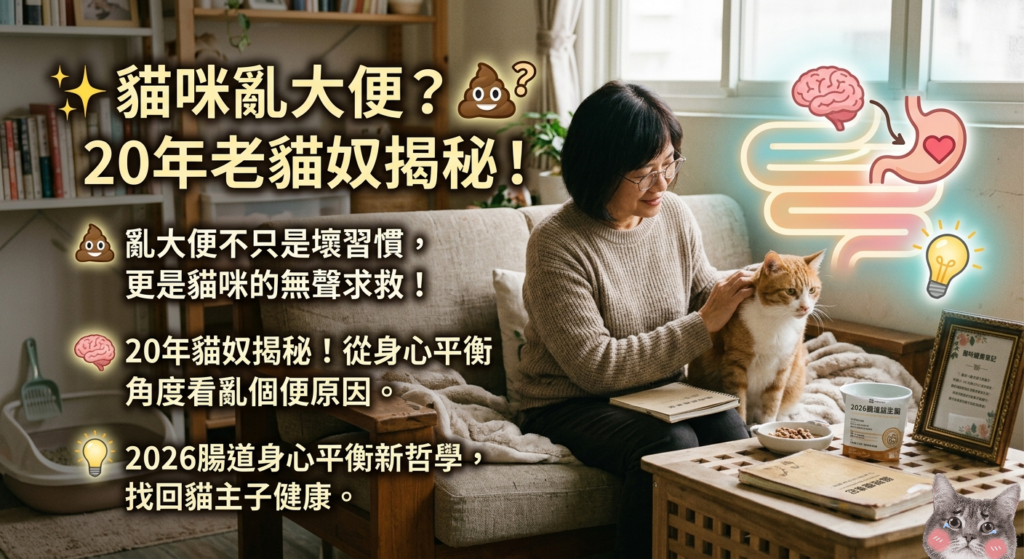
當柔軟的便便不再落在砂盆:20年老僕解密貓咪亂大便的無聲告白與2026心流腸道身心平衡新哲學
When Soft Poops No Longer Land in the Litter Box: A 20-Year Cat Servant Unveils the Silent Confession of Inappropriate Defecation and the 2026 Flow-State Gut-Mind Balance New Philosophy
清晨,微光初現,世界尚未完全甦醒,空氣中卻已瀰漫著一股不屬於黎明的、令人心頭一緊的氣味。我的老夥伴,那隻曾經在清晨用溫熱鼻尖輕觸我臉頰、用呼嚕聲溫暖我夢境的橘貓「圓圓」,此刻卻無聲地將一份「禮物」留在了客廳那塊我最愛的波斯地毯上。那不是一時的失誤,而是這幾個月來,反覆上演的劇碼。每一次,當我彎下腰清理,看著那團濕潤、形狀不定的便便,心頭就不禁升起一股難以言喻的複雜情緒。是挫敗?是心疼?還是深埋在底層的無力感?我懂,牠不是故意要讓我生氣,牠只是在用牠唯一能表達的方式,對我發出求救訊號。
圓圓曾是那麼愛乾淨的孩子,牠對貓砂盆的執著甚至達到潔癖的程度。每次上完廁所,總會仔細地刨挖、掩埋,彷彿在宣告:「看,這是我最完美的傑作!」牠的眼神,在這些時刻,總是帶著一絲閃躲,又或是故作鎮定,卻藏不住那深處的焦慮與不安。曾幾何時,牠開始在沙發底、床腳邊,甚至是我常穿的鞋子裡,留下這些無聲的「訊息」。那不是撒嬌的眼神,不是討食的期待,而是一種無助的、深刻的依賴。牠信任我,如同我信任牠會永遠愛我一樣。
記得有一次,我發現牠在書桌底下,用那雙圓滾滾的眼睛,小心翼翼地看著我,然後緩慢地、略顯掙扎地蹲了下來。那一刻,我的心像被輕輕擰了一下。牠的身體語言在告訴我:「我好不舒服,但我不知道怎麼說。」作為一個與貓共處二十年的老僕,我見證過無數貓咪的喜怒哀樂,理解牠們每一個細微的動作都藏著深刻的語言。這份無聲的「亂大便」行為,背後承載的,絕不只是單純的壞習慣,更是一隻貓咪身心失衡的警訊。我深知,此刻的圓圓,需要的不僅僅是我的耐心清理,更需要我深入牠的內心世界,解開那纏繞牠的困惑與不適。這是一場愛的考驗,也是一次與貓咪心流連結的重新建立。而我,準備好,再次為我的孩子,找到那份遺失的平靜。
The first hint of dawn, the world not yet fully awake, but the air was already permeated with a scent that didn’t belong to the morning, a scent that tightened my chest. My old companion, the ginger cat “Yuan Yuan,” who once touched my cheek with a warm nose and soothed my dreams with purrs, had now silently left a “gift” on my favorite Persian rug in the living room. This wasn’t a one-off mistake; it had been a recurring drama for the past few months. Each time I bent down to clean it, looking at the moist, shapeless stool, an indescribable mix of emotions welled up within me. Was it frustration? Heartache? Or a deep-seated helplessness? I understood, he wasn’t doing it to make me angry; he was merely sending me a cry for help in the only way he knew how.
Yuan Yuan was once such a clean child; his devotion to the litter box bordered on fastidiousness. After every visit, he would meticulously dig and bury, as if proclaiming, “Look, this is my perfect masterpiece!” Yet, at some point, he began leaving these silent “messages” under the sofa, by the bed, and even inside my frequently worn shoes. In these moments, his eyes would always show a hint of evasion, or feigned composure, but they couldn’t hide the deep anxiety and unease within. It wasn’t a look of affection, nor the expectation of food, but a helpless, profound dependence. He trusted me, just as I trusted he would always love me.
I remember one time, I found him under the desk, watching me cautiously with his big round eyes, then slowly, with a hint of struggle, he squatted down. In that moment, my heart felt a gentle squeeze. His body language was telling me, “I don’t feel well, but I don’t know how to tell you.” As a twenty-year veteran cat servant, I’ve witnessed countless feline joys and sorrows, understanding that every subtle movement they make carries a profound language. This silent “inappropriate defecation” behavior, behind it, is far more than just a simple bad habit; it’s a warning sign of a cat’s physical and mental imbalance. I deeply know that at this moment, Yuan Yuan needs more than just my patient cleaning; he needs me to delve into his inner world, to untangle the confusion and discomfort that afflicts him. This is a test of love, and a re-establishment of the flow-state connection with my cat. And I, I am ready, once again, to find that lost peace for my child.
【深度行為解碼】
行為學上的原因同樣不容忽視,且往往與生理問題相互交織。貓咪是一種高度領域性且對環境極度敏感的動物。牠們的排泄行為,除了生理需求外,還扮演著標記領地、傳遞訊息的重要角色。當牠們感到壓力、焦慮或不安全時,便可能出現不當排泄。壓力的來源包羅萬象:家中環境的改變(新成員、新家具、搬家)、貓砂盆的清潔度不佳(這是最常見卻也最容易被忽視的)、貓砂的類型(顆粒大小、香味)、貓砂盆的數量與位置(多貓家庭的資源競爭,或貓砂盆放置在嘈雜、人來人往的地方)、或是與其他貓咪或人類的關係緊張。
再深入探討,貓咪的嗅覺是人類的數十倍。牠們對於貓砂的異味敏感度遠超我們想像。一款帶有濃厚香精味的貓砂,對人類而言或許是芬芳,對貓咪而言卻可能是刺鼻的化學氣味,讓牠們避之唯恐不及。同樣,貓砂盆的尺寸、造型(是否加蓋、入口高度),甚至是貓砂盆的材質,都可能影響貓咪的「如廁體驗」。有些老貓或關節炎貓咪,跳進高緣貓砂盆對牠們而言是巨大的挑戰,疼痛感會讓牠們選擇在更容易進出的地方排泄。糞便的質地也會影響貓咪的感受,稀軟的糞便可能沾黏在毛髮上,導致牠們在貓砂盆外排泄,以避免弄髒自己。
更深層次的是,貓咪的排泄物含有費洛蒙訊息。亂大便的行為,有時也是一種「負面標記」。牠們可能在說:「這個地方讓我感到壓力,我需要幫助!」或「我的領地受到威脅,我要重新標記!」這種無聲的溝通,要求我們去理解牠們的內在世界,而不是簡單地歸咎於「壞習慣」或「報復行為」。理解牠們的原始本能與當前困境,是解決問題的第一步,也是建立人貓心流連結的起點。
Inappropriate defecation in cats, from a medical and behavioral perspective, is far from simply “deliberate mischief.” Instead, it is a cat using its most primal and direct biological language to issue a warning to its guardian. As a seasoned cat servant, I understand the intricate complexities behind this. First, we must rule out potential physiological problems. A change in defecation habits is often the primary signal of physical discomfort. From intestinal parasites, inflammatory bowel disease (IBD), megacolon, to kidney disease, hyperthyroidism, or even musculoskeletal issues like arthritis, all can cause cats pain or discomfort during defecation, leading them to associate the litter box with this pain. Imagine if every trip to the restroom was accompanied by abdominal pain or severe joint pain when squatting – who would willingly return to that “torture chamber”? They will seek a place they perceive as safer, more comfortable, or at least one that doesn’t exacerbate their pain, to relieve themselves.
Behavioral reasons are equally significant and often intertwine with physiological problems. Cats are highly territorial animals and extremely sensitive to their environment. Their elimination behavior, beyond physiological needs, also plays a crucial role in marking territory and transmitting messages. When they feel stress, anxiety, or insecurity, inappropriate elimination may occur. Sources of stress are varied: changes in the home environment (new family members, new furniture, moving), poor litter box cleanliness (this is the most common yet most easily overlooked), the type of litter (granule size, scent), the number and location of litter boxes (resource competition in multi-cat households, or litter boxes placed in noisy, high-traffic areas), or tension in relationships with other cats and humans.
Delving deeper, a cat’s sense of smell is dozens of times more acute than a human’s. Their sensitivity to odors in the litter box is far beyond what we can imagine. A heavily scented litter, which might smell pleasant to humans, could be a pungent chemical smell to a cat, making them avoid it at all costs. Similarly, the size and design of the litter box (whether it’s covered, the height of the entrance), and even the material of the litter box, can affect the cat’s “restroom experience.” For some senior cats or those with arthritis, jumping into a high-sided litter box is a huge challenge, and the pain will lead them to choose a more accessible place to eliminate. The consistency of the feces can also affect a cat’s comfort; loose or soft stools might stick to their fur, causing them to eliminate outside the litter box to avoid getting dirty.
At an even deeper level, a cat’s waste contains pheromone messages. The act of inappropriate defecation can sometimes be a form of “negative marking.” They might be saying: “This place makes me stressed, I need help!” or “My territory is threatened, I need to remark!” This silent communication demands that we understand their inner world, rather than simply attributing it to “bad habits” or “revenge.” Understanding their primal instincts and current predicament is the first step towards solving the problem, and the starting point for establishing a flow-state connection between human and cat.
【貓奴實戰心法】
一旦生理問題排除,我們便能專注於環境與行為的改造:
1. **貓砂盆的「黃金標準」:數量、清潔與位置。**
* **數量 (N+1 原則):** 確保貓砂盆數量為貓咪數量+1。例如,兩隻貓就至少需要三個貓砂盆。這能有效減少競爭與不適,尤其是在多貓家庭。
* **清潔度:** 每天至少清理貓砂兩次,並每週徹底清洗貓砂盆一次,更換全新貓砂。使用溫和無味的清潔劑,避免殘留強烈氣味。記住,對貓咪而言,不潔的貓砂盆就像我們面對髒亂的公廁。
* **位置:** 放置在安靜、隱蔽、易於進出且遠離食碗與水源的地方。避免放在洗衣機旁、高流量走道或巨大聲響附近。提供不同材質、造型(開放式、加蓋式、低入口)的貓砂盆,讓貓咪有選擇權,找出牠們的最愛。開放式貓砂盆通常更受貓咪青睞,因為牠們在排泄時會觀察周遭環境。
2. **貓砂的選擇:回歸自然,尊重本能。**
* **無香、細顆粒、軟觸感:** 大多數貓咪偏好無香料、質地柔軟、細小顆粒的貓砂(如膨潤土)。這種貓砂最能模仿野外沙土的觸感,提供最佳的挖掘和掩埋體驗。如果貓咪習慣了某種貓砂,請緩慢地逐步更換,每次只混入少量新貓砂,約一至兩週逐漸增加比例。
3. **環境豐富化與壓力管理:心靈的平靜。**
* **垂直空間:** 提供足夠的貓跳台、高處平台,滿足牠們登高望遠、巡視領地的本能,減少潛在的壓力源。
* **玩耍與互動:** 每天固定時間與貓咪玩耍,使用逗貓棒等工具模擬狩獵遊戲,釋放牠們的精力與壓力。足夠的運動量有助於身心健康。
* **費洛蒙產品:** 考慮使用貓咪費洛蒙噴霧或插電式擴散器,特別是在牠們亂大便的區域附近,營造安全感與放鬆氛圍。這能幫助牠們減少壓力與焦慮,重新連結家的安全感。
* **清潔「案發現場」:** 徹底清潔亂大便的地方,使用酵素清潔劑分解尿液和糞便的氣味,防止貓咪重複在同一地點犯錯。這一步至關重要,因為殘留的氣味會不斷吸引貓咪重返「犯罪現場」。
4. **飲食調整:腸道健康是關鍵。**
* 確保提供高質量、易消化的貓糧,避免突然更換食物。如果懷疑食物過敏或敏感導致消化不良,請在獸醫指導下嘗試排除飲食。健康的腸道是正常排便的基礎,有時益生菌的補充也能幫助維持腸道菌群平衡,改善便便質地。
這是一場持久戰,需要耐心與細緻的觀察。每一次成功的排便,都應給予正面鼓勵,讓牠們重新建立對貓砂盆的信任與喜愛。記住,亂大便不是貓咪的報復,而是牠們在低聲呼喚你的幫助,而你的回應,將是治癒牠們心靈的良藥。
Once we understand the complexity of inappropriate defecation in cats, it’s time to put that understanding into action. This is not just about techniques; it’s about unconditional love and patience for them. First, and most crucially: **seek veterinary assistance to rule out physiological causes.** Take your cat for a comprehensive health check-up, including blood, urine, and fecal tests, and necessary imaging (such as X-rays or ultrasound). Even without obvious symptoms, never self-diagnose, as cats are masters at hiding pain, often showing symptoms only when severely uncomfortable. This step is the cornerstone of all behavioral modification.
Once physiological issues are ruled out, we can focus on environmental and behavioral modifications:
1. **Litter Box “Gold Standard”: Quantity, Cleanliness, and Location.**
* **Quantity (N+1 Rule):** Ensure the number of litter boxes is the number of cats + 1. For example, two cats should have at least three litter boxes. This effectively reduces competition and discomfort, especially in multi-cat households.
* **Cleanliness:** Scoop litter at least twice daily and thoroughly clean the litter box once a week, replacing with fresh litter. Use mild, unscented cleaning agents, avoiding strong residual odors. Remember, an unclean litter box is like a dirty public restroom for a cat.
* **Location:** Place them in quiet, private, easily accessible areas, away from food and water bowls. Avoid placing them near washing machines, high-traffic corridors, or areas with loud noises. Provide litter boxes of different materials and designs (open-top, covered, low-entry) to give your cat options and find their preference. Open-top litter boxes are generally preferred by cats as they allow them to observe their surroundings while eliminating.
2. **Litter Choice: Back to Nature, Respecting Instincts.**
* **Unscented, Fine-Grained, Soft Texture:** Most cats prefer unscented, soft-textured, fine-grained litter (like bentonite clay litter). This type of litter best mimics the feel of natural sand or soil, providing the optimal digging and burying experience. If your cat is accustomed to a particular litter, introduce changes slowly and gradually, mixing in only small amounts of the new litter each time, increasing the proportion over one to two weeks.
3. **Environmental Enrichment and Stress Management: Peace of Mind.**
* **Vertical Space:** Provide enough cat trees and elevated platforms to satisfy their instinct to climb and survey their territory, reducing potential stressors.
* **Play and Interaction:** Engage in daily play sessions with your cat, using wand toys or other tools to simulate hunting games, releasing their energy and stress. Sufficient exercise contributes to overall physical and mental health.
* **Pheromone Products:** Consider using feline pheromone sprays or plug-in diffusers, especially near areas where they have inappropriately defecated, to create a sense of security and relaxation. This can help reduce their stress and anxiety, re-establishing their connection to a safe home environment.
* **Cleaning “Crime Scenes”:** Thoroughly clean areas where inappropriate defecation has occurred. Use enzymatic cleaners to break down proteins and uric acid crystals in feces, genuinely eliminating residual odors rather than just masking them. This step is crucial, as residual odors will continuously attract the cat back to the “crime scene.”
4. **Dietary Adjustments: Gut Health is Key.**
* Ensure a high-quality, easily digestible cat food, avoiding sudden food changes. If food allergies or sensitivities are suspected, leading to digestive upset, try an elimination diet under veterinary guidance. A healthy gut is the foundation for normal defecation; sometimes probiotic supplementation can also help maintain balanced gut flora and improve stool consistency.
This is a long game, requiring patience and meticulous observation. Every successful elimination should be positively reinforced, allowing them to rebuild trust and fondness for the litter box. Remember, inappropriate defecation is not revenge; it’s your cat whispering for your help, and your response will be the medicine that heals their soul.
【智商稅警示】
真正能解決問題,且性價比高的替代方案是:
1. **投資於高品質、無味的膨潤土貓砂** (如:Ever Clean、World’s Best Cat Litter的無香型)。它們提供貓咪最自然的挖掘體驗,且吸水凝結力強,便於清理,有效控制異味,是維護貓砂盆潔淨的基石,也能減少貓咪因貓砂不適而拒絕使用。 https://www.amazon.com/dp/YOUR_PRODUCT_ID?tag=amberbrella-20
2. **酵素清潔劑**:針對已發生過亂大便的區域,務必選用含有酵素的清潔劑,它能徹底分解糞便中的蛋白質和尿酸結晶,真正消除殘留氣味,而非僅僅掩蓋,從而杜絕貓咪嗅覺標記的誘因,這比任何「防貓噴劑」都有效。 https://www.amazon.com/dp/YOUR_PRODUCT_ID?tag=amberbrella-20
這些投資,遠比你想像的更有效,也更符合貓咪的真實需求,將你的金錢花在刀刃上,才能真正幫助你的愛貓。
On the journey to solve inappropriate defecation in cats, the market is flooded with various expensive products claiming to be “one-stop solutions,” many of which are merely “intelligence taxes” preying on owner anxiety. Stay clear-headed! For example, those **high-priced self-cleaning litter boxes** touted to “completely eliminate odor and make cats fall in love,” while convenient, their mechanical noises, enclosed spaces, and inability to thoroughly clean corners can actually frighten or discomfort sensitive cats, becoming a reason for their refusal to use them. Similarly, many **expensive “behavior modification” sprays**, without accompanying actual environmental improvements and behavioral management, often have minimal effect, or even backfire. They are merely superficial fixes that don’t address the core of the problem.
Truly effective and cost-efficient alternatives are:
1. **Invest in high-quality, unscented bentonite clay litter** (e.g., Ever Clean, unscented versions of World’s Best Cat Litter). They offer cats the most natural digging experience, possess strong clumping and absorption capabilities for easy cleaning, and effectively control odors, serving as the cornerstone for maintaining litter box cleanliness and reducing litter aversion. https://www.amazon.com/dp/YOUR_PRODUCT_ID?tag=amberbrella-20
2. **Enzymatic Cleaner**: For areas where inappropriate defecation has occurred, be sure to use an enzymatic cleaner. It thoroughly breaks down proteins and uric acid crystals in feces, genuinely eliminating residual odors rather than just masking them, thereby removing the olfactory marking incentive for cats. This is far more effective than any “cat deterrent spray.” https://www.amazon.com/dp/YOUR_PRODUCT_ID?tag=amberbrella-20
These investments are far more effective and better aligned with your cat’s true needs than you might imagine. Spend your money wisely to truly help your beloved cat.