
當牠舔舐的聲音不再是愛的印記:2026年老僕解密貓咪過度理毛的無聲求救與心流療癒新哲學
When Her Licking Sound Isn’t Just a Mark of Love: A 2026 Cat Servant Unveils the Silent Plea of Feline Overgrooming and the New Philosophy of Flow-State Healing
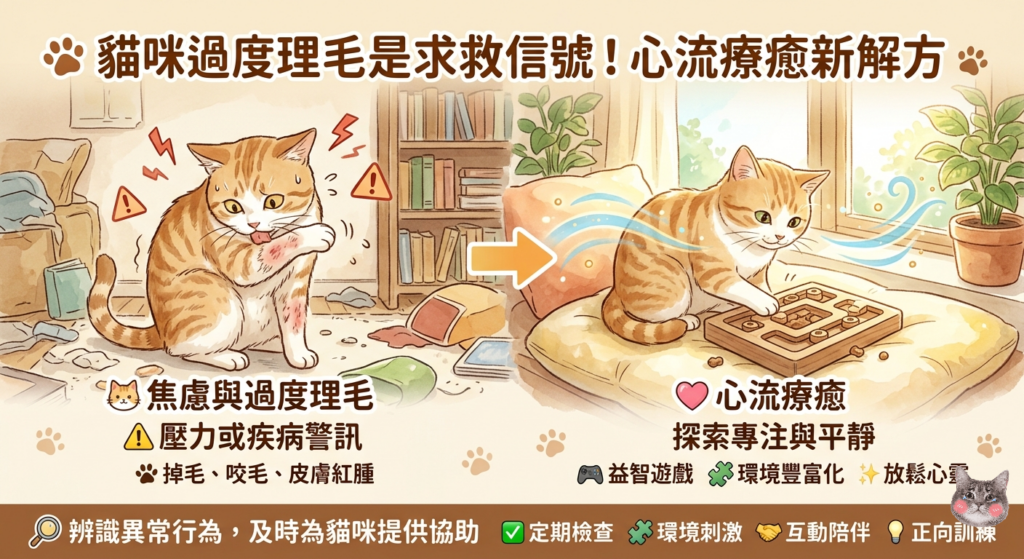
清晨的陽光,輕柔地灑落在客廳地毯上,暖洋洋的。我的老夥伴,那隻名叫「小橘」的虎斑貓,本應在這樣慵懶的時光裡享受一個香甜的盹。然而,我聽到的卻是規律而刺耳的「嘶——嘶——」聲。那不是牠在梳理牠那引以為傲的柔軟毛髮,而是一種近乎強迫的、反覆的舔舐。我的心,像被貓爪輕輕抓了一下,隱隱作痛。走近一看,小橘的腹部、大腿內側,甚至尾巴根部,原本濃密的毛髮已變得稀疏,粉紅色的皮膚若隱若現,有些地方甚至結了一層薄薄的痂。牠的眼神,帶著一絲疲憊與無助,彷彿在無聲地向我訴說著什麼。我與貓咪共處二十載,深知牠們是情感細膩的生物,牠們的世界裡,任何微小的變化都可能激起內心的波瀾。這過度理毛的行為,絕非單純的清潔,而是牠們內在焦慮或不適最直接、也最令人心疼的表達。牠們無法言語,只能透過身體來發出求救的訊號。從第一次遇見這樣的困境,到如今見證無數貓咪因內在壓力而「自殘」的案例,我學會了傾聽那些無聲的語言,解讀牠們在看似平靜外表下的掙扎。
The morning sun, gentle and warm, streamed across the living room carpet. My old companion, a tabby named “Xiao Ju” (Little Orange), should have been enjoying a sweet nap in such a languid moment. Instead, I heard a regular, almost grating “hiss—hiss—” sound. It wasn’t the sound of her meticulously grooming her once-proud, soft fur, but rather a compulsive, repetitive licking. My heart ached as if a cat’s paw had gently clutched it. As I approached, Xiao Ju’s abdomen, inner thighs, and even the base of her tail, where her fur was once thick, had become sparse, revealing pink skin, with some areas even forming a thin scab. Her eyes, filled with a hint of fatigue and helplessness, seemed to silently convey something to me. Having lived with cats for twenty years, I deeply understand that they are emotionally delicate creatures; any subtle change in their world can stir their inner turmoil. This excessive grooming behavior is by no means simple self-cleaning, but rather the most direct and heartbreaking expression of their internal anxiety or discomfort. They cannot speak, but can only signal for help through their bodies. From encountering such distress for the first time to now witnessing countless cats “self-mutilating” due to internal stress, I have learned to listen to those silent languages and decipher their struggles hidden beneath a seemingly calm exterior.
【深度行為解碼】
誘發過度理毛的因素包羅萬象,專業的貓行為學家會將其歸類為幾大方向:
1. **環境壓力源**:家中佈置的變動、新家具的導入、噪音(如施工、派對)、缺乏足夠的隱蔽處(貓咪需要安全感來躲藏)、貓砂盆清潔不足或位置不當,都可能讓貓咪感到不安。
2. **社會壓力源**:多貓家庭中,貓咪之間的隱形衝突、資源分配不均(食物碗、水碗、貓砂盆數量不足或擺放位置不佳),或是與人類互動模式的改變(如主人工作時間變長、家庭成員變動)都可能引發焦慮。
3. **生理因素**:這是首先需要排除的關鍵。皮膚過敏(食物過敏、跳蚤過敏性皮膚炎、環境過敏)、寄生蟲(跳蚤、蟎蟲)、疼痛(關節炎、牙痛、膀胱炎、腫瘤),都會導致貓咪透過舔舐來緩解不適。由於貓咪善於隱藏疼痛,牠們可能會舔舐受影響的區域以自我安撫,但往往被誤認為是心理問題。
因此,當貓咪出現過度理毛時,首先必須帶牠們去看獸醫,排除所有可能的生理疾病。如果生理原因被排除,那麼問題就極有可能根源於心理或行為層面,這時就需要從環境、社會互動和情緒管理等方面著手,才能真正觸及問題的核心。
Feline overgrooming, professionally known as “psychogenic alopecia” or “over-grooming disorder,” is never accidental. It is a classic “displacement behavior,” where cats, unable to effectively cope with stress, anxiety, boredom, or physical discomfort, convert internal conflicts into excessive grooming. From their primal instincts, grooming is a crucial way for cats to clean, cool down, and spread pheromones, possessing self-soothing effects. When cats feel stressed, licking can stimulate the brain to release endorphins, creating a sense of pleasure, much like humans biting their nails when anxious. However, once this behavior becomes habitual, it forms a vicious cycle: the more they lick, the sparser their fur becomes, and the more their skin is damaged. This can paradoxically lead to continued licking due to skin discomfort, exacerbating the problem.
The factors triggering overgrooming are comprehensive, and professional feline behaviorists categorize them into several main areas:
1. **Environmental Stressors**: Changes in home layout, introduction of new furniture, noise (e.g., construction, parties), lack of sufficient hiding spots (cats need a sense of security to hide), and inadequate litter box hygiene or inappropriate placement can all make cats feel uneasy.
2. **Social Stressors**: In multi-cat households, invisible conflicts between cats, unequal distribution of resources (insufficient or poorly placed food bowls, water bowls, litter boxes), or changes in human interaction patterns (e.g., owner working longer hours, changes in family members) can all trigger anxiety.
3. **Physiological Factors**: This is the crucial first step to rule out. Skin allergies (food allergies, flea allergy dermatitis, environmental allergies), parasites (fleas, mites), pain (arthritis, toothache, cystitis, tumors) will all cause cats to lick to alleviate discomfort. Because cats are adept at hiding pain, they may lick affected areas to self-soothe, but this is often mistakenly attributed to psychological issues.
Therefore, when a cat exhibits excessive grooming, it is imperative to first take them to the veterinarian to rule out all possible physiological illnesses. If physiological causes are excluded, then the problem is highly likely rooted in psychological or behavioral aspects, at which point it becomes necessary to address environmental factors, social interactions, and emotional management to truly get to the core of the issue.
【貓奴實戰心法】
1. **獸醫優先,排除生理病因**:這是我20年來最深刻的體會。任何行為問題,都必須先帶貓咪到獸醫院進行全面檢查。獸醫可能會進行皮膚刮片、過敏測試、血液檢查、X光,甚至尿液分析,以排除跳蚤、蟎蟲、真菌感染、食物或環境過敏、膀胱炎、甲狀腺亢進,甚至隱藏的疼痛(如關節炎)。切記,在未排除生理原因之前,所有行為干預都只是治標不治本。
2. **環境豐容與壓力管理**:
* **提供垂直空間與隱蔽處**:貓咪是領域性動物,高度能給牠們安全感。確保家中有足夠的貓爬架、層板,讓牠們能登高望遠或躲藏。提供紙箱、貓隧道、高處的貓窩,讓牠們有「逃生出口」。
* **豐富的遊戲與互動**:每天固定至少兩次,每次10-15分鐘的「模擬狩獵」遊戲。使用逗貓棒、雷射筆(最後要提供實際的「捕獲」物),讓牠們釋放精力、滿足狩獵本能,並消耗焦慮。
* **貓砂盆的藝術**:貓砂盆數量應為「貓咪數量+1」,並放置在安靜、隱蔽且方便使用的位置。每天至少清理一次,保持絕對的潔淨。
* **費洛蒙輔助**:可考慮在貓咪常待的區域使用貓咪費洛蒙擴散器(如Feliway),模擬貓咪臉部費洛蒙,幫助牠們感到放鬆和安全。
3. **建立穩定與可預測的作息**:貓咪是習慣的動物,規律的餵食、玩耍、睡眠時間能給牠們帶來極大的安全感。盡量減少生活中的突發變動,若有變化(如搬家、新成員),應逐步引入,並給予貓咪足夠的時間適應。
4. **正向強化與溫柔引導**:當貓咪出現過度理毛行為時,避免直接喝斥或懲罰,這只會增加牠們的壓力。取而代之的是,當你觀察到牠準備舔舐時,嘗試用玩具或溫柔的撫摸分散牠的注意力。當牠表現出正常的行為時(如放鬆睡覺、玩耍),給予正向的口頭讚美或獎勵。
5. **飲食與補充品考量**:在獸醫建議下,可考慮使用含有Omega-3脂肪酸、益生菌或L-色胺酸等成分的補充品,這些有助於改善皮膚健康或緩解壓力,但務必在專業指導下進行。
6. **尋求專業行為學家協助**:若上述方法嘗試數週後仍無改善,或情況嚴重,請務必諮詢獸醫行為學家或動物行為訓練師。他們能提供更深入的評估和客製化的行為修正方案,必要時可能配合藥物治療。記住,你的耐心、觀察和愛,是貓咪走出困境最重要的解藥。
When facing the tricky problem of feline overgrooming, my 20 years of experience as a cat servant have taught me that one must act like a detective: observe meticulously and adjust patiently. Here are my practical strategies, hoping to bring a turning point for you and your furry child:
1. **Veterinary First, Exclude Physiological Causes**: This is my deepest realization over two decades. For any behavioral issue, you must first take your cat to the vet for a comprehensive examination. The vet may perform skin scrapes, allergy tests, blood tests, X-rays, or even urinalysis to rule out fleas, mites, fungal infections, food or environmental allergies, cystitis, hyperthyroidism, or even hidden pain (like arthritis). Remember, without ruling out physiological causes, all behavioral interventions are merely treating symptoms, not the root cause.
2. **Environmental Enrichment and Stress Management**:
* **Provide Vertical Space and Hiding Spots**: Cats are territorial animals, and height gives them a sense of security. Ensure your home has enough cat trees and shelves, allowing them to survey from above or hide. Provide cardboard boxes, cat tunnels, and elevated cat beds, giving them “escape routes.”
* **Rich Play and Interaction**: Engage in “simulated hunting” games at least twice daily, for 10-15 minutes each session. Use wand toys, laser pointers (but always provide a physical “capture” at the end), allowing them to release energy, satisfy their hunting instincts, and dissipate anxiety.
* **The Art of the Litter Box**: The number of litter boxes should be “number of cats + 1,” placed in quiet, private, and easily accessible locations. Clean them at least once a day, maintaining absolute cleanliness.
* **Pheromone Support**: Consider using feline pheromone diffusers (like Feliway) in areas where your cat frequently stays. These mimic feline facial pheromones, helping them feel relaxed and secure.
3. **Establish a Stable and Predictable Routine**: Cats are creatures of habit; regular feeding, play, and sleep times provide them with immense security. Try to minimize sudden changes in their routine, and if changes occur (such as moving or new family members), introduce them gradually and give your cat ample time to adjust.
4. **Positive Reinforcement and Gentle Guidance**: When your cat exhibits overgrooming behavior, avoid direct scolding or punishment, as this will only increase their stress. Instead, when you observe them preparing to lick, try to distract them with a toy or gentle petting. When they display normal behavior (like relaxing, sleeping, or playing), offer positive verbal praise or rewards.
5. **Diet and Supplement Considerations**: Under veterinary advice, consider supplements containing Omega-3 fatty acids, probiotics, or L-tryptophan, which can help improve skin health or alleviate stress. However, always proceed under professional guidance.
6. **Seek Professional Behaviorist Help**: If the above methods show no improvement after several weeks, or if the situation is severe, it is crucial to consult a veterinary behaviorist or animal behavior trainer. They can provide a more in-depth assessment and customized behavior modification plan, possibly incorporating medication if necessary. Remember, your patience, observation, and love are the most important remedies for your cat to overcome difficulties.
【智商稅警示】
真正能解決問題的,往往是回歸貓咪最原始的需求與專業的協助。
我推薦以下兩種替代方案:
1. **基礎而有效的環境豐容工具**:與其花大錢買來路不明的「情緒玩具」,不如投資於高質量的貓爬架、多功能抓板、互動式益智餵食器、以及不同材質的貓咪專用玩具。這些能滿足貓咪垂直空間、磨爪、狩獵與探索的本能,是緩解壓力的基石。例如,一個穩固的貓爬架勝過十瓶昂貴的鎮靜噴霧。
2. **獸醫行為學家或動物行為訓練師諮詢**:面對複雜的行為問題,專業的知識與客製化方案才是最值得投資的。他們能透過詳細的問診與觀察,精準找出問題根源,並提供一套完整的治療計畫,包括環境調整、行為修正與必要時的藥物輔助。這筆費用看似較高,但能從根本上解決問題,避免反覆嘗試與失敗的成本。