
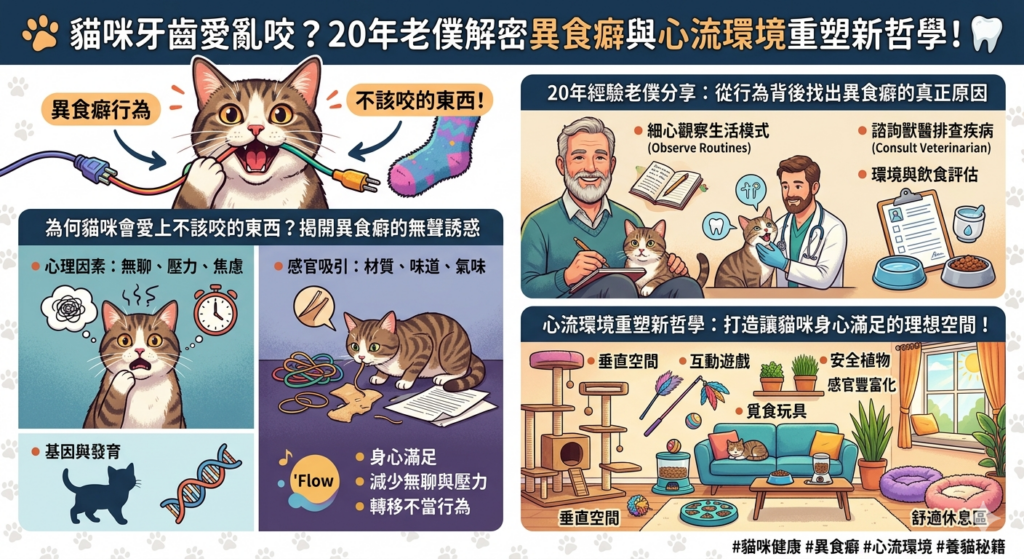
當貓咪的牙齒愛上不該愛的:20年老僕解密異食癖的無聲誘惑與心流環境重塑新哲學
When Your Cat’s Teeth Crave the Forbidden: A 20-Year Servant Deciphers the Silent Allure of Pica and the New Philosophy of FlowState Environmental Reshaping
清晨的微光透過窗簾縫隙,輕柔地灑落在米色的地毯上。我循著一陣細微的、不尋常的啃咬聲望去,心臟猛地揪了一下。不是熟悉的貓糧咀嚼聲,也不是玩弄逗貓棒的沙沙響。我的老貓,那隻曾經優雅地舔拭著自己毛髮的「小餅乾」,此刻正弓著身子,專注地啃食著我放在床頭、只剩一半的耳機線。她的雙眼澄澈,卻帶著一種近乎原始的、無法抗拒的渴望,彷彿那條塑膠線是世上最美味的獵物。溫熱的呼吸間,我看到了她眼中深藏的迷茫與焦慮,那是身為貓奴二十載,我卻從未真正理解的「異食癖」發作。那條被她啃咬出深深齒痕的耳機線,不僅是物質上的損壞,更像是無聲的求救信號,在訴說著她內心深處某種未被滿足的空洞。
這不是第一次了。從塑膠袋、毛線、棉花棒,到我的頭髮,甚至連盆栽裡的泥土她都曾試圖淺嚐。每次我發現,總是帶著一絲驚恐、一份心疼,以及濃濃的自責——我是不是哪裡做錯了?為什麼我的貓咪,會對這些非食物的物件產生如此強烈的執著?她柔軟的肉墊輕輕地踏在地上,每一次啃咬都牽動著我的神經。我試圖溫柔地制止,她卻只是抬頭,眼神一如既往地清澈無辜,彷彿在問:「我只是在玩耍啊,有什麼不對嗎?」然而,我知道這不是單純的玩耍。那是一種不健康、充滿風險的行為,像一顆不定時炸彈,隨時可能引發腸胃不適、腸道阻塞,甚至更嚴重的後果。看著她,我的腦海中浮現了無數個貓咪因誤食異物而受苦的案例。作為一個二十年與貓共處的老僕,我深知每一種異常行為背後,都藏著貓咪無聲的語言。異食癖,更是一封充滿隱喻的信件,邀請我們深入探索貓咪的生理與心理世界,重新審視我們為牠們建構的生活環境。這場探索,不只為了矯正行為,更是為了理解、為了連結,為了讓牠們回歸那個安全、滿足、充滿心流的原始本真。
—
The faint morning light filtered through the blinds, casting a soft glow on the beige carpet. I followed a subtle, unusual gnawing sound, and my heart instantly tightened. It wasn’t the familiar crunch of kibble, nor the rustle of a wand toy. My old cat, “Cookie,” once so elegantly grooming her fur, was now hunched over, intently gnawing on my half-eaten earphone cable lying on the bedside table. Her eyes were clear, yet held an almost primal, irresistible craving, as if that plastic wire was the most delectable prey in the world. With each warm breath, I saw a deep-seated confusion and anxiety in her gaze – a pica episode that, despite twenty years as a cat servant, I had never truly understood. That earphone cable, deeply scarred by her teeth, wasn’t just material damage; it was a silent distress signal, speaking of some unfulfilled void deep within her.
This wasn’t the first time. From plastic bags, yarn, and cotton swabs, to my own hair, she had even attempted to sample the soil from potted plants. Each discovery brought a pang of alarm, a heartache, and a profound sense of self-reproach – had I done something wrong? Why would my cat develop such an intense fixation on non-food items? Her soft paws gently padded the floor, each gnaw tugging at my nerves. I tried to gently stop her, but she merely looked up, her eyes as clear and innocent as ever, as if asking, “I’m just playing, what’s wrong?” Yet, I knew this wasn’t just play. It was an unhealthy, risky behavior, like a ticking time bomb, constantly threatening to cause gastrointestinal upset, intestinal obstruction, or even more severe consequences. Watching her, countless stories of cats suffering from accidental ingestion of foreign objects flashed through my mind. As a veteran cat servant of two decades, I deeply understand that every abnormal behavior hides a cat’s silent language. Pica, even more so, is a letter full of metaphors, inviting us to delve into the cat’s physiological and psychological world, and to re-examine the living environment we have built for them. This exploration is not just about correcting behavior; it’s about understanding, connecting, and allowing them to return to that safe, fulfilled, and FlowState primal self.
【深度行為解碼】
生理層面,異食癖可能是潛在疾病的「無聲示警」。消化系統疾病(如:炎症性腸病IBD、胃潰瘍)、內分泌失調(如:甲狀腺功能亢進)、貧血、營養不良(尤其是維生素或礦物質缺乏),甚至是寄生蟲感染,都可能促使貓咪透過啃食異物來試圖自我緩解不適或補充所需。例如,患有貧血的貓咪可能會啃食泥土,試圖獲取鐵質。而某些缺乏B群維生素的貓,則可能對塑膠產生異常的興趣。此外,口腔問題(如牙齦炎、牙齒疼痛)也可能讓貓咪尋求透過啃咬來緩解不適,儘管這通常會導致更嚴重的後果。在我們進行任何行為干預之前,排除這些潛在的生理問題,是專業貓奴的首要任務。定期的獸醫檢查和血液生化分析,能為我們揭示冰山下的真相。
心理層面,異食癖則與貓咪的情緒狀態和環境刺激息息相關。壓力、焦慮、無聊、分離焦慮或環境匱乏,都是常見的觸發因素。想像一隻長期生活在單一、缺乏刺激環境中的貓咪,牠的狩獵本能、探索慾望無處宣洩,便可能轉向身邊的物件,將其視為「獵物」來啃咬、吞食,以尋求感官上的滿足或情緒上的釋放。尤其對於被提早斷奶的貓咪,牠們可能因為口慾期未被滿足,將這種「尋找安慰」的行為轉移到啃食羊毛、棉布等柔軟物品上,這稱為「羊毛吸吮癖(Wool Sucking)」,是異食癖的一種特殊形式。長期的焦慮和壓力,會使貓咪體內的皮質醇(cortisol)水平升高,這不僅會影響生理健康,更可能加劇其強迫性行為。
新興的「心流環境重塑」哲學,提倡從貓咪的原始需求出發,打造一個能夠激發其心流體驗的環境。心流(Flow State)是指個體在執行某項活動時,全神貫注、沉浸其中,並感到無比愉悅的狀態。對於貓咪而言,這意味著提供足夠的狩獵、探索、磨爪和攀爬機會,讓牠們的本能得到充分的滿足。一個缺乏豐富度、無法預測性和挑戰性的環境,會讓貓咪長期處於低度興奮或高度焦慮的狀態,進而產生各種異常行為,異食癖便是其中之一。理解這些深層次的生理與心理連結,是我們開啟解決方案的第一步。
—
Pica in cats, seemingly an eccentric behavior, often conceals complex physiological and psychological mechanisms, far from being a mere “bad habit.” From a behavioral perspective, cats are naturally opportunistic predators, full of curiosity about novelties in their environment. However, when this exploratory drive is misdirected towards non-food items, accompanied by ingestion, it constitutes pica. This is not just about teething or playing, but a compulsive eating behavior, triggered by diverse and profound factors.
Physiologically, pica can be a “silent warning” of underlying diseases. Digestive system disorders (such as Inflammatory Bowel Disease IBD, gastric ulcers), endocrine imbalances (such as hyperthyroidism), anemia, nutritional deficiencies (especially vitamin or mineral deficiencies), or even parasitic infections, can prompt cats to attempt self-relief or supplement their needs by chewing on foreign objects. For instance, anemic cats might chew on soil, trying to acquire iron. Some cats lacking B vitamins may develop an unusual interest in plastics. Furthermore, oral problems (such as gingivitis, tooth pain) might also lead cats to seek relief through chewing, although this usually leads to more severe consequences. Before any behavioral intervention, ruling out these potential physiological issues is a professional cat servant’s primary task. Regular veterinary check-ups and blood biochemistry analysis can reveal the truth beneath the iceberg.
Psychologically, pica is closely related to a cat’s emotional state and environmental stimuli. Stress, anxiety, boredom, separation anxiety, or environmental deprivation are common triggers. Imagine a cat living long-term in a singular, unstimulating environment; its hunting instincts and exploratory desires have no outlet, and thus it may turn to nearby objects, treating them as “prey” to chew and ingest, seeking sensory satisfaction or emotional release. Especially for cats weaned too early, their oral gratification phase might not have been met, leading them to transfer this “comfort-seeking” behavior to chewing soft items like wool or fabric, known as “Wool Sucking,” a special form of pica. Chronic anxiety and stress elevate cortisol levels in cats, which not only affects physiological health but can also exacerbate compulsive behaviors.
The emerging “FlowState Environmental Reshaping” philosophy advocates for creating an environment that ignites a cat’s Flow State experience, starting from their primal needs. Flow State refers to a state where an individual is fully immersed, absorbed, and deeply enjoying an activity. For cats, this means providing ample opportunities for hunting, exploring, scratching, and climbing, allowing their instincts to be fully satisfied. An environment lacking richness, unpredictability, and challenge will keep cats in a state of low excitement or high anxiety, leading to various abnormal behaviors, with pica being one of them. Understanding these deep physiological and psychological connections is our first step towards solving the problem.
【貓奴實戰心法】
**第一步:醫療排除與營養檢視(基石)**
* **立即就醫:** 在進行任何行為干預前,務必帶貓咪去看獸醫,進行全面的身體檢查,包括血液生化、甲狀腺功能、糞便檢查等,排除潛在的生理疾病。這一步至關重要,因為許多異食癖是疾病的表徵。
* **營養評估:** 與獸醫或專業寵物營養師討論貓咪的飲食。確保提供的是高品質、營養均衡的主食罐或乾糧。考慮是否需要額外補充維生素或礦物質,但務必在專業人士指導下進行,避免過度補充。有時,轉換成更高比例肉類、更低碳水化合物的飲食,也能有所幫助。
**第二步:環境安全化與物件管理(首要任務)**
* **隔離誘惑:** 將所有貓咪可能啃食的危險物品徹底收納。電線務必用電線保護套包覆或隱藏;塑膠袋、橡皮筋、棉線、小飾品等則要收進抽屜或櫃子。盆栽植物若有毒性,應移至貓咪無法觸及處或移除。
* **提供安全替代品:** 當貓咪有啃咬需求時,應立即提供安全的替代品。例如,耐啃咬的寵物專用玩具、潔牙骨、貓草棒、無毒的貓咪磨牙草等。這些替代品應定期輪換,保持新鮮感。
**第三步:豐富化環境與心流活動(核心策略)**
* **模擬狩獵:** 每天至少進行兩次、每次10-15分鐘的互動遊戲。使用逗貓棒、雷射筆(注意避免讓貓咪感到挫敗)或能模擬獵物的玩具,讓貓咪追逐、捕捉、感受「成功」。結束遊戲時,務必讓貓咪「抓住」獵物並給予獎勵,滿足其狩獵循環。
* **垂直空間:** 提供貓跳台、貓爬架、牆面跳台等垂直空間,讓貓咪有攀爬、巡視領地的機會,滿足其高度優勢感。
* **藏食玩具:** 使用藏食球(puzzle feeder)或將貓糧藏在不同地方,讓貓咪透過「尋找食物」來消耗精力,刺激其智力。
* **貓咪電視(Cat TV):** 在窗邊設置舒適的臥榻,讓貓咪可以觀察窗外動靜(鳥類、路人),這對牠們來說是非常好的感官刺激。
* **氣味豐富化:** 使用貓薄荷、木天蓼或費洛蒙散發器(如Feliway),營造放鬆、愉悅的氣氛。
**第四步:情緒連結與行為引導(愛的教育)**
* **增加陪伴時間:** 每天花時間輕撫、梳理貓咪,進行溫柔的對話。肢體的接觸和溫柔的聲音能有效降低貓咪的焦慮。
* **正向增強:** 當貓咪啃食正確的玩具或表現出良好行為時,立即給予口頭讚美、零食獎勵或輕柔撫摸。忽略其異食行為,但若行為可能危及生命,則必須溫和制止並轉移注意力。
* **耐心與觀察:** 異食癖的改善需要時間。持續觀察貓咪的行為模式,記錄觸發因素,以便更精準地調整環境和干預策略。如果異食行為突然加劇,應再次考慮是否是生理問題復發。
透過這套「心流環境重塑」哲學,我們不僅要解決貓咪的異食行為,更要深入牠們的內心世界,提供一個能讓牠們身心靈都得到滿足與平衡的生活。當貓咪能沉浸在一個充滿刺激、安全且符合其天性的環境中時,那些不該愛的「誘惑」,自然會失去其吸引力。
—
Faced with a cat’s pica, we must adopt a comprehensive and strategic “FlowState Environmental Reshaping” plan to address the root cause, rather than merely suppressing the behavior. Here are specific practical steps and principles to bring hope to you and your cat:
**Step One: Medical Exclusion and Nutritional Review (Foundation)**
* **Immediate Veterinary Visit:** Before any behavioral intervention, it is imperative to take your cat to the vet for a comprehensive physical examination, including blood work, thyroid function tests, and fecal tests, to rule out potential underlying physiological diseases. This step is crucial, as many cases of pica are manifestations of illness.
* **Nutritional Assessment:** Discuss your cat’s diet with your vet or a professional pet nutritionist. Ensure you are providing high-quality, nutritionally balanced wet or dry food. Consider whether additional vitamin or mineral supplements are needed, but always do so under professional guidance to avoid over-supplementation. Sometimes, switching to a higher-meat, lower-carbohydrate diet can also be beneficial.
**Step Two: Environmental Safety and Object Management (Top Priority)**
* **Remove Temptations:** Thoroughly put away all dangerous items your cat might chew. All electrical cords must be covered with cable protectors or hidden; plastic bags, rubber bands, yarn, small ornaments, etc., should be stored in drawers or cabinets. If potted plants are toxic, move them out of reach or remove them entirely.
* **Provide Safe Alternatives:** When your cat has a need to chew, immediately provide safe alternatives. For example, durable pet-specific chew toys, dental treats, catnip sticks, non-toxic cat grass for chewing, etc. These alternatives should be rotated regularly to maintain novelty.
**Step Three: Environmental Enrichment and FlowState Activities (Core Strategy)**
* **Simulate Hunting:** Engage in interactive play sessions at least twice a day, 10-15 minutes each time. Use wand toys, laser pointers (be careful not to frustrate the cat), or toys that mimic prey, allowing the cat to chase, catch, and experience “success.” At the end of the game, always let the cat “catch” the prey and give a reward to satisfy its hunting cycle.
* **Vertical Space:** Provide cat trees, climbing structures, and wall-mounted shelves to give your cat opportunities to climb and survey its territory, satisfying its need for elevated vantage points.
* **Puzzle Feeders:** Use puzzle feeders or hide cat food in various locations, allowing your cat to expend energy and stimulate its intellect by “foraging for food.”
* **Cat TV:** Set up a comfortable perch by a window so your cat can observe outdoor activities (birds, passersby), which provides excellent sensory stimulation for them.
* **Scent Enrichment:** Use catnip, silvervine, or pheromone diffusers (like Feliway) to create a relaxing and pleasant atmosphere.
**Step Four: Emotional Connection and Behavioral Guidance (Loving Education)**
* **Increase Quality Time:** Spend time each day petting and grooming your cat, engaging in gentle conversation. Physical touch and a gentle voice can effectively reduce a cat’s anxiety.
* **Positive Reinforcement:** When your cat chews on appropriate toys or exhibits good behavior, immediately offer verbal praise, treat rewards, or gentle strokes. Ignore the pica behavior, but if the behavior is life-threatening, gently stop it and redirect attention.
* **Patience and Observation:** Improvement in pica takes time. Continuously observe your cat’s behavioral patterns, recording triggers to more accurately adjust the environment and intervention strategies. If pica suddenly intensifies, reconsider whether it’s a recurrence of a physiological problem.
Through this “FlowState Environmental Reshaping” philosophy, we aim not only to resolve the cat’s pica but also to delve into their inner world, providing a life where their mind, body, and spirit can find satisfaction and balance. When cats can immerse themselves in an environment that is stimulating, safe, and aligned with their natural instincts, those forbidden “cravings” will naturally lose their appeal.
【智商稅警示】
真正有效的替代方案,其實更注重「環境」與「互動」,而非產品本身。**首先,投資在高品質的「藏食玩具」與「互動式餵食碗」** 是非常值得的。這類產品能讓貓咪透過智力與身體活動來「賺取」食物,滿足其狩獵本能,有效轉移對非食物的注意力。推薦品牌如:https://www.amazon.com/dp/YOUR_PRODUCT_ID?tag=amberbrella-20 Catit Senses系列或Petsafe SlimCat球,它們不僅耐用,設計也符合貓咪的習性,能提供持久的挑戰。**其次,將錢花在「定期獸醫檢查」上**,這是最根本且長期有效的投資。確保貓咪的生理健康是所有行為矯正的基石,這比任何噴劑或玩具都來得重要且划算。獸醫會提供專業的診斷和營養建議,這才是真正能解決問題的「良方」。
—
When dealing with feline pica, the market is flooded with various “miracle” sprays or expensive behavioral correction products claiming to instantly stop cats from chewing. However, as a seasoned cat servant, I must honestly tell you that most of these are “intellectual tax” products. For example, some sprays that claim to have a “bitter” or “unpleasant” taste might not deter cats at all; some might even find them a new stimulus for play, thus encouraging further exploration. Similarly, some expensive, overly elaborate “anti-chew” toys often only temporarily attract cats and fail to address the root cause of the problem. A cat’s pica is a complex physical and psychological response, and a single product usually won’t work.
Truly effective alternatives actually focus more on “environment” and “interaction” than on the products themselves. **Firstly, investing in high-quality “puzzle feeders” and “interactive feeding bowls”** is highly worthwhile. These products allow cats to “earn” their food through mental and physical activity, satisfying their hunting instincts and effectively diverting their attention from non-food items. Recommended brands include: https://www.amazon.com/dp/YOUR_PRODUCT_ID?tag=amberbrella-20 Catit Senses series or Petsafe SlimCat ball, which are not only durable but also designed to suit a cat’s habits, providing long-lasting challenge. **Secondly, spending money on “regular veterinary check-ups”** is the most fundamental and long-term effective investment. Ensuring your cat’s physiological health is the cornerstone of all behavioral correction; this is more important and cost-effective than any spray or toy. Vets will provide professional diagnoses and nutritional advice, which is truly the “good medicine” that can solve the problem.