
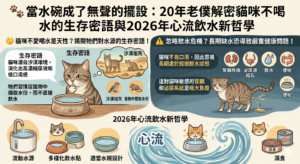
當水碗成了無聲的擺設:20年老僕解密貓咪不喝水的生存密語與2026年心流飲水新哲學
When the Water Bowl Becomes a Silent Ornament: A 20-Year Cat Servant Deciphers the Survival Secrets of Feline Dehydration and the 2026 Flow-State Drinking New Philosophy
清晨,陽光輕柔地灑落客廳,為這片日常的舞台鍍上一層金邊。我的老貓,那隻名叫「阿嚕米」的玳瑁,此刻正優雅地從窗台躍下,發出一聲輕盈的「啪噠」。牠信步走到牠那嵌著過濾器的豪華自動飲水機旁,只是輕嗅,然後便轉身離去,彷彿那閃著微光的水面,對牠而言只是一個毫無吸引力的透明玻璃。我望著牠那絲毫未被滿足的眼神,心頭不禁一沉。牠已經不是第一次這樣了。每次看著牠,我的腦海中總會浮現牠年輕時,在浴室水龍頭下好奇伸出小爪,輕撥水流的活潑模樣。如今,牠會安靜地坐在浴室門口,等待我開水龍頭給牠。那一滴滴緩慢滴落的水珠,彷彿是牠無聲的祈求,也是我們之間一種心照不宣的儀式。20年的貓奴生涯,讓我學會了閱讀這些無聲的語言。貓咪的每一個細微動作,每一個眼神流轉,都承載著牠們獨特的情感與需求。阿嚕米的不喝水行為,不僅僅是牠的挑剔,更是牠身體正在發出的一種訊號。我知道,貓咪天性對流動的水更有興趣,這源於牠們祖先在野外對新鮮、活水源的本能偏好。但牠為何會對精心準備的飲水機視而不見,卻對洗手台那冰冷的水龍頭情有獨鍾?這背後隱藏的,是牠們對「安全」、「新鮮」和「自然」的執著。我曾為此焦慮不已,嘗試了各式各樣的水碗、飲水機,甚至在屋內各處擺放水杯,但效果總是不盡理想。直到我真正靜下心來,以牠們的視角重新審視這個問題,才逐漸摸索出一套屬於我們的「飲水哲學」。這不只關乎健康,更關乎我們與貓咪之間,那份細膩而深沉的理解與連結。當我們看懂牠們的「水語」,才能真正為牠們打造一個既能滿足生理需求,又能撫慰心靈的飲水綠洲。
The morning sun gently dusted the living room, gilding this everyday stage. My old cat, a calico named “Alumi,” elegantly leaped from the windowsill, landing with a soft “thump.” She strolled towards her luxurious automatic water fountain, equipped with a filter, only to give it a brief sniff before turning away. The slightly shimmering water surface seemed to hold no appeal for her, just a transparent, uninteresting glass. Watching her unsatisfied gaze, my heart sank. This wasn’t the first time. Every time I saw her, my mind would conjure images of her younger self, playfully extending a tiny paw to tap the flowing water under the bathroom faucet. Now, she would quietly sit by the bathroom door, waiting for me to turn on the tap for her. Those slow-dripping water droplets felt like her silent plea, a tacit ritual between us.
Twenty years of cat servitude have taught me to read these silent languages. Every subtle movement, every shift in gaze, carries their unique emotions and needs. Alumi’s refusal to drink is not just pickiness; it’s a signal her body is sending. I know cats instinctively prefer running water, a preference rooted in their ancestors’ primal need for fresh, live water sources in the wild. But why would she ignore the carefully prepared water fountain, yet be so enamored with the cold faucet in the sink? Behind this lies their steadfast adherence to “safety,” “freshness,” and “nature.” I once fretted endlessly, trying all sorts of water bowls, fountains, and even placing cups of water throughout the house, but the results were always less than ideal. It wasn’t until I truly quieted my mind and re-examined the problem from their perspective that I gradually developed our own “drinking philosophy.” This isn’t just about health; it’s about the delicate and profound understanding and connection between us and our cats. Only when we comprehend their “water language” can we truly create a drinking oasis that fulfills both their physiological needs and soothes their souls.
【深度行為解析】
A cat’s refusal to drink, seemingly a simple behavioral issue, involves complex physiological mechanisms, evolutionary instincts, and environmental psychology. As descendants of desert animals, cats’ ancestors primarily obtained most of their moisture through prey (such as small rodents, containing about 70-75% water) in the wild. This led to the development of highly efficient kidney systems capable of concentrating urine to excrete metabolic waste with minimal water. This natural gift provides cats with strong survival capabilities in arid environments but also results in a higher thirst threshold; even when mildly dehydrated, they won’t actively drink as frequently as humans or dogs. Chronic mild dehydration is a critical factor in cats developing kidney disease, urinary stones (such as calcium oxalate or struvite stones), or lower urinary tract diseases like cystitis.
From a behavioral perspective, cats’ requirements for water are extremely subtle. Their sensitivity to “water quality” far exceeds our imagination. Stagnant water surfaces in the wild could imply staleness, contamination, or even the risk of predators, hence cats naturally prefer flowing water sources like streams or rainwater. This explains why many cats are fond of faucets or automatic water fountains. Furthermore, the choice of “water source location” is crucial. Cats tend to separate their food and water areas, again stemming from primal instinct—to avoid food residue contaminating the water or carcasses attracting disease. They may also dislike residual odors from the water bowl material (e.g., plastic smell) or feel uncomfortable with the bowl’s depth or width (for example, their whiskers touching the bowl’s sides can cause stress, a phenomenon known as “whisker fatigue”). In multi-cat households, competition for water sources can also deter more submissive cats from drinking. Environmental stress, changes in daily routines, and even the placement of the water bowl (whether it’s near noisy appliances or high-traffic pathways) can all affect a cat’s willingness to drink. Understanding these deep-seated behavioral motivations is the first step in creating a “flow-state drinking experience” for our cats and lays the foundation for preventing their potential health crises.
【老僕實戰心法】
* **多點設置,種類豐富:** 不僅限於一個飲水機或水碗。在家中各處(至少2-3個不同房間),擺放多種材質、形狀的水容器。例如:
* **寬口淺碟陶瓷碗:** 避免鬍鬚疲勞,陶瓷不易殘留異味,保持水溫涼爽。
* **玻璃杯/馬克杯:** 許多貓咪對人類的杯子特別好奇。
* **自動飲水機:** 選擇有「湧泉式」或「瀑布式」出水模式的款式,模仿流動水源。確保定期清洗並更換濾心。
* **水龍頭滴水:** 作為偶爾的「特供」,滿足牠們對活水的高級享受。
* **遠離食盆與貓砂盆:** 將飲水點與食物盆、貓砂盆至少保持2-3公尺的距離,模擬野外情境,確保水源潔淨無污染。
* **靜謐與安全區域:** 選擇家中較為安靜、人來人往不多的角落,讓貓咪感到安全,可以安心飲水。避開洗衣機、電視等發出噪音的家電附近。
**第二步:提升水的誘惑力 (The Hydration Hack)**
* **每日換水,保持新鮮:** 即使是飲水機,也建議每日更換至少一次水,確保水質新鮮。
* **添加天然風味:** 嘗試在水中加入少量無鹽雞肉高湯塊、煮雞胸肉的水,或冰凍的雞肉泥冰塊。這種輕微的風味能極大提升貓咪對水的興趣。
* **濕糧混水:** 在貓咪的濕糧中加入少量溫水,攪拌均勻。這不僅增加了水分攝取,也能提升食物的香氣。
* **冰塊魔法:** 在水碗中放入幾顆冰塊,尤其在夏天,冰涼的水更具吸引力,冰塊融化也能產生微小的水波,增加趣味性。
**第三步:觀察與調整 (The Cat-Whisperer’s Log)**
* **記錄飲水行為:** 觀察貓咪偏好哪個飲水點、哪種水容器、哪個時段飲水。這能幫助你了解牠的「水語」。
* **嘗試不同水溫:** 有些貓咪喜歡常溫水,有些則偏愛微涼的水。
* **耐心與彈性:** 貓咪是習慣性動物,改變需要時間。不斷嘗試,並從牠的反應中學習,總能找到最適合你家貓咪的飲水哲學。
Creating an environment where your cat loves to drink is an art that combines observation, experimentation, and patience. Here are practical tips from a 20-year cat servant to help you design a personalized “flow-state drinking oasis” for your feline overlord:
**Step One: Diversify Water Sources and Strategic Placement (The Water Bar Tour)**
* **Multiple Locations, Varied Types:** Don’t limit yourself to just one water fountain or bowl. Place various types of water containers made of different materials and shapes throughout your home (at least 2-3 different rooms). For example:
* **Wide, Shallow Ceramic Bowls:** Prevents whisker fatigue. Ceramic doesn’t retain odors easily and keeps water cool.
* **Glass Cups/Mugs:** Many cats are particularly curious about human cups.
* **Automatic Water Fountains:** Choose models with “bubbling spring” or “waterfall” flow modes, mimicking natural flowing water. Ensure regular cleaning and filter replacement.
* **Dripping Faucet:** Offer this as an occasional “special treat” to satisfy their luxurious craving for live water.
* **Away from Food and Litter Boxes:** Position water stations at least 2-3 meters away from food bowls and litter boxes. This simulates a wild environment, ensuring the water source remains clean and uncontaminated.
* **Quiet and Safe Zones:** Choose quieter corners of your home with less foot traffic, where your cat feels safe and can drink peacefully. Avoid areas near noisy appliances like washing machines or televisions.
**Step Two: Enhance Water’s Allure (The Hydration Hack)**
* **Daily Water Change, Maintain Freshness:** Even with water fountains, it’s recommended to change the water at least once daily to ensure freshness.
* **Add Natural Flavor:** Try adding a small amount of unsalted chicken broth, water from boiled chicken breast, or frozen chicken puree ice cubes to the water. This subtle flavor can significantly boost your cat’s interest in drinking.
* **Mix Water with Wet Food:** Add a small amount of warm water to your cat’s wet food and mix thoroughly. This not only increases water intake but also enhances the food’s aroma.
* **Ice Cube Magic:** Place a few ice cubes in the water bowl, especially during summer. Cool water is more appealing, and melting ice cubes create small ripples, adding to the fun.
**Step Three: Observe and Adjust (The Cat-Whisperer’s Log)**
* **Log Drinking Behavior:** Observe which drinking station, type of container, and time of day your cat prefers to drink. This will help you understand their “water language.”
* **Experiment with Water Temperature:** Some cats prefer room-temperature water, while others like it slightly cool.
* **Patience and Flexibility:** Cats are creatures of habit, and changes take time. Continuously experiment and learn from their reactions; you’ll eventually find the best drinking philosophy for your cat.
【智商稅警示區】
1. **高品質陶瓷或玻璃寬口水碗:** 選擇食物級安全、不易殘留異味、重量穩定不易打翻的碗。寬口設計避免鬍鬚疲勞,讓貓咪飲水更舒適。重點是每天至少換水一次,保持清潔。例如:[AFFILIATE_LINK]陶瓷貓水碗
2. **簡易噴泉式自動飲水機(無多餘花俏功能):** 選擇結構簡單、易於清潔、具備基礎循環過濾功能的噴泉式飲水機。其流動的水流對貓咪更具吸引力,且能確保水質循環。定期清潔和更換濾心是關鍵。例如:[AFFILIATE_LINK]不鏽鋼貓咪飲水機
When seeking drinking solutions for your cat, the market is flooded with various expensive, “high-tech” hydration products. Be wary of water fountains that claim to “automatically detect your cat’s drinking frequency” or “AI intelligently optimize water quality”; these are often prime examples of “intelligence tax” traps. Many of these features are more gimmick than practical, come with high maintenance costs, and do not fundamentally address the underlying motivation for cats to drink.
True problem solvers often revert to a cat’s primal instincts and needs. Instead of spending a fortune on complex gadgets, invest in these two practical and highly effective alternative solutions:
1. **High-Quality Ceramic or Glass Wide-Mouth Water Bowls:** Choose food-grade safe, odor-resistant, and stable bowls that won’t easily tip over. The wide-mouth design prevents whisker fatigue, making drinking more comfortable for your cat. The key is to change the water at least once daily and keep it clean. For example: [AFFILIATE_LINK]Ceramic Cat Water Bowl
2. **Simple Fountain-Style Automatic Water Fountain (without unnecessary bells and whistles):** Opt for a fountain with a simple structure, easy to clean, and basic circulating filtration. The flowing water is more attractive to cats, and it ensures water circulation. Regular cleaning and filter replacement are crucial. For example: [AFFILIATE_LINK]Stainless Steel Cat Water Fountain