
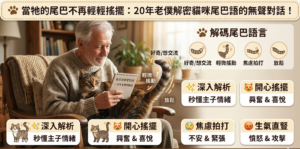
當牠的尾巴不再輕輕搖擺:20年老僕解密貓咪尾巴語的無聲對話與2026心流連結新哲學
When Her Tail No Longer Swishes Gently: A 20-Year Servant Deciphers the Silent Dialogue of Feline Tail Language and the 2026 Flow-State Connection Philosophy
清晨,微亮的陽光灑進臥室,輕柔地落在床邊那團溫熱的毛球上。我緩緩睜開眼,首先映入眼簾的,不是鬧鐘,而是我的老伴侶——那隻名叫「小橘」的橘貓。牠正用牠柔軟的尾巴,輕輕地、有節奏地,在我的臉頰旁來回掃動。那溫暖而熟悉的觸感,伴隨著牠滿足的輕聲呼嚕,像是一首無聲的晨間情歌。我知道,這是牠特有的「早安吻」,是牠在宣告:「老僕,我醒了,也想跟你道早安。」那尾巴的每一次輕拂,都承載著數十年來無數個清晨的記憶:牠開心地高舉,驕傲地展示著狩獵成果;牠困惑地垂下,對新玩具投以不解的目光;牠警戒地夾緊,面對窗外陌生的聲響。
尾巴,對貓咪而言,不只是一條平衡工具,更是牠們情感最直接、最誠實的出口。它像一面無形的旗幟,無時無刻不在揮舞,訴說著牠們內心最深處的秘密。當小橘年輕時,牠的尾巴總是充滿活力,像一條舞動的絲帶,從興奮的「問號尾」,到狩獵時的「低伏擺動」,再到撒嬌時的「輕柔纏繞」,每一種姿態都充滿生命力。但隨著歲月流逝,我開始發現,小橘的尾巴有時會顯得有些沉重,擺動的幅度不如以往輕盈,甚至有時會莫名地垂著。這讓我心中警鈴大作。
作為一個與貓共處二十年的老僕,我深知,尾巴的變化往往是貓咪內在狀態的無聲預警。牠可能在告訴我:「我有點不舒服」、「我感到焦慮」,或者「我需要你的關注」。每一次尾巴的輕微顫動、每一次弧度的變化,都是牠們向世界發出的獨特訊號。我們這些資深貓奴的任務,就是學會讀懂這些深奧卻細膩的「尾巴語」,不再僅憑想像,而是用心去解讀牠們傳達的每一份情感。這不只是一門學問,更是一場深刻的心靈對話,一場超越語言限制的愛與理解的旅程。
讓我們一同深入貓咪的尾巴世界,學習如何與牠們建立更深層次的心流連結,讓這份愛,透過無聲的語言,更加堅韌、更加溫暖。In the early morning, soft sunlight streamed into the bedroom, gently falling upon the warm ball of fur beside the bed. I slowly opened my eyes, and the first thing I saw was not the alarm clock, but my old companion – an orange cat named “Xiao Ju.” She was gently and rhythmically brushing my cheek with her soft tail. That warm and familiar touch, accompanied by her contented purrs, was like a silent morning love song. I knew this was her unique “good morning kiss,” her way of declaring, “Old servant, I’m awake, and I want to wish you a good morning too.” Each flick of her tail carried countless morning memories from decades past: her tail held high in joy, proudly displaying her hunting prowess; her tail drooping in confusion, casting a puzzled gaze at a new toy; her tail tucked tightly, alert to strange sounds outside the window.
For cats, the tail is not just a balancing tool; it’s the most direct and honest outlet for their emotions. It’s like an invisible flag, constantly waving and narrating the deepest secrets of their hearts. When Xiao Ju was young, her tail was always full of life, like a dancing ribbon, from the excited “question mark tail” to the “low-slung swing” during hunting, and the “gentle wrap” when seeking affection – every posture was full of vitality. But as years passed, I began to notice that Xiao Ju’s tail sometimes seemed a bit heavy, its swing less nimble than before, and occasionally, it would inexplicably droop. This set off alarm bells in my heart.
As a 20-year cat servant, I deeply understand that changes in the tail often serve as a silent warning of a cat’s internal state. She might be telling me, “I’m a little uncomfortable,” “I feel anxious,” or “I need your attention.” Every subtle tremor of the tail, every change in its curve, is their unique signal to the world. Our mission as seasoned cat owners is to learn to decipher this profound yet delicate “tail language,” no longer relying solely on imagination, but interpreting with our hearts every emotion they convey. This is not just a discipline; it’s a profound spiritual dialogue, a journey of love and understanding that transcends linguistic barriers.
Let us delve together into the world of feline tails, learning how to build deeper flow-state connections with them, allowing this love, through silent language, to become stronger and warmer.
【深度行為解析】
其生理構造精巧複雜,由多達19至23節脊椎骨組成,佔全身脊椎骨的近10%,並佈滿數千條神經末梢和肌肉。這賦予了尾巴極高的靈敏度和廣闊的活動範圍,使其能完成從輕微顫動到大幅擺動的各種動作。這些動作的微妙差異,正是我們解讀其情緒的關鍵。
舉例來說,當貓咪尾巴高高豎起,尖端略微彎曲成問號狀時,這通常代表著友善、自信與興奮。這是牠們在向同伴或人類表達「我很開心見到你」的訊號。從原始本能來看,這可能源於幼貓向母貓表示「一切安好」的姿勢,也是一種展現自身無威脅性的姿態。然而,如果尾巴完全僵硬地直立,毛髮炸開,那則是強烈恐懼或攻擊的警告,意圖使自己看起來更大以威懾對手。這兩種看似相似的動作,背後的情緒卻截然不同,僅因細微的「彎曲度」而有天壤之別。
當尾巴低垂並緩慢擺動時,通常表示貓咪正處於觀察、警戒或輕微不確定的狀態。這是一種探索前的猶豫,或是對周遭環境的審視。若擺動速度加快,並伴隨身體低伏,那便是進入狩獵模式的經典姿態,此時的尾巴是幫助牠們保持平衡,並鎖定獵物的核心。
最容易被誤解的,或許是尾巴快速且用力地左右拍打。許多人會誤以為這是開心的表現,但事實上,這通常表示貓咪感到煩躁、生氣、焦慮或極度不耐煩。在這種情況下,牠們可能正處於「進攻或逃跑」的邊緣,此時貿然接近很可能會招致攻擊。這源於牠們在遭遇威脅時,透過尾巴拍擊地面發出警訊,同時也在累積爆發的能量。
理解這些尾巴語背後的行為學與生理學機制,不僅能幫助我們精準洞察貓咪當下的情緒,更能預判牠們的下一步行動。這是一門關於同理心與尊重的學問,也是建立深厚人貓連結的基石。透過學習,我們將能更有效地回應牠們的需求,避免不必要的衝突,並提供牠們一個更安心、更幸福的生活環境。A cat’s tail is its “second brain” for complex emotions and physiological states. From a behavioral perspective, feline tail language is rooted in the primal survival instincts of its ancestors. As solitary predators and prey, they required a sophisticated and rapid non-verbal communication system to adapt to various environmental changes. The tail, as one of the most flexible skeletal and muscular structures in the entire body, naturally became the best vehicle for expressing these instincts.
Its physiological structure is exquisitely complex, composed of 19 to 23 vertebrae, accounting for nearly 10% of the entire spinal column, and is densely packed with thousands of nerve endings and muscles. This grants the tail extremely high sensitivity and a wide range of motion, allowing it to perform everything from subtle tremors to broad swings. The subtle differences in these movements are key to deciphering their emotions.
For instance, when a cat’s tail is held high with a slight curve at the tip, forming a question mark shape, it typically signifies friendliness, confidence, and excitement. This is their way of signaling “I’m happy to see you” to companions or humans. From a primal instinct perspective, this might originate from kittens’ posture to indicate “all is well” to their mothers, and also a way to demonstrate non-threat. However, if the tail is held completely stiff and upright with fur bristling, it’s a warning of intense fear or aggression, intended to make themselves appear larger to deter opponents. These two seemingly similar movements harbor vastly different emotions, separated by a subtle “degree of curvature.”
When the tail is held low and swings slowly, it usually indicates that the cat is in a state of observation, alertness, or slight uncertainty. This is a hesitation before exploration, or an assessment of the surrounding environment. If the swing speed increases, accompanied by a low-slung body, it’s the classic posture for entering hunting mode; at this point, the tail helps them maintain balance and pinpoint prey.
Perhaps the most easily misunderstood movement is the tail rapidly and forcefully thumping from side to side. Many people mistakenly believe this is a sign of happiness, but in fact, it usually means the cat is feeling annoyed, angry, anxious, or extremely impatient. In such situations, they might be on the verge of “fight or flight,” and approaching them rashly at this time is highly likely to provoke an attack. This behavior stems from their primitive instinct to thump their tail on the ground as a warning when encountering a threat, while also building up explosive energy.
Understanding the behavioral and physiological mechanisms behind this tail language not only helps us precisely discern a cat’s current emotions but also allows us to anticipate their next actions. This is a discipline of empathy and respect, and the cornerstone for building a deep human-cat bond. Through learning, we will be able to respond more effectively to their needs, avoid unnecessary conflicts, and provide them with a safer, happier living environment.
【老僕實戰心法】
* **步驟一:觀察並記錄**。每天花10-15分鐘,靜靜觀察你的貓咪。記錄牠在不同情境下的尾巴姿態,例如:用餐前、玩耍時、你回家時、陌生人來訪時、睡覺時。
* **步驟二:連結情緒與行為**。例如,當牠尾巴高舉輕微顫抖,同時發出輕柔喵叫並蹭你時,記錄為「高興、歡迎、撒嬌」。當牠尾巴低垂夾緊,躲在沙發下時,記錄為「害怕、不安」。將這些觀察寫下來或用手機錄影,建立你的專屬「貓咪尾巴行為資料庫」。
* **心法**:重複觀察是關鍵。你會發現,即使是相同的尾巴姿態,在不同情境下可能略有不同。透過交叉比對,你會越來越精準地掌握牠的獨特語言。
2. **營造「情緒安全區」的環境改造**:
* **高處避難所**:提供至少一個高於人類視線的貓跳台或貓櫃,讓牠在感到壓力或不安時能登高望遠,尾巴可以放鬆垂下,代表牠感到安全。
* **隱蔽藏身處**:在貓咪常駐的區域,準備幾個開放式紙箱或洞穴型貓窩。當牠尾巴夾緊並躲藏時,這表示牠需要獨處,提供這些空間能有效降低牠的焦慮,讓牠有機會自行平復情緒。
* **心法**:讓貓咪擁有選擇權,是給予牠安全感的核心。當牠能自由選擇躲藏或觀察,其尾巴自然會呈現更放鬆的姿態。
3. **學習「緩慢互動」與「尊重距離」**:
* **伸食指測試**:當你不確定貓咪情緒時,緩慢伸出食指,讓牠嗅聞。如果牠尾巴微揚輕擺,靠近嗅聞,表示牠願意互動;如果尾巴低垂甚至夾緊,並後退或甩動,則表示牠需要空間,此時請勿強行觸碰。
* **「慢眨眼」回應法**:這是貓咪表達「我很放鬆,我很信任你」的方式。當你看到牠尾巴放鬆,眼神望向你時,可以緩慢地眨眼,模擬牠們的「愛的眨眼」,牠們的尾巴通常會回應以輕微的擺動或僵直的放鬆。
* **心法**:貓咪的信任需要時間建立。每一次對牠們尾巴訊號的正確回應,都是在積累這份信任。避免急促的動作和突然的聲音,給予牠們足夠的反應時間。
透過這些實戰教學,你將不僅能讀懂貓咪的尾巴語言,更能從行為上積極回應,建立起超越語言的心靈連結,讓你們的關係更上一層樓。
Deciphering feline tail language is a practice that requires patience and observation. Here are some practical steps to help you become a “tail language translator” for your cat:
1. **Create a “Tail Journal” and Contextual Mapping Method**:
* **Step One: Observe and Record**. Spend 10-15 minutes each day quietly observing your cat. Document its tail postures in different situations, such as before meals, during playtime, when you return home, when strangers visit, or when sleeping.
* **Step Two: Link Emotions to Behaviors**. For example, when its tail is held high and slightly trembling, accompanied by soft meows and rubbing against you, record it as “happy, welcoming, affectionate.” When its tail is low and tucked tightly while hiding under the sofa, record it as “scared, anxious.” Write down these observations or record them with your phone to build your personal “feline tail behavior database.”
* **Core Principle**: Repeated observation is key. You will find that even similar tail postures might vary slightly in different contexts. Through cross-referencing, you will become increasingly accurate in understanding its unique language.
2. **Environmental Modification to Create an “Emotional Safe Zone”**:
* **High Perches**: Provide at least one cat tree or cat cabinet higher than human eye level, allowing your cat to observe from above when feeling stressed or anxious. A relaxed, drooping tail in such a spot indicates safety.
* **Hidden Retreats**: In areas where your cat frequently stays, prepare a few open cardboard boxes or cave-like cat beds. When its tail is tucked and it hides, it means it needs solitude. Providing these spaces can effectively reduce its anxiety and give it a chance to self-soothe.
* **Core Principle**: Giving your cat choices is central to providing a sense of security. When it can freely choose to hide or observe, its tail will naturally adopt a more relaxed posture.
3. **Learn “Slow Interaction” and “Respecting Distance”**:
* **Index Finger Test**: When you’re unsure of your cat’s mood, slowly extend your index finger for it to sniff. If its tail is slightly raised and gently swishing, and it approaches to sniff, it indicates a willingness to interact. If its tail is low or even tucked, and it backs away or thumps its tail, it means it needs space, and you should not force contact.
* **”Slow Blink” Response Method**: This is a cat’s way of expressing “I’m relaxed, I trust you.” When you see its tail relaxed and its gaze directed at you, you can slowly blink, mimicking their “love blinks.” Their tails will usually respond with a slight twitch or a stiff relaxation.
* **Core Principle**: A cat’s trust takes time to build. Every correct response to their tail signals accumulates this trust. Avoid abrupt movements and sudden noises, giving them enough time to react.
Through these practical teachings, you will not only be able to understand your cat’s tail language but also actively respond behaviorally, establishing a spiritual connection that transcends language, elevating your relationship to the next level.
【智商稅警示區】
真正能幫助你解讀貓咪尾巴語,並建立心流連結的,是持續的觀察與學習。如果你真的想投資,我會推薦你兩個真正有價值的替代方案:
1. **一本權威的貓咪行為學書籍**:例如《貓的行為學》(Cat Behaviour) 或《別說你懂貓》(The Cat Whisperer)。這些書籍能提供你系統性的知識,了解貓咪行為背後的演化與生理基礎,而非僅僅是表象的解讀。[AFFILIATE_LINK]
2. **一個穩固的攝影機**:用來記錄你不在家時貓咪的狀態,或是在你無法親自觀察時,捕捉牠們的細微動作。許多平價家用監控攝影機(如TP-Link Tapo系列)就能滿足需求,它的主要價值在於提供客觀的影像資料,輔助你的日常觀察與「尾巴日誌」的建立,而不是去「解釋」貓咪的情緒。這能讓你更全面地了解貓咪在獨處時的真實反應,彌補你親自觀察的盲點。
記住,人貓之間最深層的連結,永遠來自於你投入的愛與陪伴,而非冰冷的科技產品。On the journey to deciphering feline tail language, the market is flooded with various smart collars or apps claiming to “translate cat emotions.” My experience is: most of these are an intellectual property tax! A cat’s emotions are fluid and multifaceted, and no tech product can truly capture the subtle nuances and complex feelings expressed by its tail in different contexts. Instead of spending a fortune on these “digital translators,” it’s better to return to the most primal and effective method: your time and patience.
What truly helps you decipher feline tail language and build a flow-state connection is continuous observation and learning. If you truly want to invest, I would recommend two truly valuable alternatives:
1. **An authoritative cat behavior book**: For example, “Cat Behaviour” or “The Cat Whisperer.” These books can provide you with systematic knowledge to understand the evolutionary and physiological basis behind feline behaviors, rather than just superficial interpretations. [AFFILIATE_LINK]
2. **A stable surveillance camera**: Used to record your cat’s state when you’re not home, or to capture their subtle movements when you can’t observe them in person. Many affordable home security cameras (like the TP-Link Tapo series) can meet this need. Their primary value lies in providing objective video data to assist your daily observations and the creation of your “tail journal,” rather than “interpreting” your cat’s emotions. This allows you to more comprehensively understand your cat’s true reactions when alone, filling in blind spots in your personal observations.
Remember, the deepest bond between human and cat always comes from the love and companionship you invest, not from cold tech products.