
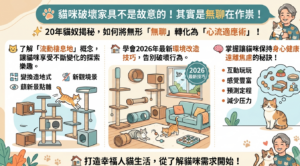
繁體中文:當無形的「無聊」化為有形的破壞:20年老僕解密貓咪「流動棲息地」的2026年心流適應術
英文:When Invisible “Boredom” Becomes Tangible Destruction: A 20-Year Servant Deciphers Feline “Flow Habitat” Adaptation Techniques for 2026
【核心導讀】
繁體中文:
清晨的陽光,輕柔地灑落在我的臉龐,帶著一絲暖意,但這份暖意卻被遠處傳來的家具輕微抓撓聲,以及那若有似無的、帶著幾分焦躁的喵鳴聲打破了。我緩緩睜開眼,心頭一緊,那份熟悉的、令人不安的預感又浮上心頭。我的老夥伴,那隻曾在我懷中溫順沉睡、用規律呼嚕聲陪伴我無數個夜晚的虎斑貓「阿毛」,如今正用牠尖銳的小爪,對著新買的義大利真皮沙發進行著牠的「每日改造工程」。牠那雙平時深邃如琥珀的眼睛,此刻卻流露著一絲難以捉摸的焦躁與空洞,彷彿在無聲地質問著什麼,又像是在宣洩著某種深層的挫敗感。牠不是不愛我,也不是刻意搗蛋;那股無精打采卻又蠢蠢欲動的矛盾感,我這個與貓共處二十載的老僕,太熟悉了。這是「無聊」的氣息,一種被現代居家環境無形剝奪了狩獵本能與探索慾望的「無聊症候群」。牠的溫熱呼吸依舊,鼻尖輕輕地抽動著,卻不再帶著全然的滿足,反而透露出一種近乎哀求的訊息。作為一個資深貓奴,我曾見證過無數次這種無聲的求救——牠們在用最原始的語言,對著我們這些「兩腳獸」訴說著「我需要更多,我需要刺激,我需要一個能讓我靈魂自由奔跑的空間」。看著阿毛那纖長的軀體在沙發上伸展,卻又在下一秒百無聊賴地舔舐自己的毛髮,我知道,我必須再次深入牠們的世界。這眼神裡的依賴與困惑,是貓咪靈魂深處對生命活力的渴望,也是牠們對我們信任的證明。今日,我們將一同揭開這「無聊症候群」的神秘面紗,不只從行為表象,更從牠們古老的基因與現代環境的衝突中,尋找解決之道,並為牠們打造一個充滿「心流」的棲息地,讓牠們的生命再次飽滿、璀璨。英文:
The gentle and warm morning sun kissed my face, but its warmth was broken by the faint scratching sound of furniture from a distance, accompanied by a soft, almost imperceptible meow imbued with a hint of anxiety. I slowly opened my eyes, a pang in my heart, as that familiar, unsettling premonition resurfaced. My old companion, “A-Mao,” the tabby cat who once slept docilely in my arms, filling countless nights with her rhythmic purr, was now meticulously conducting her “daily renovation project” on the newly acquired Italian leather sofa with her sharp little claws. Her eyes, usually as deep as amber, now held an elusive hint of anxiety and emptiness, as if silently questioning something, or perhaps expressing a deep-seated frustration. She wasn’t being disobedient, nor was she deliberately mischievous; that contradictory feeling of listlessness yet restless energy was all too familiar to me, a servant who has lived with cats for twenty years. This was the scent of “boredom,” a “boredom syndrome” stemming from the invisible deprivation of her primal hunting instincts and exploratory desires by the modern home environment. Her warm breath was still there, her nose twitching ever so slightly, but it no longer carried complete contentment; instead, it conveyed a message almost begging for something more. As a seasoned cat servant, I have witnessed this silent cry for help countless times—they are using their most primal language to tell us, “two-legged creatures,” that “I need more, I need stimulation, I need a space where my soul can run free.” Watching A-Mao’s lithe body stretch across the sofa, only to then listlessly groom her fur a second later, I knew I had to delve deeper into their world once again. The dependence and confusion in her eyes are a yearning from the depths of her feline soul for more life vitality, and proof of their trust in us. Today, we will collectively unveil the mystery of this “boredom syndrome,” not just from behavioral manifestations, but by seeking solutions from the conflict between their ancient genes and modern environments, and by creating a “flow-state” habitat for them, allowing their lives to be full and vibrant once more.
繁體中文:
清晨的陽光,輕柔地灑落在我的臉龐,帶著一絲暖意,但這份暖意卻被遠處傳來的家具輕微抓撓聲,以及那若有似無的、帶著幾分焦躁的喵鳴聲打破了。我緩緩睜開眼,心頭一緊,那份熟悉的、令人不安的預感又浮上心頭。我的老夥伴,那隻曾在我懷中溫順沉睡、用規律呼嚕聲陪伴我無數個夜晚的虎斑貓「阿毛」,如今正用牠尖銳的小爪,對著新買的義大利真皮沙發進行著牠的「每日改造工程」。牠那雙平時深邃如琥珀的眼睛,此刻卻流露著一絲難以捉摸的焦躁與空洞,彷彿在無聲地質問著什麼,又像是在宣洩著某種深層的挫敗感。牠不是不愛我,也不是刻意搗蛋;那股無精打采卻又蠢蠢欲動的矛盾感,我這個與貓共處二十載的老僕,太熟悉了。這是「無聊」的氣息,一種被現代居家環境無形剝奪了狩獵本能與探索慾望的「無聊症候群」。牠的溫熱呼吸依舊,鼻尖輕輕地抽動著,卻不再帶著全然的滿足,反而透露出一種近乎哀求的訊息。作為一個資深貓奴,我曾見證過無數次這種無聲的求救——牠們在用最原始的語言,對著我們這些「兩腳獸」訴說著「我需要更多,我需要刺激,我需要一個能讓我靈魂自由奔跑的空間」。看著阿毛那纖長的軀體在沙發上伸展,卻又在下一秒百無聊賴地舔舐自己的毛髮,我知道,我必須再次深入牠們的世界。這眼神裡的依賴與困惑,是貓咪靈魂深處對生命活力的渴望,也是牠們對我們信任的證明。今日,我們將一同揭開這「無聊症候群」的神秘面紗,不只從行為表象,更從牠們古老的基因與現代環境的衝突中,尋找解決之道,並為牠們打造一個充滿「心流」的棲息地,讓牠們的生命再次飽滿、璀璨。英文:
The gentle and warm morning sun kissed my face, but its warmth was broken by the faint scratching sound of furniture from a distance, accompanied by a soft, almost imperceptible meow imbued with a hint of anxiety. I slowly opened my eyes, a pang in my heart, as that familiar, unsettling premonition resurfaced. My old companion, “A-Mao,” the tabby cat who once slept docilely in my arms, filling countless nights with her rhythmic purr, was now meticulously conducting her “daily renovation project” on the newly acquired Italian leather sofa with her sharp little claws. Her eyes, usually as deep as amber, now held an elusive hint of anxiety and emptiness, as if silently questioning something, or perhaps expressing a deep-seated frustration. She wasn’t being disobedient, nor was she deliberately mischievous; that contradictory feeling of listlessness yet restless energy was all too familiar to me, a servant who has lived with cats for twenty years. This was the scent of “boredom,” a “boredom syndrome” stemming from the invisible deprivation of her primal hunting instincts and exploratory desires by the modern home environment. Her warm breath was still there, her nose twitching ever so slightly, but it no longer carried complete contentment; instead, it conveyed a message almost begging for something more. As a seasoned cat servant, I have witnessed this silent cry for help countless times—they are using their most primal language to tell us, “two-legged creatures,” that “I need more, I need stimulation, I need a space where my soul can run free.” Watching A-Mao’s lithe body stretch across the sofa, only to then listlessly groom her fur a second later, I knew I had to delve deeper into their world once again. The dependence and confusion in her eyes are a yearning from the depths of her feline soul for more life vitality, and proof of their trust in us. Today, we will collectively unveil the mystery of this “boredom syndrome,” not just from behavioral manifestations, but by seeking solutions from the conflict between their ancient genes and modern environments, and by creating a “flow-state” habitat for them, allowing their lives to be full and vibrant once more.
【深度行為解析】
繁體中文:
貓咪,即便被馴化數千年,其體內仍流淌著遠古獵手的血液。牠們是天生的狩獵者,每一個細胞都在渴望追逐、捕捉、攀爬、觀察,並以此來消耗精力、維持心理平衡。當現代居家環境,特別是高樓層公寓生活,大大限縮了這些原始行為的機會時,「無聊症候群」便應運而生,成為許多城市貓咪的隱形痛點。這不是單純的「不愛玩」,而是一種深層的生理與心理需求長期未被滿足的結果。從行為學角度看,貓咪的行為模式深受其「狩獵循環」的驅動:搜尋獵物、追蹤、捕捉、玩弄、殺死、進食,最後梳理與休息。這個循環不僅是為了獲取食物,更是牠們釋放壓力、建立自信、維持大腦活力,甚至鞏固社會關係的重要過程。當這個數百萬年演化而來的循環被打破或長期缺乏時,貓咪的大腦會因缺乏足夠的感官刺激與認知挑戰而感到「無聊」。這種「無聊」並非人類那種發呆、放空的無聊,而是表現為一種持續性的焦慮、沮喪和壓力的累積。生理上,長期無聊會導致壓力賀爾蒙(如皮質醇)升高,進而引發一系列我們常見卻誤解為「壞習慣」的問題:例如,過度舔毛導致的皮膚炎或脫毛斑(這是壓力和無聊的經典症狀,而非單純的毛髮問題)、亂咬或抓撓家具(非單純的磨爪或宣示領地,而是發洩內心鬱悶和未被滿足的狩獵衝動)、食慾不振或暴飲暴食(情緒性進食,試圖透過食物尋求慰藉)、破壞行為、甚至對同伴或人類的攻擊性行為(挫折感和不安全感導致)、以及夜間頻繁吵鬧或過度要求關注(精力無處發洩,試圖引起主人注意)。這些行為,都是貓咪在告訴我們:「我需要刺激,我需要意義,我需要我的生命更有『流動感』。」因此,「流動棲息地」的概念,便是在於理解貓咪這種流動的狩獵本能和探索天性,設計一個讓牠們能在環境中順暢地進行探索、追逐、休息、玩樂的空間,讓牠們的「心流」得以自然流動,而非被困在單一、靜態、缺乏挑戰的空間中。英文:
Despite millennia of domestication, cats still possess the ancient hunter’s blood flowing within them. They are natural predators; every cell yearns to stalk, chase, capture, climb, and observe, thereby expending energy and maintaining psychological balance. When modern home environments, especially high-rise apartment living, significantly restrict opportunities for these primal behaviors, “Boredom Syndrome” inevitably arises, becoming an invisible pain point for many urban cats. This isn’t merely “not wanting to play,” but rather the result of deep physiological and psychological needs remaining unmet over a long period. From a behavioral perspective, feline behavior patterns are profoundly driven by their “hunting cycle”: searching for prey, stalking, capturing, playing with, killing, eating, followed by grooming and resting. This cycle is not just about acquiring food; it’s a crucial process for them to release stress, build confidence, maintain brain vitality, and even solidify social relationships. When this cycle, honed over millions of years of evolution, is disrupted or consistently lacking, the cat’s brain experiences “boredom” due to insufficient sensory stimulation and cognitive challenges. This “boredom” is not the same as human idleness or zoning out; it manifests as a continuous accumulation of anxiety, frustration, and stress. Physiologically, chronic boredom can lead to elevated stress hormones (such as cortisol), which in turn trigger a series of problems we commonly observe but often misunderstand as “bad habits”: for example, over-grooming leading to dermatitis or bald patches (a classic symptom of stress and boredom, not merely a fur issue), destructive chewing or scratching of furniture (not just claw sharpening or territorial marking, but an outlet for inner frustration and unmet hunting urges), loss of appetite or overeating (emotional eating, attempting to seek comfort through food), destructive behaviors, even aggression towards companions or humans (due to frustration and insecurity), and frequent nocturnal disturbances or excessive attention-seeking (pent-up energy with nowhere to go, attempting to gain owner attention). All these behaviors are the cat’s way of telling us: “I need stimulation, I need purpose, I need my life to have more ‘flow.'” Therefore, the concept of a “flow-state habitat” is about understanding this fluid hunting instinct and exploratory nature of cats, designing a space where they can smoothly explore, stalk, rest, and play, allowing their “flow” to circulate naturally, rather than being trapped in a static, singular, and unchallenging environment.
貓咪,即便被馴化數千年,其體內仍流淌著遠古獵手的血液。牠們是天生的狩獵者,每一個細胞都在渴望追逐、捕捉、攀爬、觀察,並以此來消耗精力、維持心理平衡。當現代居家環境,特別是高樓層公寓生活,大大限縮了這些原始行為的機會時,「無聊症候群」便應運而生,成為許多城市貓咪的隱形痛點。這不是單純的「不愛玩」,而是一種深層的生理與心理需求長期未被滿足的結果。從行為學角度看,貓咪的行為模式深受其「狩獵循環」的驅動:搜尋獵物、追蹤、捕捉、玩弄、殺死、進食,最後梳理與休息。這個循環不僅是為了獲取食物,更是牠們釋放壓力、建立自信、維持大腦活力,甚至鞏固社會關係的重要過程。當這個數百萬年演化而來的循環被打破或長期缺乏時,貓咪的大腦會因缺乏足夠的感官刺激與認知挑戰而感到「無聊」。這種「無聊」並非人類那種發呆、放空的無聊,而是表現為一種持續性的焦慮、沮喪和壓力的累積。生理上,長期無聊會導致壓力賀爾蒙(如皮質醇)升高,進而引發一系列我們常見卻誤解為「壞習慣」的問題:例如,過度舔毛導致的皮膚炎或脫毛斑(這是壓力和無聊的經典症狀,而非單純的毛髮問題)、亂咬或抓撓家具(非單純的磨爪或宣示領地,而是發洩內心鬱悶和未被滿足的狩獵衝動)、食慾不振或暴飲暴食(情緒性進食,試圖透過食物尋求慰藉)、破壞行為、甚至對同伴或人類的攻擊性行為(挫折感和不安全感導致)、以及夜間頻繁吵鬧或過度要求關注(精力無處發洩,試圖引起主人注意)。這些行為,都是貓咪在告訴我們:「我需要刺激,我需要意義,我需要我的生命更有『流動感』。」因此,「流動棲息地」的概念,便是在於理解貓咪這種流動的狩獵本能和探索天性,設計一個讓牠們能在環境中順暢地進行探索、追逐、休息、玩樂的空間,讓牠們的「心流」得以自然流動,而非被困在單一、靜態、缺乏挑戰的空間中。英文:
Despite millennia of domestication, cats still possess the ancient hunter’s blood flowing within them. They are natural predators; every cell yearns to stalk, chase, capture, climb, and observe, thereby expending energy and maintaining psychological balance. When modern home environments, especially high-rise apartment living, significantly restrict opportunities for these primal behaviors, “Boredom Syndrome” inevitably arises, becoming an invisible pain point for many urban cats. This isn’t merely “not wanting to play,” but rather the result of deep physiological and psychological needs remaining unmet over a long period. From a behavioral perspective, feline behavior patterns are profoundly driven by their “hunting cycle”: searching for prey, stalking, capturing, playing with, killing, eating, followed by grooming and resting. This cycle is not just about acquiring food; it’s a crucial process for them to release stress, build confidence, maintain brain vitality, and even solidify social relationships. When this cycle, honed over millions of years of evolution, is disrupted or consistently lacking, the cat’s brain experiences “boredom” due to insufficient sensory stimulation and cognitive challenges. This “boredom” is not the same as human idleness or zoning out; it manifests as a continuous accumulation of anxiety, frustration, and stress. Physiologically, chronic boredom can lead to elevated stress hormones (such as cortisol), which in turn trigger a series of problems we commonly observe but often misunderstand as “bad habits”: for example, over-grooming leading to dermatitis or bald patches (a classic symptom of stress and boredom, not merely a fur issue), destructive chewing or scratching of furniture (not just claw sharpening or territorial marking, but an outlet for inner frustration and unmet hunting urges), loss of appetite or overeating (emotional eating, attempting to seek comfort through food), destructive behaviors, even aggression towards companions or humans (due to frustration and insecurity), and frequent nocturnal disturbances or excessive attention-seeking (pent-up energy with nowhere to go, attempting to gain owner attention). All these behaviors are the cat’s way of telling us: “I need stimulation, I need purpose, I need my life to have more ‘flow.'” Therefore, the concept of a “flow-state habitat” is about understanding this fluid hunting instinct and exploratory nature of cats, designing a space where they can smoothly explore, stalk, rest, and play, allowing their “flow” to circulate naturally, rather than being trapped in a static, singular, and unchallenging environment.
【老僕實戰心法】
繁體中文:
打造一個充滿「心流」的「流動棲息地」並非一蹴可幾,而是一個循序漸進、持續觀察與調整的過程。其核心在於「垂直空間拓展」、「智能互動設計」與「多重感官刺激」的整合,以滿足貓咪的原始本能。
1. **垂直空間的極致拓展:** 貓咪是天生的三維空間使用者,地面的廣闊遠不如垂直空間的豐富與安全感。在牆壁上安裝貓跳台、走道、貓吊床 ([AFFILIATE_LINK]),利用書櫃或高櫃頂部清理出牠們專屬的「制高點」,甚至可以考慮「貓咪專用牆壁步道系統」。至少提供三到五層不同高度的休息、觀察或移動點,形成一個環繞室內的「空中高速公路」,讓牠們能自由巡視領地,這是建立牠們身心「心流動線」的基礎。這種多層次的設計,不僅增加活動空間,也滿足牠們觀察和躲藏的本能。
2. **智能互動遊戲與狩獵模擬:** 告別單一的、需要你手動操作的逗貓棒,引入「互動式益智餵食器」([AFFILIATE_LINK])與「定時自動雷射筆」(確保安全使用,勿直射眼睛)。這些工具不僅能模擬狩獵,還能提供複雜的認知挑戰,讓貓咪透過「工作」來獲取獎勵。設定每日固定時間,使用這些工具與貓咪進行短暫而高效的互動,每次5-10分鐘,每天2-3次,模擬真實狩獵的「快、狠、準」與「成功獎勵」。2026年的趨勢在於智能設備的應用,例如AI驅動的互動玩具,能根據貓咪的活動模式與情緒反饋,自動調整遊戲難度與互動頻率,讓牠們持續保持新鮮感與參與度。更進一步,可以導入「覓食玩具」概念,將部分食物藏匿於家中不同角落,激發牠們的探索本能。
3. **多重感官刺激的細緻營造:**
* **嗅覺的盛宴:** 定期在不同區域噴灑高品質貓薄荷或木天蓼,或藏匿小零食於嗅聞墊、玩具中,刺激牠們的嗅覺探索與追蹤本能。
* **視覺的饗宴:** 設置窗邊的舒適觀察點,讓牠們能安全地觀察外界動態。或利用平板電腦播放鳥類、魚類、松鼠的影片(需監控,避免貓咪抓破螢幕)。提供動態的視覺刺激,但不應過度。
* **聽覺的調節:** 播放舒緩的貓咪專屬音樂、自然環境音(如流水、鳥鳴),而非長時間的電視噪音或人類音樂。避免突發的巨響。
* **觸覺的豐富:** 提供多種材質的抓板、貓抓柱、絨毯、硬紙箱等,滿足貓咪不同的抓撓與休息需求。
4. **環境輪替與驚喜元素:** 每週輪替不同的玩具組合,或將部分玩具藏起來一段時間再重新出現,營造「新發現」的樂趣。在空間中設置一些大小不一的紙箱、紙袋、隧道,定期更換位置,提供牠們躲藏、奇襲、探索的機會,這些看似簡單的物品卻能帶來極大的樂趣。
5. **「儀式感」的建立與連結:** 每日固定餵食、遊戲、梳理的時間,為貓咪建立可預期的生活節奏,降低不確定性帶來的焦慮感。遊戲結束後,提供零食作為「獵物」的獎勵,完成狩獵循環。睡前給予溫柔的撫摸,強化人貓連結。這套「流動棲息地適應術」的目標,是讓貓咪在家中也能體驗到野外狩獵的樂趣與挑戰,讓牠們的身心都達到平衡且充滿活力的「心流」狀態,從而告別無聊,享受充實的貓生。英文:
Creating a “flow-state habitat” is not an overnight transformation but a gradual process of continuous observation and adjustment. Its core lies in the integration of “vertical space expansion,” “intelligent interactive design,” and “multi-sensory stimulation” to satisfy the cat’s primal instincts.
1. **Maximal Vertical Space Expansion:** Cats are natural three-dimensional users; the vastness of the floor is far less enriching and secure than abundant vertical space. Install cat shelves, walkways, and cat hammocks ([AFFILIATE_LINK]) on walls, clear the tops of bookshelves or tall cabinets to create their exclusive “high ground,” and even consider “cat-specific wall track systems.” Provide at least three to five resting, observation, or movement points at different heights, forming an “aerial highway” that circumnavigates the room, allowing them to freely patrol their territory. This is fundamental for establishing their physical and mental “flow path.” This multi-level design not only increases activity space but also satisfies their instinct to observe and hide.
2. **Smart Interactive Play and Hunting Simulation:** Move beyond single, manually operated wand toys and introduce “interactive puzzle feeders” ([AFFILIATE_LINK]) and “timed automatic laser pointers” (ensuring safe use, never directing into eyes). These tools not only simulate hunting but also provide complex cognitive challenges, allowing cats to earn rewards through “work.” Set fixed times daily for short yet highly effective interactions with these tools, 5-10 minutes each, 2-3 times a day, mimicking the “quick, fierce, accurate” nature and “success reward” of real hunting. The 2026 trend focuses on the application of smart devices, such as AI-driven interactive toys that automatically adjust game difficulty and interaction frequency based on the cat’s activity patterns and emotional feedback, keeping them consistently engaged and stimulated. Furthermore, introduce the concept of “foraging toys” by hiding portions of their food in different corners of the home, stimulating their exploratory instincts.
3. **Meticulous Creation of Multi-Sensory Stimulation:**
* **Olfactory Feast:** Periodically spray high-quality catnip or silvervine in different areas, or hide small treats in snuffle mats and toys, to stimulate their olfactory exploration and tracking instincts.
* **Visual Delight:** Set up comfortable observation points by windows, allowing them to safely watch outside activities. Or use a tablet to play videos of birds, fish, or squirrels (with supervision to prevent screen damage). Provide dynamic visual stimulation, but avoid overdoing it.
* **Auditory Regulation:** Play soothing cat-specific music or natural ambient sounds (like running water, bird chirps), rather than prolonged TV noise or human music. Avoid sudden loud noises.
* **Tactile Richness:** Offer various materials for scratching posts, cat trees, plush blankets, and sturdy cardboard boxes to satisfy their diverse scratching and resting needs.
4. **Environmental Rotation and Elements of Surprise:** Rotate different toy combinations weekly, or hide some toys for a period before reintroducing them, creating the joy of “new discoveries.” Place cardboard boxes, paper bags, and tunnels of varying sizes in the space, regularly changing their positions, to offer opportunities for hiding, ambushing, and exploration. These seemingly simple items can bring immense enjoyment.
5. **Establishing “Rituals” and Connection:** Set fixed times daily for feeding, play, and grooming to establish a predictable life rhythm for your cat, reducing anxiety caused by uncertainty. After play, offer treats as a “prey” reward to complete the hunting cycle. Provide gentle petting before bedtime to strengthen the human-cat bond. The goal of this “flow-state habitat adaptation technique” is to allow cats to experience the joy and challenges of outdoor hunting even indoors, enabling their mind and body to achieve a balanced and vibrant “flow” state, thereby bidding farewell to boredom and enjoying a fulfilling cat life.
打造一個充滿「心流」的「流動棲息地」並非一蹴可幾,而是一個循序漸進、持續觀察與調整的過程。其核心在於「垂直空間拓展」、「智能互動設計」與「多重感官刺激」的整合,以滿足貓咪的原始本能。
1. **垂直空間的極致拓展:** 貓咪是天生的三維空間使用者,地面的廣闊遠不如垂直空間的豐富與安全感。在牆壁上安裝貓跳台、走道、貓吊床 ([AFFILIATE_LINK]),利用書櫃或高櫃頂部清理出牠們專屬的「制高點」,甚至可以考慮「貓咪專用牆壁步道系統」。至少提供三到五層不同高度的休息、觀察或移動點,形成一個環繞室內的「空中高速公路」,讓牠們能自由巡視領地,這是建立牠們身心「心流動線」的基礎。這種多層次的設計,不僅增加活動空間,也滿足牠們觀察和躲藏的本能。
2. **智能互動遊戲與狩獵模擬:** 告別單一的、需要你手動操作的逗貓棒,引入「互動式益智餵食器」([AFFILIATE_LINK])與「定時自動雷射筆」(確保安全使用,勿直射眼睛)。這些工具不僅能模擬狩獵,還能提供複雜的認知挑戰,讓貓咪透過「工作」來獲取獎勵。設定每日固定時間,使用這些工具與貓咪進行短暫而高效的互動,每次5-10分鐘,每天2-3次,模擬真實狩獵的「快、狠、準」與「成功獎勵」。2026年的趨勢在於智能設備的應用,例如AI驅動的互動玩具,能根據貓咪的活動模式與情緒反饋,自動調整遊戲難度與互動頻率,讓牠們持續保持新鮮感與參與度。更進一步,可以導入「覓食玩具」概念,將部分食物藏匿於家中不同角落,激發牠們的探索本能。
3. **多重感官刺激的細緻營造:**
* **嗅覺的盛宴:** 定期在不同區域噴灑高品質貓薄荷或木天蓼,或藏匿小零食於嗅聞墊、玩具中,刺激牠們的嗅覺探索與追蹤本能。
* **視覺的饗宴:** 設置窗邊的舒適觀察點,讓牠們能安全地觀察外界動態。或利用平板電腦播放鳥類、魚類、松鼠的影片(需監控,避免貓咪抓破螢幕)。提供動態的視覺刺激,但不應過度。
* **聽覺的調節:** 播放舒緩的貓咪專屬音樂、自然環境音(如流水、鳥鳴),而非長時間的電視噪音或人類音樂。避免突發的巨響。
* **觸覺的豐富:** 提供多種材質的抓板、貓抓柱、絨毯、硬紙箱等,滿足貓咪不同的抓撓與休息需求。
4. **環境輪替與驚喜元素:** 每週輪替不同的玩具組合,或將部分玩具藏起來一段時間再重新出現,營造「新發現」的樂趣。在空間中設置一些大小不一的紙箱、紙袋、隧道,定期更換位置,提供牠們躲藏、奇襲、探索的機會,這些看似簡單的物品卻能帶來極大的樂趣。
5. **「儀式感」的建立與連結:** 每日固定餵食、遊戲、梳理的時間,為貓咪建立可預期的生活節奏,降低不確定性帶來的焦慮感。遊戲結束後,提供零食作為「獵物」的獎勵,完成狩獵循環。睡前給予溫柔的撫摸,強化人貓連結。這套「流動棲息地適應術」的目標,是讓貓咪在家中也能體驗到野外狩獵的樂趣與挑戰,讓牠們的身心都達到平衡且充滿活力的「心流」狀態,從而告別無聊,享受充實的貓生。英文:
Creating a “flow-state habitat” is not an overnight transformation but a gradual process of continuous observation and adjustment. Its core lies in the integration of “vertical space expansion,” “intelligent interactive design,” and “multi-sensory stimulation” to satisfy the cat’s primal instincts.
1. **Maximal Vertical Space Expansion:** Cats are natural three-dimensional users; the vastness of the floor is far less enriching and secure than abundant vertical space. Install cat shelves, walkways, and cat hammocks ([AFFILIATE_LINK]) on walls, clear the tops of bookshelves or tall cabinets to create their exclusive “high ground,” and even consider “cat-specific wall track systems.” Provide at least three to five resting, observation, or movement points at different heights, forming an “aerial highway” that circumnavigates the room, allowing them to freely patrol their territory. This is fundamental for establishing their physical and mental “flow path.” This multi-level design not only increases activity space but also satisfies their instinct to observe and hide.
2. **Smart Interactive Play and Hunting Simulation:** Move beyond single, manually operated wand toys and introduce “interactive puzzle feeders” ([AFFILIATE_LINK]) and “timed automatic laser pointers” (ensuring safe use, never directing into eyes). These tools not only simulate hunting but also provide complex cognitive challenges, allowing cats to earn rewards through “work.” Set fixed times daily for short yet highly effective interactions with these tools, 5-10 minutes each, 2-3 times a day, mimicking the “quick, fierce, accurate” nature and “success reward” of real hunting. The 2026 trend focuses on the application of smart devices, such as AI-driven interactive toys that automatically adjust game difficulty and interaction frequency based on the cat’s activity patterns and emotional feedback, keeping them consistently engaged and stimulated. Furthermore, introduce the concept of “foraging toys” by hiding portions of their food in different corners of the home, stimulating their exploratory instincts.
3. **Meticulous Creation of Multi-Sensory Stimulation:**
* **Olfactory Feast:** Periodically spray high-quality catnip or silvervine in different areas, or hide small treats in snuffle mats and toys, to stimulate their olfactory exploration and tracking instincts.
* **Visual Delight:** Set up comfortable observation points by windows, allowing them to safely watch outside activities. Or use a tablet to play videos of birds, fish, or squirrels (with supervision to prevent screen damage). Provide dynamic visual stimulation, but avoid overdoing it.
* **Auditory Regulation:** Play soothing cat-specific music or natural ambient sounds (like running water, bird chirps), rather than prolonged TV noise or human music. Avoid sudden loud noises.
* **Tactile Richness:** Offer various materials for scratching posts, cat trees, plush blankets, and sturdy cardboard boxes to satisfy their diverse scratching and resting needs.
4. **Environmental Rotation and Elements of Surprise:** Rotate different toy combinations weekly, or hide some toys for a period before reintroducing them, creating the joy of “new discoveries.” Place cardboard boxes, paper bags, and tunnels of varying sizes in the space, regularly changing their positions, to offer opportunities for hiding, ambushing, and exploration. These seemingly simple items can bring immense enjoyment.
5. **Establishing “Rituals” and Connection:** Set fixed times daily for feeding, play, and grooming to establish a predictable life rhythm for your cat, reducing anxiety caused by uncertainty. After play, offer treats as a “prey” reward to complete the hunting cycle. Provide gentle petting before bedtime to strengthen the human-cat bond. The goal of this “flow-state habitat adaptation technique” is to allow cats to experience the joy and challenges of outdoor hunting even indoors, enabling their mind and body to achieve a balanced and vibrant “flow” state, thereby bidding farewell to boredom and enjoying a fulfilling cat life.
【智商稅警示區】
繁體中文:
許多寵物用品店會推銷各種華而不實、設計感十足卻不實用的昂貴貓抓板、貓窩,甚至聲稱能「治療」貓咪無聊的單一功能玩具。這些往往只是「智商稅」,因為它們忽略了貓咪對「功能性」、「多變性」和「新鮮感」的真實需求,以及牠們的原始天性。一個動輒數千元的設計師貓抓柱,可能遠不如幾個幾十塊錢的瓦楞紙板抓板來得受歡迎,因為瓦楞紙板損壞後可以替換,帶來「新」的抓感,且成本低廉可大量提供。同樣地,華麗的貓窩可能不如一個能提供隱蔽感和可塑性的紙箱有吸引力。真正能解決「無聊症候群」並提升貓咪「心流」體驗的有效投資是:
1. **模組化垂直空間擴充套件:** 無需購買整組佔據地面空間且昂貴的貓樹,可選擇模組化的牆壁式跳台、走道或貓吊床套件 ([AFFILIATE_LINK])。這些可以根據家中空間大小和貓咪活動習性逐步擴充與調整,打造多層次的垂直樂園,性價比極高,且能長久使用。
2. **多功能、高互動性益智餵食器:** 選擇耐用、易清潔,且有多種難度模式可調的款式,能長期提供心智挑戰與覓食樂趣,避免單一餵食器的無聊感 ([AFFILIATE_LINK])。這類餵食器能有效延長用餐時間,模擬狩獵過程,是消耗精力、刺激大腦的絕佳工具。
避免為追逐潮流或品牌而盲目消費,觀察貓咪的真實反應與需求,將資源投入到真正能激發牠們原始本能、提升「心流」體驗,並帶來長期價值的產品上。英文:
Many pet stores promote various flashy, aesthetically pleasing yet impractical, and expensive scratching posts or cat beds, or even single-function toys claiming to “cure” feline boredom. These often amount to a “boredom tax” on owners, as they overlook cats’ true needs for “functionality,” “versatility,” and “novelty,” as well as their primal nature. A designer scratching post costing thousands might be far less popular than a few cardboard scratching pads costing dozens, because cardboard can be replaced when worn out, providing a “new” scratching sensation, and is inexpensive enough to be provided abundantly. Similarly, a luxurious cat bed might be less appealing than a simple cardboard box that offers concealment and moldability. Truly effective investments that can solve “boredom syndrome” and enhance a cat’s “flow-state” experience are:
1. **Modular Vertical Space Expansion Kits:** There’s no need to buy an expensive, floor-space-consuming full cat tree. Instead, opt for modular wall-mounted shelves, walkways, or cat hammock kits ([AFFILIATE_LINK]). These can be gradually expanded and adjusted according to your home space and your cat’s activity habits, creating a multi-layered vertical paradise that offers excellent value for money and long-term utility.
2. **Multi-functional, Highly Interactive Puzzle Feeders:** Choose durable, easy-to-clean models with adjustable difficulty levels. These provide long-term mental challenge and foraging enjoyment, preventing the boredom that can come from a single feeding method ([AFFILIATE_LINK]). Such feeders effectively extend meal times, simulate the hunting process, and are excellent tools for expending energy and stimulating the brain.
Avoid blindly spending to chase trends or brands. Observe your cat’s genuine reactions and needs, and invest resources in products that truly stimulate their primal instincts, enhance their “flow” experience, and deliver long-term value.
許多寵物用品店會推銷各種華而不實、設計感十足卻不實用的昂貴貓抓板、貓窩,甚至聲稱能「治療」貓咪無聊的單一功能玩具。這些往往只是「智商稅」,因為它們忽略了貓咪對「功能性」、「多變性」和「新鮮感」的真實需求,以及牠們的原始天性。一個動輒數千元的設計師貓抓柱,可能遠不如幾個幾十塊錢的瓦楞紙板抓板來得受歡迎,因為瓦楞紙板損壞後可以替換,帶來「新」的抓感,且成本低廉可大量提供。同樣地,華麗的貓窩可能不如一個能提供隱蔽感和可塑性的紙箱有吸引力。真正能解決「無聊症候群」並提升貓咪「心流」體驗的有效投資是:
1. **模組化垂直空間擴充套件:** 無需購買整組佔據地面空間且昂貴的貓樹,可選擇模組化的牆壁式跳台、走道或貓吊床套件 ([AFFILIATE_LINK])。這些可以根據家中空間大小和貓咪活動習性逐步擴充與調整,打造多層次的垂直樂園,性價比極高,且能長久使用。
2. **多功能、高互動性益智餵食器:** 選擇耐用、易清潔,且有多種難度模式可調的款式,能長期提供心智挑戰與覓食樂趣,避免單一餵食器的無聊感 ([AFFILIATE_LINK])。這類餵食器能有效延長用餐時間,模擬狩獵過程,是消耗精力、刺激大腦的絕佳工具。
避免為追逐潮流或品牌而盲目消費,觀察貓咪的真實反應與需求,將資源投入到真正能激發牠們原始本能、提升「心流」體驗,並帶來長期價值的產品上。英文:
Many pet stores promote various flashy, aesthetically pleasing yet impractical, and expensive scratching posts or cat beds, or even single-function toys claiming to “cure” feline boredom. These often amount to a “boredom tax” on owners, as they overlook cats’ true needs for “functionality,” “versatility,” and “novelty,” as well as their primal nature. A designer scratching post costing thousands might be far less popular than a few cardboard scratching pads costing dozens, because cardboard can be replaced when worn out, providing a “new” scratching sensation, and is inexpensive enough to be provided abundantly. Similarly, a luxurious cat bed might be less appealing than a simple cardboard box that offers concealment and moldability. Truly effective investments that can solve “boredom syndrome” and enhance a cat’s “flow-state” experience are:
1. **Modular Vertical Space Expansion Kits:** There’s no need to buy an expensive, floor-space-consuming full cat tree. Instead, opt for modular wall-mounted shelves, walkways, or cat hammock kits ([AFFILIATE_LINK]). These can be gradually expanded and adjusted according to your home space and your cat’s activity habits, creating a multi-layered vertical paradise that offers excellent value for money and long-term utility.
2. **Multi-functional, Highly Interactive Puzzle Feeders:** Choose durable, easy-to-clean models with adjustable difficulty levels. These provide long-term mental challenge and foraging enjoyment, preventing the boredom that can come from a single feeding method ([AFFILIATE_LINK]). Such feeders effectively extend meal times, simulate the hunting process, and are excellent tools for expending energy and stimulating the brain.
Avoid blindly spending to chase trends or brands. Observe your cat’s genuine reactions and needs, and invest resources in products that truly stimulate their primal instincts, enhance their “flow” experience, and deliver long-term value.
關鍵字:貓咪無聊, 貓咪破壞, 貓咪焦慮, 貓咪行為問題, 貓咪環境豐富化, 貓咪心流, 貓跳台, 益智餵食器, 貓咪心理, 貓奴指南