
當新來爪子踏入牠的聖域:20年老僕解密貓咪社會化流動和諧新哲學與心靈融合的溫柔藝術
When a New Paw Enters Their Sacred Territory: A 20-Year Cat Servant Deciphers the 2026 Feline Social Flow Harmonization Philosophy and the Gentle Art of Heart-to-Heart Integration
【核心導讀】
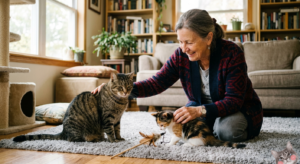
清晨的陽光透過窗簾縫隙,慵懶地灑落在客廳,小橘貓「橘子」正窩在我懷裡,用牠溫熱的身體和規律的呼嚕聲宣告著一天美好的開始。那雙琥珀色的眼睛,總是流露出無盡的依賴與信任,彷彿我是牠世界的全部。然而,這個寧靜的畫面,在一個月前,當另一隻被救援的小虎斑「斑斑」闖入我的生活時,曾一度破碎。我永遠記得,當斑斑從提籠中探出頭,橘子弓起背,發出我從未聽過的低沉嘶吼,那是原始的領地宣示,也是深植貓咪基因裡的恐懼。空氣瞬間凝結,我的心也揪成一團。我深知,這不是單純的兩隻貓咪相遇,而是兩顆纖細心靈的對抗與適應。如何讓牠們從劍拔弩張到最終的相依相偎,不僅考驗著我的耐心,更是對貓咪行為模式深度理解的挑戰。我望著牠們,心疼又焦急,決心要用20年的貓奴經驗,為牠們鋪設一條通往和諧共處的道路。
The morning sun, lazy and golden, filters through the curtains into the living room. My ginger cat, “Orange,” is curled in my arms, her warm body and rhythmic purrs signaling the start of a beautiful day. Her amber eyes always express boundless dependence and trust, as if I am her entire world. Yet, this serene scene was shattered a month ago when “Stripe,” a rescued tabby, entered my life. I’ll never forget the moment Stripe peered out of his carrier; Orange arched her back, letting out a low, guttural hiss I’d never heard before. It was a primal declaration of territory, a fear deeply embedded in feline DNA. The air instantly thickened, and my heart clenched. I knew this wasn’t just two cats meeting; it was a confrontation and adaptation between two delicate souls. Guiding them from hostility to eventual companionship tested my patience and challenged my deep understanding of feline behavior. I looked at them, my heart aching with worry, determined to use my 20 years of cat-servant experience to pave a path for their harmonious coexistence.
清晨的陽光透過窗簾縫隙,慵懶地灑落在客廳,小橘貓「橘子」正窩在我懷裡,用牠溫熱的身體和規律的呼嚕聲宣告著一天美好的開始。那雙琥珀色的眼睛,總是流露出無盡的依賴與信任,彷彿我是牠世界的全部。然而,這個寧靜的畫面,在一個月前,當另一隻被救援的小虎斑「斑斑」闖入我的生活時,曾一度破碎。我永遠記得,當斑斑從提籠中探出頭,橘子弓起背,發出我從未聽過的低沉嘶吼,那是原始的領地宣示,也是深植貓咪基因裡的恐懼。空氣瞬間凝結,我的心也揪成一團。我深知,這不是單純的兩隻貓咪相遇,而是兩顆纖細心靈的對抗與適應。如何讓牠們從劍拔弩張到最終的相依相偎,不僅考驗著我的耐心,更是對貓咪行為模式深度理解的挑戰。我望著牠們,心疼又焦急,決心要用20年的貓奴經驗,為牠們鋪設一條通往和諧共處的道路。
The morning sun, lazy and golden, filters through the curtains into the living room. My ginger cat, “Orange,” is curled in my arms, her warm body and rhythmic purrs signaling the start of a beautiful day. Her amber eyes always express boundless dependence and trust, as if I am her entire world. Yet, this serene scene was shattered a month ago when “Stripe,” a rescued tabby, entered my life. I’ll never forget the moment Stripe peered out of his carrier; Orange arched her back, letting out a low, guttural hiss I’d never heard before. It was a primal declaration of territory, a fear deeply embedded in feline DNA. The air instantly thickened, and my heart clenched. I knew this wasn’t just two cats meeting; it was a confrontation and adaptation between two delicate souls. Guiding them from hostility to eventual companionship tested my patience and challenged my deep understanding of feline behavior. I looked at them, my heart aching with worry, determined to use my 20 years of cat-servant experience to pave a path for their harmonious coexistence.
【深度行為解析】
貓咪是天生的地域性動物,牠們透過氣味、視覺和聲音建立自己的「安全泡泡」。當新成員進入時,牠們的原始本能會被觸發,認為資源可能被瓜分、安全受到威脅。這份焦慮源於演化,即便在家中,牠們仍保有獨居獵手的潛意識。初次見面時的哈氣、嘶吼、弓背,都是貓咪在發送「保持距離」的訊號,並非針對個體,而是對「入侵」行為的本能反應。若貿然讓兩貓直接接觸,很可能導致負面連結,加劇後續的磨合難度。2026年的「貓咪社會化流動和諧」哲學強調,我們必須從「氣味」與「視覺」兩大感官入手,逐步打破舊有領地界線,建立新的「共享領地意識」。這不僅是生理上的適應,更是心理上的重建。貓咪需要時間去處理這些新的刺激,並重新定義牠們在家庭中的角色與關係。忽視這個循序漸進的過程,無異於強迫牠們接受一個未知的威脅,將導致長期壓力,甚至攻擊行為。理解這些,是我們進行任何干預的基礎。
Cats are inherently territorial animals; they establish their “safe bubbles” through scent, sight, and sound. When a new member arrives, their primal instincts are triggered, perceiving a threat to resources and safety. This anxiety stems from evolution; even indoors, they retain the subconscious of a solitary hunter. The hissing, growling, and arched backs during initial encounters are cats sending “keep away” signals, not directed at the individual, but an instinctive response to an “invasion.” If two cats are introduced abruptly, it can lead to negative associations, intensifying future integration difficulties. The 2026 “Feline Social Flow Harmonization” philosophy emphasizes starting with the two major senses – “scent” and “sight” – to gradually break down old territorial boundaries and establish a new “shared territory consciousness.” This is not just physiological adaptation, but psychological reconstruction. Cats need time to process new stimuli and redefine their roles and relationships within the household. Neglecting this gradual process is akin to forcing them to accept an unknown threat, leading to long-term stress and even aggression. Understanding these principles is the foundation for any intervention.
Cats are inherently territorial animals; they establish their “safe bubbles” through scent, sight, and sound. When a new member arrives, their primal instincts are triggered, perceiving a threat to resources and safety. This anxiety stems from evolution; even indoors, they retain the subconscious of a solitary hunter. The hissing, growling, and arched backs during initial encounters are cats sending “keep away” signals, not directed at the individual, but an instinctive response to an “invasion.” If two cats are introduced abruptly, it can lead to negative associations, intensifying future integration difficulties. The 2026 “Feline Social Flow Harmonization” philosophy emphasizes starting with the two major senses – “scent” and “sight” – to gradually break down old territorial boundaries and establish a new “shared territory consciousness.” This is not just physiological adaptation, but psychological reconstruction. Cats need time to process new stimuli and redefine their roles and relationships within the household. Neglecting this gradual process is akin to forcing them to accept an unknown threat, leading to long-term stress and even aggression. Understanding these principles is the foundation for any intervention.
【老僕實戰心法】
實戰教學,從「隔離」開始。首先,新貓必須在獨立房間隔離至少一週,提供所有生活必需品,確保牠有足夠安全感。這期間,進行「氣味交換」:用毛巾輕輕擦拭新貓的臉頰(收集費洛蒙),然後將毛巾放在原住貓的休息區;反之亦然。每日交換數次,讓彼此熟悉對方的氣味,將其與安全、正面的經驗連結。接下來是「視覺交換」,在兩間房門下開一個小縫,或使用圍欄隔開,讓牠們能看到對方但無法直接接觸。同時,每天隔著門或圍欄,分別給予兩隻貓零食或玩耍,創造正向互動。最後,在確認雙方都沒有哈氣或攻擊性行為後,進行「短暫、有監護的會面」。初期會面時間不超過5分鐘,保持距離,若出現任何緊張跡象立刻分開。逐漸延長會面時間,並在過程中持續提供零食或玩具,讓牠們將彼此的存在與愉快經驗綁定。這是一個長達數週甚至數月的過程,耐心與一致性是成功的關鍵。
Practical instruction begins with “isolation.” First, the new cat must be isolated in a separate room for at least a week, provided with all necessities, ensuring a strong sense of security. During this period, perform “scent swapping”: gently rub a towel on the new cat’s cheeks (collecting pheromones), then place it in the resident cat’s resting area; and vice versa. Exchange daily, allowing them to familiarize themselves with each other’s scents, associating it with safe, positive experiences. Next is “visual exchange,” creating a small gap under the doors of both rooms, or using a baby gate, allowing them to see each other without direct contact. Simultaneously, daily, through the door or gate, offer both cats treats or playtime separately, creating positive interactions. Finally, after confirming neither cat shows hissing or aggressive behavior, proceed to “short, supervised meetings.” Initial meetings should not exceed 5 minutes, maintaining distance, and separating immediately if any signs of tension appear. Gradually extend meeting times, continuously offering treats or toys during the process to link each other’s presence with pleasant experiences. This is a process that takes weeks or even months; patience and consistency are key to success.
Practical instruction begins with “isolation.” First, the new cat must be isolated in a separate room for at least a week, provided with all necessities, ensuring a strong sense of security. During this period, perform “scent swapping”: gently rub a towel on the new cat’s cheeks (collecting pheromones), then place it in the resident cat’s resting area; and vice versa. Exchange daily, allowing them to familiarize themselves with each other’s scents, associating it with safe, positive experiences. Next is “visual exchange,” creating a small gap under the doors of both rooms, or using a baby gate, allowing them to see each other without direct contact. Simultaneously, daily, through the door or gate, offer both cats treats or playtime separately, creating positive interactions. Finally, after confirming neither cat shows hissing or aggressive behavior, proceed to “short, supervised meetings.” Initial meetings should not exceed 5 minutes, maintaining distance, and separating immediately if any signs of tension appear. Gradually extend meeting times, continuously offering treats or toys during the process to link each other’s presence with pleasant experiences. This is a process that takes weeks or even months; patience and consistency are key to success.
【智商稅警示區】
別再傻傻投入昂貴的「情緒鎮靜劑」或「多貓專用費洛蒙擴散器」,這些產品效果因貓而異,甚至可能掩蓋真正需要解決的行為問題。牠們只是短暫的輔助,而非根本解方。真正能解決問題的,是建立充足的垂直空間和分散式資源,讓每隻貓都有自己的「安全島嶼」。投資一個穩固的多層貓跳台 [AFFILIATE_LINK] 或在牆壁上設置貓跳板,確保至少有一處高位休息區是每隻貓專屬且能俯瞰全局的。同時,準備足夠數量的貓砂盆(貓隻數+1)、水碗和食物碗,並分開放置於不同區域,減少資源競爭。這些物理環境的改造,遠比化學藥劑來得治本有效。
Stop foolishly investing in expensive “calming supplements” or “multi-cat pheromone diffusers.” The effectiveness of these products varies by cat and can even mask underlying behavioral issues that need addressing. They are temporary aids, not fundamental solutions. What truly solves the problem is creating ample vertical space and dispersed resources, ensuring each cat has its own “safe island.” Invest in a sturdy multi-level cat tree [AFFILIATE_LINK] or install cat shelves on walls, ensuring at least one high resting spot is exclusive to each cat and offers a panoramic view. Simultaneously, provide a sufficient number of litter boxes (number of cats + 1), water bowls, and food bowls, placed in different areas to reduce resource competition. These physical environmental modifications are far more fundamental and effective than chemical agents.
Stop foolishly investing in expensive “calming supplements” or “multi-cat pheromone diffusers.” The effectiveness of these products varies by cat and can even mask underlying behavioral issues that need addressing. They are temporary aids, not fundamental solutions. What truly solves the problem is creating ample vertical space and dispersed resources, ensuring each cat has its own “safe island.” Invest in a sturdy multi-level cat tree [AFFILIATE_LINK] or install cat shelves on walls, ensuring at least one high resting spot is exclusive to each cat and offers a panoramic view. Simultaneously, provide a sufficient number of litter boxes (number of cats + 1), water bowls, and food bowls, placed in different areas to reduce resource competition. These physical environmental modifications are far more fundamental and effective than chemical agents.
關鍵字:貓咪介紹, 新貓舊貓, 多貓家庭, 貓咪打架, 貓咪社會化, 和諧共處, 貓咪行為, 費洛蒙, 貓抓板, 貓跳台, feline introduction, new cat old cat, multi-cat household, cat fights, cat socialization, harmonious coexistence, cat behavior, pheromones, cat scratcher, cat tree