
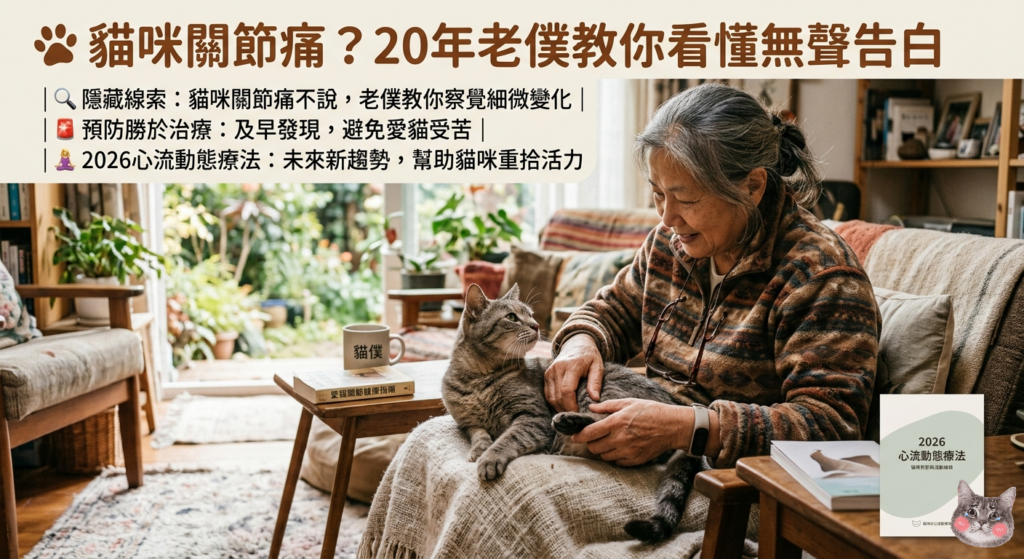
當牠的跳躍不再輕盈:20年老僕解密貓咪關節疼痛的無聲告白與2026年心流動態療法新哲學
When Her Jumps Are No Longer Effortless: A 20-Year Cat Servant Deciphers the Silent Confession of Feline Joint Pain and the 2026 Flow-State Dynamic Therapy New Philosophy
清晨的陽光透過窗簾的縫隙,斑駁地灑落在熟悉的客廳地板上。我的老夥計,橘白貓咪「Mochi」,曾經是家中最靈活的舞者,一躍而上書櫃頂,輕巧地像一片羽毛。但現在,那曾經充滿力量的弧線,卻被一種小心翼翼、略顯猶豫的姿態取代。牠緩慢地、一層一層地跳上沙發,背部弓起,落下時不再是無聲的著陸,而是伴隨著一聲輕微的、似有若無的「碰」。我坐在地板上,輕撫著牠溫熱的背脊,感受著那熟悉的、規律的呼吸。牠轉過頭,翠綠色的眼睛望著我,眼神中透著一絲不易察覺的疲憊與依賴。那眼神彷彿在說:「老僕,我感覺有些不一樣了,但不知道怎麼告訴你。」這份無聲的求助,刺痛了我的心。這不是單純的老去,這是一種隱而不顯的痛苦,一種連牠自己也難以名狀的關節不適。二十年的相伴,讓我學會了讀懂牠們的每一絲顫動、每一個眼神、每一次呼吸的輕重。我知道,Mochi正在無聲地忍受著,而我的任務,就是成為牠的聲音,找到讓牠重新輕盈舞動的方法。
The morning sun, dappled through the blinds, cast fragmented patterns on the familiar living room floor. My old companion, the orange-and-white cat “Mochi,” was once the most agile dancer in our home, leaping onto the top of the bookshelf with the lightness of a feather. But now, that once powerful arc has been replaced by a cautious, slightly hesitant demeanor. She slowly, step-by-step, climbs onto the sofa, her back arched, and her landing is no longer silent, but accompanied by a faint, almost imperceptible “thump.” I sit on the floor, gently stroking her warm back, feeling the familiar, rhythmic breathing. She turns her head, her emerald eyes looking at me, with a hint of fatigue and dependence that is hard to notice. That look seemed to say, “Old servant, I feel a little different, but I don’t know how to tell you.” This silent plea stung my heart. This isn’t just simple aging; this is a hidden, subtle pain, a joint discomfort that even she finds hard to articulate. Twenty years of companionship have taught me to read every tremor, every glance, every nuance of their breathing. I know Mochi is silently enduring, and my task is to be her voice, to find a way for her to dance lightly again.
【深度行為解碼】
Cats, these natural hunters and climbers, inherently place high-intensity stress on their musculoskeletal system. Their astonishing jumping ability, flexible spines, and silent landings all depend on healthy joint cartilage, synovial fluid, and ligaments. However, with the passage of time, especially in middle-aged to older cats (around 7 years old and up), degenerative joint diseases, such as Osteoarthritis (OA), stealthily appear. This is a chronic, progressive disease where cartilage gradually wears down, leading to direct bone-on-bone friction, causing inflammation, pain, and restricted movement. Unlike dogs, cats are masters at hiding pain; they won’t cry out or limp as obviously as dogs. Their pain manifestations are often extremely subtle, making it difficult for many owners to detect.
從行為學角度來看,當貓咪感到關節疼痛時,牠們會自動調整行為模式以減少不適。這包括:減少跳躍高度和頻率(例如不再跳上平常喜歡的高處,或需要更多次嘗試才能跳上去)、使用更為「階梯式」或「緩慢」的跳躍方式、 grooming減少(因為某些姿勢會引起疼痛)、攻擊性增加(因為疼痛讓牠們易怒)、排泄習慣改變(因進入貓砂盆姿勢困難)、甚至躲藏起來。牠們可能會避免某些動作,或在進行這些動作時顯得僵硬、遲疑。這些都是牠們在用無聲的語言,訴說著身體的不適。了解這些微小的行為變化,是早期發現並介入關節問題的關鍵。近年來的研究更指出,長期且未被妥善管理的疼痛,會導致貓咪產生慢性壓力,進而影響其整體生活品質與免疫系統。因此,將關節照護納入日常,已不僅是提升舒適度,更是維護其身心健康的必要環節。
From a behavioral perspective, when cats experience joint pain, they automatically adjust their behavior patterns to reduce discomfort. This includes: reducing jumping height and frequency (e.g., no longer jumping to their usual favorite high spots, or requiring more attempts to jump up), adopting a more “stair-step” or “slow” jumping style, reduced grooming (as certain postures cause pain), increased aggression (because pain makes them irritable), changes in elimination habits (due to difficulty getting into the litter box), and even hiding. They may avoid certain movements or appear stiff and hesitant when performing them. These are all ways they use silent language to communicate physical discomfort. Understanding these minute behavioral changes is key to early detection and intervention for joint problems. Recent studies further indicate that chronic and poorly managed pain can lead to chronic stress in cats, subsequently affecting their overall quality of life and immune system. Therefore, incorporating joint care into daily routines is not just about improving comfort, but also an essential part of maintaining their physical and mental well-being.
【貓奴實戰心法】
1. **環境改造心法:打造無障礙「階梯式」生活空間**
* **提供多層跳躍平台:** 在貓咪常跳的窗台、沙發旁、床邊,增設穩定、防滑的低矮踏板、小矮凳或斜坡板。例如,為牠們提供一組高度逐漸升高的「貓咪樓梯」,讓牠們不需高難度跳躍也能到達高處。高度差控制在30公分以內為佳。
* **加高貓砂盆邊緣或選用低邊盆:** 確保貓咪能輕鬆進出貓砂盆,避免因抬腿困難而忍尿或在外面排泄。市售的「長照貓砂盆」或自製的低邊收納箱都是不錯的選擇。
* **防滑地墊鋪設:** 在牠們常活動的區域鋪設防滑地墊或小地毯,減少跳下時的衝擊力,並避免滑倒。
* **溫暖舒適的睡眠區:** 提供記憶棉或矯形貓床,墊高離地,遠離風口,幫助緩解關節壓力,提供更好的保暖。
2. **飲食營養支持:精準補充「關節建築師」**
* **優質關節保健品:** 選擇含有葡萄糖胺 (Glucosamine)、軟骨素 (Chondroitin)、MSM (Methylsulfonylmethane)、Omega-3脂肪酸(尤其是EPA和DHA)的貓咪專用保健品。葡萄糖胺和軟骨素是軟骨的重要組成部分,有助於維持軟骨健康;Omega-3則具有強效的抗炎作用。請務必諮詢獸醫後選購。
* **控制理想體重:** 過重會增加關節負擔。與獸醫討論制定合理的減重計畫,包括低熱量、高蛋白的處方糧,並搭配溫和運動。
* **提供濕糧:** 確保足夠的水分攝取,有助於維持關節滑液的潤滑。
3. **溫和物理治療與輔助療法:**
* **輕柔按摩:** 每日輕輕按摩貓咪的四肢關節和脊椎,促進血液循環。觀察牠的反應,若有任何不適,請立即停止。
* **溫和被動運動:** 在貓咪放鬆時,輕柔地彎曲和伸展牠的關節,保持每個動作幾秒鐘,每天重複幾次。這有助於維持關節的活動度。
* **雷射治療或針灸:** 在獸醫的建議下,這些專業療法能有效緩解疼痛、促進修復。
When we notice our cat’s jumps are no longer effortless, we must immediately activate the “Flow-State Dynamic Therapy” mode, addressing joint health gently from three aspects: environment, diet, and auxiliary treatments.
1. **Environmental Modification Philosophy: Creating an Accessible “Stair-Step” Living Space**
* **Provide Multi-Level Jumping Platforms:** Install stable, non-slip low steps, small stools, or ramps near windowsills, sofas, and beds where your cat frequently jumps. For example, offer a set of “cat stairs” with gradually increasing heights, allowing them to reach high places without difficult jumps. Keep height differences within 30 cm.
* **Raise Litter Box Edges or Choose Low-Entry Pans:** Ensure your cat can easily enter and exit the litter box, preventing them from holding urine or eliminating outside due to difficulty lifting their legs. “Long-term care litter boxes” or DIY low-sided storage bins are good options.
* **Lay Non-Slip Mats:** Place non-slip mats or small rugs in frequently used areas to reduce impact when jumping down and prevent slipping.
* **Warm and Comfortable Sleeping Area:** Provide memory foam or orthopedic cat beds, elevated off the ground and away from drafts, to help relieve joint pressure and provide better warmth.
2. **Dietary Nutritional Support: Precisely Supplementing “Joint Architects”**
* **High-Quality Joint Supplements:** Choose cat-specific supplements containing Glucosamine, Chondroitin, MSM (Methylsulfonylmethane), and Omega-3 fatty acids (especially EPA and DHA). Glucosamine and chondroitin are vital components of cartilage, helping maintain cartilage health; Omega-3s have potent anti-inflammatory effects. Always consult your veterinarian before purchasing.
* **Maintain Ideal Weight:** Overweight cats put extra strain on their joints. Discuss a reasonable weight loss plan with your vet, including low-calorie, high-protein prescription diets, combined with gentle exercise.
* **Provide Wet Food:** Ensure adequate water intake, which helps maintain the lubrication of joint fluid.
3. **Gentle Physical Therapy and Auxiliary Treatments:**
* **Gentle Massage:** Gently massage your cat’s limb joints and spine daily to promote blood circulation. Observe her reaction; if there is any discomfort, stop immediately.
* **Gentle Passive Range of Motion Exercises:** When your cat is relaxed, gently bend and extend her joints, holding each movement for a few seconds, repeating several times a day. This helps maintain joint mobility.
* **Laser Therapy or Acupuncture:** Under veterinary advice, these professional therapies can effectively relieve pain and promote healing.
【智商稅警示】
**推薦替代方案:**
1. **獸醫推薦的處方級關節保健品:** 這些產品通常經過嚴格的臨床試驗,成分劑量足夠且生物利用率高,例如:https://www.amazon.com/dp/YOUR_PRODUCT_ID?tag=amberbrella-20Zoetis Rimadyl (處方藥需獸醫開立) 或 https://www.amazon.com/dp/YOUR_PRODUCT_ID?tag=amberbrella-20Dasuquin Advanced (非處方,但建議諮詢獸醫)。
2. **純淨的魚油補充劑:** 選擇人類食用級別、經過分子蒸餾去除重金屬的魚油,並確保EPA和DHA含量高,直接擠入食物中。務必計算劑量,避免過量。
There are countless “miracle” joint supplements on the market, many of which are overpriced with insufficient dosages or poor absorption, truly a “tax on intelligence.” For instance, some products claiming “XX patented formula” but lacking rigorous scientific validation are often sold at inflated prices. The truly effective ingredients widely recommended by veterinarians are glucosamine, chondroitin, MSM, and high-concentration Omega-3.
**Recommended Alternatives:**
1. **Veterinarian-recommended prescription-grade joint supplements:** These products typically undergo rigorous clinical trials, with sufficient ingredient dosages and high bioavailability. Examples include: https://www.amazon.com/dp/YOUR_PRODUCT_ID?tag=amberbrella-20Zoetis Rimadyl (prescription only, requires vet’s approval) or https://www.amazon.com/dp/YOUR_PRODUCT_ID?tag=amberbrella-20Dasuquin Advanced (non-prescription, but vet consultation is recommended).
2. **Pure fish oil supplements:** Choose human-grade fish oil that has been molecularly distilled to remove heavy metals, ensuring high EPA and DHA content. Squeeze directly into food. Be sure to calculate the dosage to avoid overconsumption.