
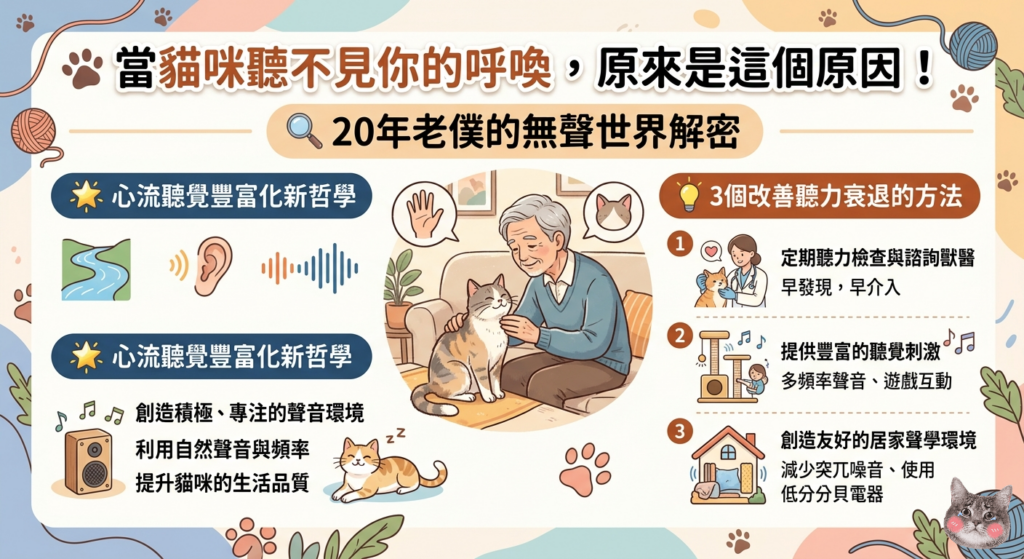
當貓咪的耳朵不再聽見你的呼喚:20年老僕解密聽力衰退的無聲世界與心流聽覺豐富化新哲學
When Your Cat No Longer Hears Your Call: A 20-Year Servant Deciphers the Silent World of Hearing Loss and the New Philosophy of Flow-State Auditory Enrichment
—
清晨的陽光透過窗簾的縫隙,輕輕落在牠的銀色毛皮上。過去,只要我一喊牠的名字,牠的耳朵總會像雷達一樣「嗶」的一聲轉向我,眼睛眯成一條線,然後優雅地踱步過來,尾巴高高翹起,像是要告訴我:「我聽見了,人類。」但最近,我注意到牠的反應不再那麼敏銳。有時候,我得拍拍手、踩踩地板,甚至走到牠面前,牠才會慢吞吞地抬起頭,眼神中帶著一絲困惑,好像在問:「你剛剛說了什麼?」
這種微妙的變化,最初我以為牠只是分心,或者年紀大了變得愛理不理。但直到有一天,我無意中在牠睡覺時發出很大的聲響,牠卻絲毫沒有反應,我才突然意識到:牠的耳朵可能出問題了。那一刻,我的心像被什麼東西緊緊揪住。牠的世界,是否已經變成了一個無聲的島嶼?而我,是否錯過了牠無聲的求救?
20年來,我與牠共度了無數個日夜。牠見證了我的喜怒哀樂,而我也守護了牠的每一個呼吸。但現在,我突然發現,我們之間的溝通,可能已經被一道無形的牆隔開。牠不再聽見我的呼喚,但牠的眼神依舊溫柔,依舊依賴。我需要重新學習如何與牠對話,不只是用聲音,還要用心。
—
The morning sunlight filters through the gaps in the curtains, gently resting on her silver fur. In the past, whenever I called her name, her ears would turn toward me like a radar with a soft *beep*, her eyes narrowing into a line before she’d gracefully saunter over, tail held high, as if to say, *“I heard you, human.”* But lately, her reactions have dulled. Sometimes, I have to clap my hands, stomp the floor, or even walk right up to her before she slowly lifts her head, her expression tinged with confusion, as if asking, *“What did you just say?”*
At first, I thought she was just distracted or had grown indifferent with age. But one day, I accidentally made a loud noise while she was sleeping, and she didn’t react at all. That was the moment my heart tightened. Had her world already become a silent island? Had I missed her silent cry for help?
For 20 years, she and I have shared countless days and nights. She has witnessed my joys and sorrows, and I have guarded every breath she takes. But now, I realize that an invisible wall might be growing between us. She no longer hears my calls, but her gaze remains gentle and trusting. I need to relearn how to communicate with her—not just with my voice, but with my heart.
—
【深度行為解碼】
但聽力衰退不僅僅是生理上的問題,它還深深影響著貓咪的心理狀態。貓咪是高度依賴聽覺的動物,聽力的喪失會讓牠們感到焦慮、困惑,甚至恐懼。試想,如果你忽然發現世界變得安靜,原本熟悉的聲音(比如主人的腳步聲、食物罐頭打開的聲音)不再存在,你會如何適應?貓咪也是如此。牠們可能變得更加警惕,或者反而變得漠不關心,因為牠們無法確定聲音的來源或意義。
此外,聽力衰退還可能導致貓咪的行為改變。例如,牠們可能不再響應你的呼喚,或者對突然的聲音(比如門鈴聲)產生過度驚嚇反應。這些行為變化往往被主人誤解為貓咪變得「不聽話」或「老了」,而實際上,牠們只是在應對一個對牠們來說全新且陌生的世界。
從行為學的角度來看,聽力衰退的貓咪可能會轉而依賴其他感官來補償。例如,牠們可能更依賴視覺或觸覺,比如觀察你的手勢或感受地板的振動。這就是為什麼有些聽力受損的貓咪會變得更「粘人」,因為牠們需要通過接觸來確認你的存在。
—
Feline hearing loss is a gradual process, particularly affecting middle-aged or senior cats. According to studies in animal behavior, a cat’s hearing range originally spans from 20Hz to 64kHz, far exceeding the human range of 20Hz to 20kHz. This allows them to detect high-frequency sounds, such as the squeaks of mice or the fluttering of insect wings. However, as cats age, their hearing deteriorates, with high-frequency sounds being the first to fade. This change often begins with damage or death of the hair cells in the inner ear, which disrupts the transmission of sound signals to the brain.
But hearing loss isn’t just a physical issue—it profoundly affects a cat’s psychological state. Cats are highly reliant on their auditory senses, and losing this ability can lead to anxiety, confusion, and even fear. Imagine if the familiar sounds of your world—like your owner’s footsteps or the sound of a can opener—suddenly disappeared. How would you adapt? Cats face the same dilemma. They may become more vigilant or, conversely, indifferent, as they struggle to interpret the source or meaning of sounds.
Additionally, hearing loss can lead to behavioral changes. For example, a cat may no longer respond to your calls or may startle excessively at sudden noises, like a doorbell. These changes are often misinterpreted by owners as the cat becoming “disobedient” or “old,” when in reality, they are simply navigating a new and unfamiliar world.
From a behavioral perspective, cats with hearing loss may compensate by relying more on other senses, such as vision or touch. For instance, they might watch your gestures more closely or feel vibrations through the floor. This is why some hearing-impaired cats become more affectionate—they seek physical contact to confirm your presence.
—
【貓奴實戰心法】
1. **視覺信號的建立**
開始使用手勢或燈光來取代聲音。例如,每次喂食時,可以打開厨房的燈,或者用手勢(比如揮手或指向食物碗)來吸引牠的注意。久而久之,牠會學會將這些視覺信號與特定活動聯繫起來。
2. **觸覺溝通**
經常用手輕輕觸碰牠的身體,讓牠感受到你的存在。例如,在牠睡覺時,可以輕輕抚摸牠的背部,或者在牠醒著時,用手指輕輕點觸牠的鼻子。這樣牠會學會通過觸覺來確認你的位置和意圖。
3. **環境改造**
為牠創造一個安全且易於導航的環境。避免頻繁改變家具的位置,因為牠可能依賴記憶和觸覺來移動。你可以在牠經常活動的區域鋪設地毯或墊子,這樣牠可以通過腳底的觸感來確定方位。
4. **振動的利用**
有些貓咪雖然聽不見高頻率的聲音,但仍能感受到低頻率的振動。例如,你可以輕輕踩踏地板,或者使用振動玩具,來吸引牠的注意。這種方法對於聽力嚴重受損的貓咪尤為有效。
5. **耐心和一致性**
重建溝通方式需要時間和耐心。每次與牠互動時,都要使用相同的手勢或信號,避免混淆牠。例如,如果你決定用揮手來代表「過來」,那麼每次都要使用相同的動作,直到牠完全理解。
6. **定期健康檢查**
定期帶牠去獸醫那裡進行聽力檢查,以確保聽力衰退不是由其他健康問題(如耳道感染或腫瘤)引起的。獸醫可能會建議使用聽力輔助設備,雖然這對貓咪來說較為罕見,但某些特殊設計的助聽器可能有助於改善牠的生活品質。
—
After noticing your cat’s hearing loss, it’s essential to rebuild the way you communicate with her. Here’s my 20 years of hands-on experience caring for hearing-impaired cats, which I hope will help you reconnect with your feline friend:
1. **Establish Visual Signals**
Start using gestures or lights to replace sounds. For example, turn on the kitchen light every time you feed her, or use hand signals (like waving or pointing at the food bowl) to get her attention. Over time, she’ll associate these visual cues with specific activities.
2. **Tactile Communication**
Frequently touch her gently to let her feel your presence. For instance, stroke her back lightly when she’s asleep, or tap her nose softly when she’s awake. This helps her learn to confirm your location and intentions through touch.
3. **Environmental Adaptations**
Create a safe and easy-to-navigate environment for her. Avoid rearranging furniture frequently, as she may rely on memory and tactile feedback to move around. You can also place rugs or mats in her favorite areas to help her orient herself through the sensation under her paws.
4. **Use Vibrations**
Some cats, even with high-frequency hearing loss, can still sense low-frequency vibrations. For example, stomp the floor lightly or use vibrating toys to get her attention. This method is particularly effective for cats with severe hearing loss.
5. **Patience and Consistency**
Rebuilding communication takes time and patience. Use the same gestures or signals every time you interact with her to avoid confusion. For example, if you decide that waving means “come here,” use the same motion consistently until she fully understands.
6. **Regular Health Checkups**
Schedule regular vet visits to monitor her hearing and ensure that the loss isn’t caused by other health issues, such as ear infections or tumors. In some cases, your vet might recommend hearing aids, though these are rare for cats. Specialized devices may help improve her quality of life.
—
【智商稅警示】
真正有效的替代方案是**環境豐富化**(Environmental Enrichment)。你不需要花大錢買昂貴的玩具或設備,只需要利用家中的現有資源,為牠創造一個刺激多感官的環境。例如:
– **自製振動玩具**:在一個小盒子裡放入一個振動馬達(可以從舊手機或按摩器中拆卸),然後包裹上柔軟的布料,製成一個簡單的振動玩具。這可以幫助牠感受到振動,從而吸引牠的注意。
– **多感官互動**:使用帶有不同質地的玩具(如毛茸茸的、光滑的、粗糙的),讓牠通過觸覺來探索世界。這不僅能補償聽力的不足,還能豐富牠的生活體驗。
如果你希望投資一個真正有用的產品,我推薦**貓咪振動項圈** (https://www.amazon.com/dp/YOUR_PRODUCT_ID?tag=amberbrella-20)。這種項圈可以發出輕微的振動,幫助你在需要時吸引牠的注意,而不需要依賴聲音。它的價格合理,且經過專業設計,不會對牠造成不適。
—
Many expensive products on the market claim to “cure” feline hearing loss, such as so-called “cat hearing aids” or “hearing supplements.” However, most cases of hearing loss, especially age-related sensorineural hearing loss, are irreversible. These products often provide nothing more than psychological comfort without delivering real results.
A truly effective alternative is **environmental enrichment**. You don’t need to spend a fortune on fancy toys or equipment—just use what you already have at home to create a multi-sensory environment for your cat. For example:
– **DIY Vibrating Toy**: Place a small vibration motor (salvaged from an old phone or massager) inside a small box, wrap it in soft fabric, and you’ve got a simple vibrating toy. This can help your cat sense vibrations and capture her attention.
– **Multi-Sensory Interaction**: Use toys with different textures (fluffy, smooth, rough) to let her explore the world through touch. This not only compensates for hearing loss but also enriches her life experience.
If you’re looking to invest in a genuinely useful product, I recommend a **vibrating cat collar** (https://www.amazon.com/dp/YOUR_PRODUCT_ID?tag=amberbrella-20). This collar emits a gentle vibration to help you get her attention when needed, without relying on sound. It’s reasonably priced and professionally designed to ensure comfort for your cat.
—