
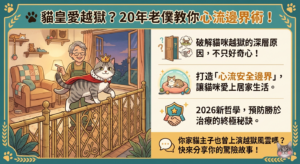
繁體中文:當牠渴望的不只是窗外風景:20年老僕解密貓咪「越獄衝動」的無聲召喚與2026心流安全邊界新哲學
英文:When Her Longing Transcends the Window View: A 20-Year Cat Servant Unveils the Silent Call of Feline “Escape Impulses” and the 2026 Flow-State Secure Boundary Philosophy
繁體中文:
清晨的微光透過窗簾的縫隙,輕柔地灑落在客廳的地板上。我心愛的橘貓,米糕,像一團融化的奶油,正舒適地窩在沙發的一角,發出滿足的呼嚕聲。牠溫熱的呼吸規律而平穩,柔軟的毛髮隨著每一次呼吸輕微起伏,那雙琥珀色的眼睛,即便此刻閉著,我也能感受到其中深藏的信賴與愛意。然而,這份靜謐的幸福,在宅配員敲響大門的那一刻,總會被無情地打破。米糕會像一道橘色的閃電,從沙發上一躍而起,目標直指那扇通往「未知世界」的大門。我還來不及反應,牠小巧的身軀就已經靈活地鑽過我的腿邊,試圖擠出門縫。那一刻,我的心總會瞬間揪緊,腦海中飛速閃過無數個擔憂的畫面:車來車往的馬路、陌生狗狗的威脅、甚至只是迷失在複雜的巷弄中。那並不是米糕第一次嘗試「越獄」。二十年來,我見證了無數貓咪與這扇「戶外之門」的愛恨情仇。有些貓咪只是好奇,探個頭就心滿意足;有些則像米糕,內心深處似乎有一股難以抑制的原始召喚,驅使牠們一次又一次地挑戰家門的界線。我記得有一年冬天,我的一個朋友的貓,因為主人一時疏忽,從半開的窗戶跳了出去,結果在寒風中瑟瑟發抖了一夜,雖然最後安全尋回,但那份心焦與自責,至今仍讓我記憶猶新。對我們這些視貓咪如子的老僕而言,牠們每一次在門口的徘徊與躍動,都像是一場無聲的告白,訴說著牠們對自由的嚮往,卻也同時敲打著我們對牠們安危的擔憂。牠們眼神中那份複雜的情緒——是渴望?是衝動?還是單純的探險欲?這一切都讓我迫切地想要深入理解,如何在守護牠們安全的同時,也能滿足牠們與生俱來的探索本能,讓牠們在室內的「心流安全邊界」中,活出最完整的貓生。
英文:
The faint morning light, filtering through the blinds, gently kissed the living room floor. My beloved ginger cat, Miso, curled up like a melted dollop of butter on the corner of the sofa, purring contentedly. Her warm breath was rhythmic and steady, her soft fur rising and falling with each inhale, and even with her amber eyes closed, I could feel the deep trust and affection hidden within. Yet, this serene happiness was inevitably shattered the moment the delivery person knocked on the front door. Miso would spring up from the sofa like an orange flash, her target fixed on that door leading to the “unknown world.” Before I could even react, her small body would deftly weave past my legs, attempting to slip through the opening. In that instant, my heart would clench, countless worries flashing through my mind: busy streets, the threat of strange dogs, or simply getting lost in complex alleyways.
This wasn’t Miso’s first “escape attempt.” Over twenty years, I’ve witnessed countless cats’ love-hate relationship with this “outdoor portal.” Some cats are merely curious, poking their heads out and feeling satisfied; others, like Miso, seem to have an irresistible primal call deep within them, driving them to challenge the boundaries of home again and again. I recall one winter when a friend’s cat, due to a momentary lapse in vigilance, jumped out of a half-open window and shivered in the cold night. Although safely recovered, the anxiety and self-reproach still resonate with me today. For us old servants who treat our cats as our children, every hesitation and darting movement at the door is like a silent confession, speaking of their yearning for freedom, while simultaneously tapping into our concern for their safety. The complex emotions in their eyes—is it longing? Is it impulse? Or simply a desire for adventure? All of this compels me to deeply understand how, while safeguarding their well-being, we can also fulfill their innate exploratory instincts, allowing them to live their fullest cat lives within an indoor “flow-state secure boundary.”
【深度行為解析】
貓咪的「越獄衝動」並非單純的叛逆或不愛家,其根源深深植入於牠們作為掠食者的原始本能與複雜的行為學機制之中。從生理層面來看,貓咪擁有極為敏銳的感官。牠們的嗅覺比人類靈敏數十倍,能夠嗅到門外世界無數的氣味訊息:隔壁鄰居貓的領地標記、飄散而過的新奇美食氣息、甚至是風中帶來的一絲泥土芬芳。這些嗅覺刺激對牠們而言,就像一張充滿未知的地圖,誘惑力無窮。聽覺更是不用說,牠們能聽到遠方微小的鳥鳴、昆蟲的振翅聲,甚至我們無法察覺的高頻音,這些聲音都在無形中呼喚著牠們去探索。視覺方面,快速移動的物體,如樹葉的擺動、行人的身影,都能瞬間激活牠們的狩獵本能。行為學上,貓咪的行為模式受「領域性」和「狩獵本能」雙重驅動。對一隻室內貓而言,家的範圍便是牠的「核心領域」。然而,這並不代表牠們對核心領域之外的世界沒有好奇。恰恰相反,門外那廣闊的天地,是潛在的狩獵場、是未知的探險地,更是異性貓咪的氣味來源。在野外,貓咪需要不斷地巡邏、狩獵、尋找伴侶,這些行為是牠們生存的基礎。即使是家貓,這些深植於基因裡的程式碼依然存在。當室內環境無法充分提供足夠的刺激和挑戰時,這種內在的「渴望」便會被門外世界的「新奇」無限放大。
更深層次來說,貓咪的「越獄」行為也可能是一種壓力或無聊的表現。如果室內環境貧乏,缺乏足夠的垂直空間、抓磨柱、互動玩具或新奇氣味,貓咪便可能感到「心流停滯」。貓咪在狩獵和探索時,會進入一種「心流狀態」,專注、愉悅且充滿成就感。如果牠們長時間無法體驗到這種心流,便會感到焦慮、沮喪,進而尋求刺激。而最直接、最容易感知到的刺激,往往就是那扇通往戶外的大門。牠們並不是想「離家出走」,而是本能地在尋找一種能讓自己「活起來」的活動,一扇門恰好成了這種本能驅動的出口。了解這些,我們才能從根本上解決問題,而非僅僅是阻止牠們的行動。
英文:
A cat’s “escape impulse” is not simply rebellion or a dislike for home; its roots are deeply embedded in their primitive predatory instincts and complex behavioral mechanisms. Physiologically, cats possess extremely keen senses. Their sense of smell is tens of times more acute than humans’, allowing them to detect countless scent messages from the world outside the door: the territorial markings of a neighboring cat, the alluring aroma of novel food wafting by, or even a hint of earthy fragrance carried on the wind. For them, these olfactory stimuli are like an infinite, uncharted map, endlessly enticing. Their hearing, needless to say, is even more remarkable; they can hear faint bird songs from afar, the buzzing of insects’ wings, and even high-frequency sounds imperceptible to us, all subtly beckoning them to explore. Visually, rapidly moving objects, such as swaying leaves or passing pedestrians, can instantly activate their hunting instincts.
Behaviorally, a cat’s actions are driven by both “territoriality” and “hunting instincts.” For an indoor cat, the confines of the home constitute its “core territory.” However, this doesn’t mean they lack curiosity about the world beyond this core. On the contrary, the vast outdoor environment is a potential hunting ground, an unknown adventure land, and a source of scents from potential mates. In the wild, cats constantly patrol, hunt, and seek partners; these behaviors are fundamental to their survival. Even for domestic cats, these deeply ingrained genetic codes persist. When the indoor environment fails to provide sufficient stimulation and challenge, this inherent “longing” is infinitely amplified by the “novelty” of the outside world.
On a deeper level, a cat’s “escape” behavior can also be a manifestation of stress or boredom. If the indoor environment is impoverished, lacking sufficient vertical space, scratching posts, interactive toys, or novel scents, the cat may experience “flow-state stagnation.” Cats enter a “flow state” during hunting and exploration—focused, joyful, and deeply satisfied. If they are unable to experience this flow for extended periods, they become anxious and frustrated, subsequently seeking stimulation. The most immediate and easily perceived stimulation is often the door leading outdoors. They aren’t trying to “run away from home”; rather, they are instinctively searching for an activity that makes them “feel alive,” and a door merely becomes an outlet for this instinctual drive. Understanding these underlying reasons allows us to address the problem fundamentally, rather than merely thwarting their attempts.
【老僕實戰心法】
解決貓咪的「越獄衝動」需要一套系統性且充滿愛的策略,絕非單純喝止或懲罰。核心理念是:在保障安全的基礎上,滿足牠們的本能需求,並重塑牠們對「門」的認知。**1. 環境豐富化:打造室內「心流棲息地」**
這是根本。首先,提供足夠的垂直空間:貓樹、牆壁層板、書櫃頂端,讓牠們能登高望遠,模擬戶外巡邏的視野。其次,互動式玩具不可少:費洛蒙玩具、雷射筆(適度使用,避免沮喪)、貓草玩具、自動逗貓機等,每天至少安排兩次,每次15-20分鐘的「模擬狩獵」遊戲,讓牠們成功捕獲「獵物」,體驗心流。最後,嗅覺刺激:將貓薄荷、貓草噴霧或少量無毒植物藏在不同位置,讓牠們嗅聞探索。每週輪換玩具,保持新鮮感。
**2. 訓練「門口禮儀」:建立條件反射**
這需要耐心和獎勵。
* **「等待」指令:** 在靠近門口前,先讓貓咪坐下或趴下,給予獎勵(零食、摸摸)。重複練習,直到牠能安靜等待。
* **「門禁區」概念:** 每次開門時,在門後約一公尺處放置一個清晰的界線(例如一條地毯或一個小柵欄),讓貓咪明白這條線是不能跨越的。當牠想越界時,輕輕推回並重複「等待」指令。成功後重獎。
* **「關門訓練」:** 在你開門前,讓貓咪保持在安全距離。如果你需要開門,而貓咪衝了過去,不要追趕或大叫,直接關上門(確保不會夾到貓)。當牠回到安全距離,你再重新嘗試開門。貓咪很快會將「衝向門口」與「門立刻關閉」連結起來。
**3. 物理屏障與替代方案:**
* **雙重門設計:** 如果條件允許,在玄關處設置一道安全門或寵物閘門,形成「氣閘」效果,大大降低越獄風險。
* **牽繩訓練:** 循序漸進地讓貓咪習慣牽繩和胸背帶。先在家中穿戴幾分鐘,逐步延長時間,並結合零食獎勵。一旦適應,可以在安全的室內或陽台進行短暫的「戶外探索」,滿足牠們的好奇心,但必須嚴格監護。
* **貓咪外用籠(Catio):** 這是一個長期且最理想的解決方案。在陽台或窗外搭建安全的、封閉的網格空間,讓貓咪在完全安全的環境中享受新鮮空氣、陽光和戶外景色,真正體驗到「戶外」的心流樂趣。
**4. 解決潛在壓力源:** 確保貓砂盆數量足夠、清潔,食水充足且新鮮。環境中是否有讓牠們感到不安的因素(噪音、陌生訪客、其他寵物)?找出並減輕這些壓力,有助於穩定貓咪情緒,減少越獄衝動。
英文:
Solving a cat’s “escape impulse” requires a systematic and loving strategy, never merely scolding or punishing. The core philosophy is to satisfy their innate needs while ensuring safety, and to reframe their perception of “the door.”
**1. Environmental Enrichment: Creating an Indoor “Flow-State Habitat”**
This is fundamental. First, provide ample vertical space: cat trees, wall shelves, the tops of bookshelves, allowing them to survey their domain from high vantage points, mimicking outdoor patrol views. Second, interactive toys are essential: pheromone toys, laser pointers (use moderately to avoid frustration), catnip toys, automatic interactive toys, etc. Schedule at least two “simulated hunting” play sessions daily, each lasting 15-20 minutes, allowing them to successfully “catch prey” and experience a flow state. Lastly, olfactory stimulation: hide catnip, catnip spray, or small amounts of non-toxic plants in different locations for them to sniff and explore. Rotate toys weekly to maintain novelty.
**2. Training “Door Manners”: Establishing Conditioned Reflexes**
This requires patience and positive reinforcement.
* **”Wait” Command:** Before approaching the door, have your cat sit or lie down, then reward them (treats, petting). Repeat this practice until they can wait calmly.
* **”No-Go Zone” Concept:** Each time you open the door, place a clear boundary (e.g., a rug or small gate) about one meter behind it, making it clear to the cat that this line cannot be crossed. When they attempt to cross it, gently guide them back and repeat the “wait” command. Reward heavily upon success.
* **”Door Closing Training”:** Keep your cat at a safe distance before you open the door. If you open the door and the cat dashes, do not chase or yell; simply close the door immediately (ensuring not to catch the cat). Once they return to a safe distance, retry opening the door. Cats will quickly associate “rushing the door” with “the door immediately closing.”
**3. Physical Barriers and Alternative Solutions:**
* **Double-Door Design:** If feasible, install a safety gate or pet barrier in your entryway, creating an “airlock” effect that significantly reduces escape risks.
* **Leash Training:** Gradually accustom your cat to a leash and harness. Start by having them wear it for a few minutes at home, slowly extending the time, and incorporating treat rewards. Once accustomed, you can conduct brief “outdoor explorations” in a safe, supervised indoor area or balcony to satisfy their curiosity, but strict supervision is paramount.
* **Catio (Cat Patio):** This is a long-term and ideal solution. Construct a safe, enclosed mesh space on your balcony or outside a window, allowing your cat to enjoy fresh air, sunlight, and outdoor sights in a completely secure environment, truly experiencing the “flow-state” joy of the outdoors.
**4. Address Underlying Stressors:** Ensure litter boxes are sufficient in number and cleanliness, and that food and water are plentiful and fresh. Are there factors in the environment causing them unease (noise, unfamiliar visitors, other pets)? Identify and mitigate these stressors to help stabilize your cat’s emotions and reduce the urge to escape.
【智商稅警示區】
在解決貓咪「越獄衝動」的過程中,市面上充斥著許多價格不菲但效果不彰的產品,成為飼主們的「智商稅」。例如,某些號稱「防越獄」的電擊項圈或噴霧項圈,不僅違反動物福利,對貓咪的心靈造成創傷,更無法從根本上解決牠們行為背後的驅動力。高價位的、設計過於複雜或材質不透氣的胸背帶,也可能讓貓咪感到極度不適,反而增加牠們對外出訓練的抗拒。真正能解決問題的,往往是樸實卻有效的方案。我強烈推薦:
1. **安全可靠的寵物閘門或嬰兒門 [AFFILIATE_LINK]:** 投資一個堅固且高度足夠的寵物閘門,在玄關處形成一個緩衝區。這比任何花哨的「訓練工具」都更直接、更有效,能物理性地阻擋衝刺。選擇金屬材質且安裝牢固的款式,避免貓咪輕易跳過或推開。
2. **多功能貓樹或牆壁層板組合 [AFFILIATE_LINK]:** 這是一筆值得的投資,它提供了貓咪最渴望的垂直空間和高處視野,能顯著提升室內環境的豐富性,滿足牠們的探索和領域性需求,讓牠們不再覺得戶外是唯一的刺激來源。選擇穩固、材質耐抓且易於清潔的設計。
這些產品或許不像某些「高科技」產品那樣引人注目,但它們從貓咪的生理和行為需求出發,以最溫和、最有效的方式,為牠們構築一個既安全又充滿樂趣的室內「心流安全邊界」。
英文:
In the process of resolving a cat’s “escape impulse,” the market is saturated with many expensive yet ineffective products that become a “wisdom tax” for owners. For example, some “escape-proof” shock collars or spray collars not only violate animal welfare and traumatize cats but also fail to address the underlying drive behind their behavior. High-priced, overly complex, or non-breathable harnesses can also cause extreme discomfort for cats, increasing their resistance to leash training.
The truly effective solutions are often simple yet powerful. I highly recommend:
1. **Secure and reliable pet gates or baby gates [AFFILIATE_LINK]:** Invest in a sturdy and sufficiently tall pet gate to create a buffer zone in your entryway. This is more direct and effective than any fancy “training tool,” physically blocking their dashes. Choose metal models that are securely installed to prevent cats from easily jumping over or pushing them open.
2. **Multi-functional cat trees or wall shelf systems [AFFILIATE_LINK]:** This is a worthwhile investment. It provides the vertical space and high vantage points cats crave most, significantly enriching the indoor environment and satisfying their exploratory and territorial needs, making them feel that the outdoors is no longer the sole source of stimulation. Opt for stable, scratch-resistant, and easy-to-clean designs.
These products may not be as flashy as some “high-tech” gadgets, but they address cats’ physiological and behavioral needs, constructing a safe and joyful indoor “flow-state secure boundary” for them in the gentlest and most effective way.