
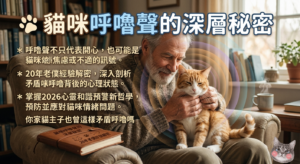
當呼嚕聲不再只是甜蜜的歌謠:20年老僕解密貓咪矛盾呼嚕的深層密語與2026心靈和諧預警新哲學
When a Purr is More Than a Sweet Song: A 20-Year Cat Servant Deciphers the Deep Language of the Paradoxical Purr and the 2026 New Philosophy of Feline Emotional Harmony & Early Warning
清晨的微光透過窗簾,溫柔地灑落在米白色沙發上,我的老貓「橘子」正蜷縮在我身旁,發出那熟悉的、低沉而規律的呼嚕聲。那聲響,曾經是我最安心的早晨BGM,是無數個日夜裡,牠在我膝頭依偎時,給予我最深沉的愛與信任的證明。我輕撫著牠柔軟的毛髮,感受著牠小小的身軀隨著每一次震動而起伏,心中滿是溫暖。然而,就在這份熟悉的溫馨中,一絲細微的違和感悄然浮現。橘子的呼嚕聲,比以往任何時候都更加頻繁,甚至在我觸碰到牠後腰時,那震動會驟然加劇,眼神中也隱約透露出些許不安。牠的食慾似乎沒有明顯變化,日常活動也看似如常,但那股「不對勁」的直覺,身為20年老僕的我,卻怎麼也揮之不去。我開始在牠熟睡時悄悄觀察,發現牠在轉換姿勢時,動作會略顯僵硬;跳上窗台時,那曾經輕盈的身影,也多了一絲猶豫。這些細微到幾乎可以被忽略的變化,像無聲的警報,在我心頭敲響。我回想起過往照顧的其他貓咪,也曾有過類似的「矛盾呼嚕」:有些在受傷後仍堅持發出呼嚕聲,有些在看獸醫的緊張時刻,呼嚕聲反而更響亮。這些經歷讓我深知,貓咪的呼嚕聲,遠不只是滿足和快樂的代名詞。它是一個複雜的生理機制,承載著貓咪豐富的情緒與生理需求,有時,它甚至是貓咪在面對不適、焦慮,甚至疼痛時,自我療癒、尋求安慰的本能表現。當這份甜蜜的「歌謠」變得過於頻繁、或伴隨著其他細微的行為變化時,它就不再是單純的幸福訊號,而是牠向我們發出的、深層次的「求救」信號。身為老僕,我們的職責便是學會傾聽這些無聲的語言,解讀這些矛盾的訊息,才能真正走進牠們的內心世界,給予最及時且溫柔的照護。The gentle morning light filtered through the curtains, softly illuminating the cream-colored sofa where my old cat, Orange, lay curled beside me, emitting that familiar, deep, and rhythmic purr. That sound used to be my most reassuring morning background music, proof of the profound love and trust it gave me during countless days and nights nestled on my lap. I gently stroked its soft fur, feeling its small body rise and fall with each vibration, my heart filled with warmth. Yet, amidst this familiar comfort, a subtle sense of incongruity quietly emerged. Orange’s purr was more frequent than ever, and when I touched its lower back, the vibration would suddenly intensify, its eyes subtly revealing a hint of unease. Its appetite seemed unchanged, and daily activities appeared normal, but that nagging feeling of “something’s not right,” as a 20-year veteran servant, I just couldn’t shake off. I began to quietly observe it while it slept, noticing that its movements were slightly stiff when changing positions; jumping onto the windowsill, its once agile figure now showed a hint of hesitation. These subtle changes, almost negligible, rang like silent alarms in my heart. I recalled other cats I had cared for in the past who also exhibited similar “paradoxical purrs”: some continued to purr after injuries, others purred even louder during anxious vet visits. These experiences taught me that a cat’s purr is far more than just a synonym for satisfaction and happiness. It’s a complex physiological mechanism carrying the cat’s rich emotions and physiological needs. Sometimes, it’s even a primal expression of self-healing and seeking comfort when a cat faces discomfort, anxiety, or even pain. When this sweet “song” becomes overly frequent, or is accompanied by other subtle behavioral changes, it is no longer a simple signal of happiness, but a deeper “cry for help” from them. As devoted servants, our duty is to learn to listen to these silent languages, decipher these contradictory messages, to truly enter their inner world, and provide the most timely and gentle care.
【深度行為解析】
【老僕實戰心法】
第三,進行「輕柔觸診」。在貓咪放鬆時,輕輕撫摸牠們的全身,觀察牠們對觸摸的反應。如果觸碰到特定部位時,呼嚕聲突然加劇,或牠們出現閃躲、肌肉緊繃,甚至攻擊性反應,這強烈暗示該部位可能存在不適或疼痛。例如,很多貓咪在關節炎發作時,會對後腰或關節處的觸摸表現出抗拒。
第四,創造「心流寧靜空間」。對於因為焦慮或壓力而過度呼嚕的貓咪,提供一個安靜、隱蔽且安全的「避難所」至關重要。這個空間應該讓牠們感到完全的掌控和安全,例如在較高的貓爬架上提供一個封閉的貓窩,或者在安靜的角落放置一個洞穴式貓床。同時,使用貓咪費洛蒙擴散器(如Feliway)可以幫助緩解環境壓力,營造更平靜的氛圍。
最後,若有任何疑慮,請務必尋求專業獸醫的協助。告知獸醫你所觀察到的所有細節,包括呼嚕聲的變化以及伴隨的行為模式。獸醫可能會建議進行身體檢查、血液檢查、X光或超音波等進一步診斷,以排除潛在的生理問題。記住,早期發現和介入,是解決貓咪不適的關鍵。
Deciphering a cat’s “paradoxical purr” is an art and, more importantly, a science requiring careful observation and practice. First and foremost is establishing a detailed “behavioral log.” Daily, record the frequency and duration of your cat’s purring, along with any accompanying behaviors (e.g., changes in grooming, appetite, elimination habits, sleeping posture, jumping ability, and interactions with people or other pets). Compiling these seemingly fragmented pieces of information will help you identify patterns and anomalies.
Second, learn to observe your cat’s “whole body language.” If purring is accompanied by flattened ears, dilated pupils, a tucked or rapidly swishing tail, stiff or arched body, hissing, low growling, or even refusal to be touched, these could all be signs of stress or pain. Conversely, if its body is relaxed, ears are forward, pupils are normal, tail is gently swaying, and eyes are soft, then the purr most likely signifies contentment. Pay particular attention to their gait and posture; older cats or those in pain may develop a stiff, slow gait or avoid jumping.
Third, perform a “gentle palpation.” When your cat is relaxed, gently stroke its entire body, observing its reactions to your touch. If purring suddenly intensifies when a specific area is touched, or if they flinch, tense their muscles, or even show aggression, this strongly suggests discomfort or pain in that area. For example, many cats with arthritis will resist touch around their lower back or joints.
Fourth, create a “flow state sanctuary.” For cats purring excessively due to anxiety or stress, providing a quiet, secluded, and safe “refuge” is crucial. This space should make them feel completely in control and secure, such as an enclosed cat bed on a higher cat tree, or a cave-style bed placed in a quiet corner. Additionally, using a feline pheromone diffuser (like Feliway) can help alleviate environmental stress and create a calmer atmosphere.
Finally, if you have any doubts, always seek professional veterinary assistance. Inform the veterinarian of all the details you’ve observed, including changes in purring and accompanying behavioral patterns. The vet may recommend a physical examination, blood tests, X-rays, or ultrasound for further diagnosis to rule out underlying physiological issues. Remember, early detection and intervention are key to resolving your cat’s discomfort.
【智商稅警示區】
When faced with a cat’s “paradoxical purr,” the market is flooded with various expensive products claiming to “instantly solve anxiety or pain,” many of which are simply a waste of money. For instance, “emotional stability supplements” with unknown ingredients, or “energy collars” with exaggerated and unscientific claims, are unnecessary expenses. Cat behavioral problems usually require a multi-faceted approach addressing environmental, physiological, and psychological factors, rather than relying solely on some quick-fix product.
What truly solves problems and is worth investing in are basic yet effective tools. First, I recommend high-quality “feline pheromone diffusers” (e.g., Feliway Classic or Feliway Friends). These products mimic feline facial pheromones, helping cats feel more secure and relaxed in their environment, and are significantly effective in alleviating excessive purring caused by stress. Secondly, consider purchasing “probiotics or digestive health supplements specifically designed for cats” [AFFILIATE_LINK]. Many cats’ anxiety or discomfort might be related to gut health, and a healthy gut microbiome contributes to emotional stability and overall well-being. Choose products recommended by veterinarians, containing multiple probiotic strains, which can improve the cat’s physiological functions from within. These investments are not only more scientifically sound but also better align with a cat’s natural needs.