
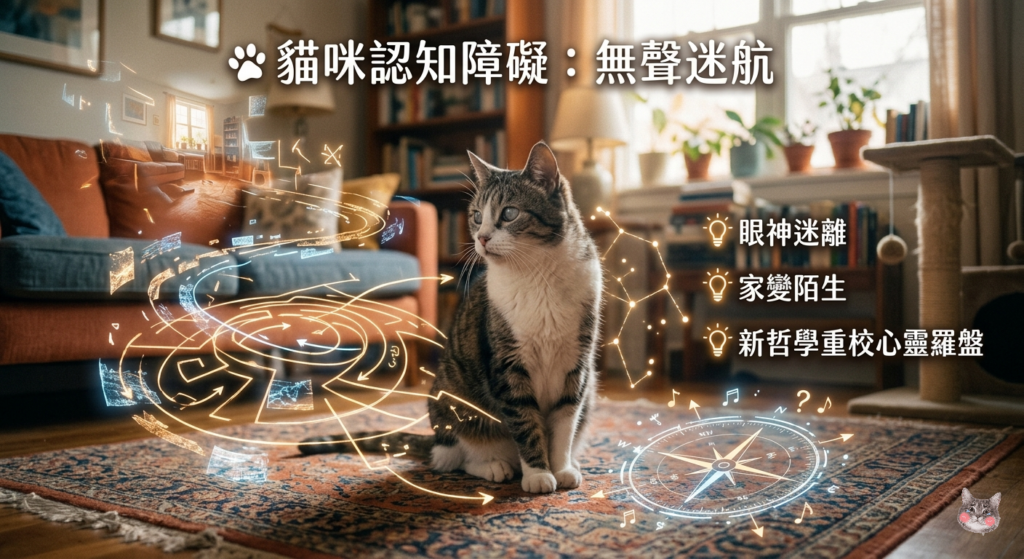
當牠眼神開始迷離,熟悉的家卻變得陌生:20年老僕解密貓咪認知障礙的無聲迷航與2026心靈羅盤重校新哲學
When Her Gaze Begins to Blur, and a Familiar Home Feels Strange: A 20-Year Servant Deciphers the Silent Drift of Feline Cognitive Dysfunction and the 2026 New Philosophy of Mental Compass Recalibration
清晨的第一縷陽光輕輕灑落在客廳的木地板上,空氣中仍帶著一絲微涼。我習慣性地轉身,期待著那聲甜膩的「喵嗚」和腿邊溫熱的磨蹭,就像過去二十年來的每一個清晨一樣。我的老夥伴,斑斑,總是比鬧鐘還準時。然而,今天,寂靜取代了熟悉的親暱。我走到牠常駐的窗邊軟墊旁,牠正蜷縮著,眼神卻有些空洞,望向窗外,卻又像什麼都沒看見。我輕輕撫摸牠柔軟的背脊,那規律的呼嚕聲依然溫暖,但牠起身時卻在原地轉了兩圈,彷彿一時想不起該往哪個方向去。牠曾是這個家的女王,對每個角落瞭若指掌,如今卻會偶爾在熟悉的走廊上停頓,用那雙曾經銳利、如今卻略顯茫然的眼睛,緩慢地掃視著。我心頭一緊,這不是偶發的健忘,這是一種更深層次的改變。牠不再像以前那樣熱衷於追逐光點,對於新玩具的反應也變得遲鈍。有時候,牠會在深夜發出不安的叫聲,那聲音裡帶著一絲困惑和孤獨,讓我輾轉反側。這種變化,不是一天兩天,是緩慢而無聲地侵蝕著牠的靈魂。我開始意識到,牠迷航了,在這牠曾以為永恆的港灣裡。身為一個與貓咪共處二十年的老僕,我深知,這份依賴與信任,值得我付出所有去理解與守護,為牠重新校準那逐漸失焦的心靈羅盤。
The first rays of dawn gently kissed the wooden floor of the living room, the air still carrying a hint of coolness. I instinctively turned, anticipating that sweet “meow” and the warm rub against my leg, just like every morning for the past twenty years. My old companion, Spot, was always more punctual than an alarm clock. Yet today, silence replaced the familiar affection. I walked over to her usual spot on the window cushion; she was curled up, her eyes somewhat vacant, looking out the window, yet seemingly seeing nothing. I gently stroked her soft back, her rhythmic purr still warm, but when she got up, she turned in two circles, as if momentarily forgetting which way to go. She was once the queen of this home, knowing every nook and cranny, but now she occasionally pauses in familiar hallways, slowly scanning with those eyes that were once sharp, but now seem a little bewildered. My heart tightened; this wasn’t just occasional forgetfulness, it was a deeper change. She no longer chases laser pointers with the same enthusiasm, and her reaction to new toys has become sluggish. Sometimes, she vocalizes with uneasy cries late at night, a sound tinged with confusion and loneliness that leaves me restless. This change wasn’t sudden; it has been slowly and silently eroding her spirit. I began to realize she was drifting, lost in what she once thought was an eternal haven. As a servant who has lived with cats for twenty years, I know that this bond of dependence and trust is worth everything to understand and protect her, to recalibrate that gradually unfocused mental compass.
【深度行為解碼】
FCD的症狀多樣,且初期往往不易察覺,這也是為何許多飼主會誤將其歸結於「老了」的正常現象。常見的臨床表現可用DISHA口訣來記憶:
D (Disorientation) – 定向障礙:貓咪可能會在熟悉的環境中迷路,站在角落發呆,或是對著牆壁叫喚。牠們可能記不住砂盆的位置,甚至忘記食物碗在哪裡。
I (Interaction changes) – 互動改變:對飼主或同伴貓的興趣降低,變得更黏人或更具攻擊性,或是對過去喜歡的撫摸不再有反應。
S (Sleep-wake cycle changes) – 睡眠-清醒週期紊亂:白天睡覺時間變長,夜間卻焦躁不安、持續叫喚或四處遊蕩,導致飼主作息受到嚴重影響。
H (House soiling) – 排泄習慣改變:儘管砂盆保持清潔,貓咪仍可能在家中不適當的地方排泄,這並非故意報復,而是因為牠們可能忘記了砂盆的位置,或是無法即時趕到。
A (Activity level changes) – 活動量改變:包括活動量減少、玩耍意願降低,或是出現重複性、無目的的行為,例如來回踱步、盯著牆壁看。
重要的是要理解,這些行為變化並非貓咪「變壞」或「任性」,而是牠們大腦功能受損的無聲求救。牠們不再能像以前那樣處理資訊、記憶路線、控制生理需求。若不及時介入,這些症狀會逐漸惡化,嚴重影響貓咪的生活品質。因此,早期識別FCD的細微跡象,並尋求獸醫的專業診斷與協助,是為老貓提供尊嚴與舒適晚年的第一步。透過理解FCD的深層生理學與行為學機制,我們才能給予牠們最溫柔、最專業的陪伴與照護。
Feline Cognitive Dysfunction (FCD), often colloquially known as “feline dementia,” is a progressive neurodegenerative disorder that occurs with age, bearing similarities to Alzheimer’s disease in humans. Just as time leaves wrinkles on us, FCD carves invisible traces in a cat’s brain, leading to a gradual decline in memory, learning ability, reaction speed, and spatial recognition. From a physiological perspective, the key to FCD lies in the accumulation of beta-amyloid plaques in the cerebral cortex. These abnormal protein deposits damage neurons, leading to impaired synaptic function, which in turn affects neurotransmission and information processing. Additionally, reduced cerebral blood flow, oxidative stress caused by free radical accumulation, and neuroinflammatory responses are all significant drivers in the progression of FCD.
The symptoms of FCD are diverse and often subtle in the early stages, which is why many owners mistakenly attribute them to normal “aging.” Common clinical manifestations can be remembered using the DISHA acronym:
D (Disorientation): Cats may get lost in familiar environments, stare blankly in corners, or vocalize at walls. They might forget the litter box location or even where their food bowl is.
I (Interaction changes): Decreased interest in owners or other cats, becoming more clingy or aggressive, or no longer responding to previously enjoyed petting.
S (Sleep-wake cycle changes): Longer daytime sleeping hours, but restlessness, persistent vocalization, or wandering at night, severely disrupting the owner’s sleep schedule.
H (House soiling): Despite a clean litter box, cats may eliminate inappropriately in the home. This is not intentional defiance but because they may have forgotten the litter box’s location or cannot get there in time.
A (Activity level changes): Including reduced activity, decreased willingness to play, or engaging in repetitive, aimless behaviors such as pacing back and forth or staring at walls.
It is crucial to understand that these behavioral changes are not signs of a cat being “naughty” or “stubborn,” but rather silent pleas stemming from impaired brain function. They can no longer process information, remember routes, or control physiological needs as they once did. If left unaddressed, these symptoms will gradually worsen, severely impacting the cat’s quality of life. Therefore, early identification of subtle FCD signs and seeking professional veterinary diagnosis and assistance is the first step in providing aging cats with a dignified and comfortable senior life. By understanding the deeper physiological and behavioral mechanisms of FCD, we can offer them the most gentle and professional companionship and care.
【貓奴實戰心法】
1. **建立預測性強的環境與規律作息 (Routine & Predictability)**:
* **固定佈局**:避免頻繁更動家具位置或物品擺設,讓貓咪對環境保持熟悉感。牠們需要熟悉的地標來導航。
* **規律餵食與玩耍**:每天在固定時間、固定地點餵食,並保持短暫、溫和的玩耍時光。重複的儀式能提供安全感。
* **多個砂盆與飲水點**:在家中多處設置易於進入的低緣砂盆,尤其是在貓咪常駐的區域。飲水碗也應多點設置,保持水源新鮮,方便牠們隨時取用。
2. **打造安全且容易導航的棲息地 (Safe & Navigable Habitat)**:
* **消除危險源**:封閉潛在危險區域(如樓梯、高處),防止牠們因迷路或平衡感不佳而受傷。
* **夜間照明**:在貓咪夜間活動的區域開啟小夜燈,幫助牠們在黑暗中辨識方向,減少夜間焦慮和叫喚。
* **增加垂直空間可近性**:如果貓咪喜歡高處,提供階梯或坡道,讓牠們能安全上下,減少跳躍壓力。
3. **溫和的感官刺激與認知訓練 (Gentle Sensory & Cognitive Engagement)**:
* **氣味標記**:用牠熟悉的味道(如牠的被子、您的衣物)輕輕擦拭家具或路徑,幫助牠「嗅覺導航」。
* **互動式玩具**:選擇能讓牠動動腦但又不會過度刺激的玩具,例如藏食玩具 (food puzzle),少量多餐地提供,既能進食又能刺激心智。
* **溫柔的撫摸與對話**:維持每日固定的親暱時間,輕聲細語,緩慢撫摸,提供牠情感上的慰藉與安全感。這有助於鞏固牠與您的連結。
4. **營養與補充品的支持 (Nutritional & Supplemental Support)**:
* **獸醫推薦的認知支持處方糧**:市面上有專為年老貓設計的處方糧,富含抗氧化劑、Omega-3脂肪酸、中鏈甘油三酯 (MCTs) 等,有助於支持大腦功能。
* **適當的保健品**:在獸醫指導下,考慮添加S-腺苷甲硫胺酸 (SAMe)、銀杏提取物或特定的維生素B群等,這些成分被認為對腦部健康有益。
5. **定期獸醫檢查 (Regular Veterinary Check-ups)**:
* FCD的診斷需要排除其他可能導致類似症狀的疾病,如甲狀腺功能亢進、腎臟疾病、關節炎疼痛等。定期檢查能確保貓咪獲得最準確的診斷和最合適的治療方案。
* 獸醫可能也會考慮開立Pravicetam等藥物,以減緩FCD的進程。
請記住,愛與耐心是最好的良藥。透過這些實戰方法,我們不僅是照顧牠們的身體,更是修復牠們逐漸迷失的心靈,讓牠們在生命晚年依然感受到家的溫暖與歸屬。
When facing feline cognitive dysfunction, our care strategy must center on “stability,” “safety,” and “emotional connection.” Here are practical steps to help recalibrate the mental compass for your drifting cat:
1. **Establish a Predictable Environment and Routine**:
* **Fixed Layout**: Avoid frequently rearranging furniture or items to maintain a sense of familiarity for your cat. They rely on familiar landmarks for navigation.
* **Regular Feeding and Play**: Feed at fixed times and locations daily, and maintain short, gentle play sessions. Repetitive rituals provide a sense of security.
* **Multiple Litter Boxes and Water Stations**: Place easily accessible, low-sided litter boxes in multiple locations throughout the home, especially in areas where your cat frequently spends time. Water bowls should also be multi-point, keeping water fresh and readily available.
2. **Create a Safe and Navigable Habitat**:
* **Eliminate Hazards**: Block off potentially dangerous areas (e.g., stairs, high places) to prevent injuries due to disorientation or poor balance.
* **Nighttime Lighting**: Install nightlights in areas where your cat is active at night to help them orient in the dark, reducing nocturnal anxiety and vocalization.
* **Increase Vertical Space Accessibility**: If your cat enjoys high places, provide ramps or steps to allow them safe access, reducing the strain of jumping.
3. **Gentle Sensory Stimulation and Cognitive Training**:
* **Scent Marking**: Gently rub familiar scents (like their blanket or your clothing) on furniture or along pathways to help them “olfactorily navigate.”
* **Interactive Toys**: Choose toys that engage their minds without over-stimulation, such as food puzzles, offering small, frequent meals that also provide mental stimulation.
* **Gentle Petting and Conversation**: Maintain daily, consistent affectionate time with soft whispers and slow strokes, providing emotional comfort and security. This helps reinforce their bond with you.
4. **Nutritional and Supplemental Support**:
* **Veterinarian-Recommended Cognitive Support Diets**: Commercial prescription diets are available, specifically formulated for senior cats, rich in antioxidants, Omega-3 fatty acids, Medium-Chain Triglycerides (MCTs), etc., which help support brain function.
* **Appropriate Supplements**: Under veterinary guidance, consider adding S-adenosylmethionine (SAMe), Ginkgo Biloba extract, or specific B vitamins, which are believed to benefit brain health.
5. **Regular Veterinary Check-ups**:
* Diagnosing FCD requires ruling out other conditions that can cause similar symptoms, such as hyperthyroidism, kidney disease, or arthritis pain. Regular check-ups ensure your cat receives the most accurate diagnosis and appropriate treatment plan.
* Your veterinarian may also consider prescribing medications like Pravicetam to help slow the progression of FCD.
Remember, love and patience are the best medicine. Through these practical methods, we are not just caring for their bodies, but also mending their gradually lost minds, allowing them to feel the warmth and belonging of home in their twilight years.
【智商稅警示】
**真正能解決問題的替代方案與推薦:**
1. **專業處方糧**:獸醫專用的老年貓或認知支持處方糧,如「希爾思處方糧 c/d Multicare Feline Metabolic + Mobility」或「皇家獸醫處方糧 Senior Consult」,這些產品經過嚴謹配方,富含抗氧化劑、Omega-3 脂肪酸、MCTs 等,經臨床證實對大腦健康有益。雖然價格稍高,但其成分配比與吸收率通常優於一般保健品,是值得投資的基礎。
https://www.amazon.com/dp/YOUR_PRODUCT_ID?tag=amberbrella-20
2. **環境豐富化與互動玩具**:投資一些高品質、耐用的藏食玩具 (Food Puzzle),如「Catit Senses 2.0 Food Tree」或「Nina Ottosson 系列益智玩具」,這些能激發貓咪的狩獵本能與解謎能力,在溫和的刺激中延緩認知退化。它們比許多口服補品更具互動性與生活感,且長期成本效益高。
https://www.amazon.com/dp/YOUR_PRODUCT_ID?tag=amberbrella-20
記住,任何保健品或處方糧的使用,務必諮詢專業獸醫師的意見,確保其適用於您的貓咪,並排除其他潛在疾病。
When facing feline cognitive dysfunction, many commercially available “brain-boosting” products, especially expensive supplements claiming to “reverse aging” or “instantly restore vitality,” are often overpriced “intelligence taxes.” These products may contain various ingredients, but without scientific evidence and veterinary advice, their effectiveness can be minimal, or even questionable due to unknown components. Instead of blindly purchasing them, it’s better to invest resources in truly effective and scientifically backed solutions.
**Effective Alternatives and Recommendations:**
1. **Prescription Diets**: Veterinarian-specific senior cat or cognitive support prescription diets, such as “Hill’s Prescription Diet c/d Multicare Feline Metabolic + Mobility” or “Royal Canin Veterinary Diet Senior Consult,” are rigorously formulated. They are rich in antioxidants, Omega-3 fatty acids, MCTs, etc., and clinically proven to benefit brain health. Although slightly more expensive, their ingredient ratios and absorption rates are usually superior to general supplements, making them a worthwhile fundamental investment.
https://www.amazon.com/dp/YOUR_PRODUCT_ID?tag=amberbrella-20
2. **Environmental Enrichment and Interactive Toys**: Invest in high-quality, durable food puzzles, like the “Catit Senses 2.0 Food Tree” or “Nina Ottosson puzzle toys.” These stimulate your cat’s hunting instincts and problem-solving abilities, gently delaying cognitive decline. They offer more interaction and a sense of life than many oral supplements, and are cost-effective in the long run.
https://www.amazon.com/dp/YOUR_PRODUCT_ID?tag=amberbrella-20
Remember, always consult with a professional veterinarian before using any supplements or prescription diets to ensure they are appropriate for your cat and to rule out other potential underlying conditions.