
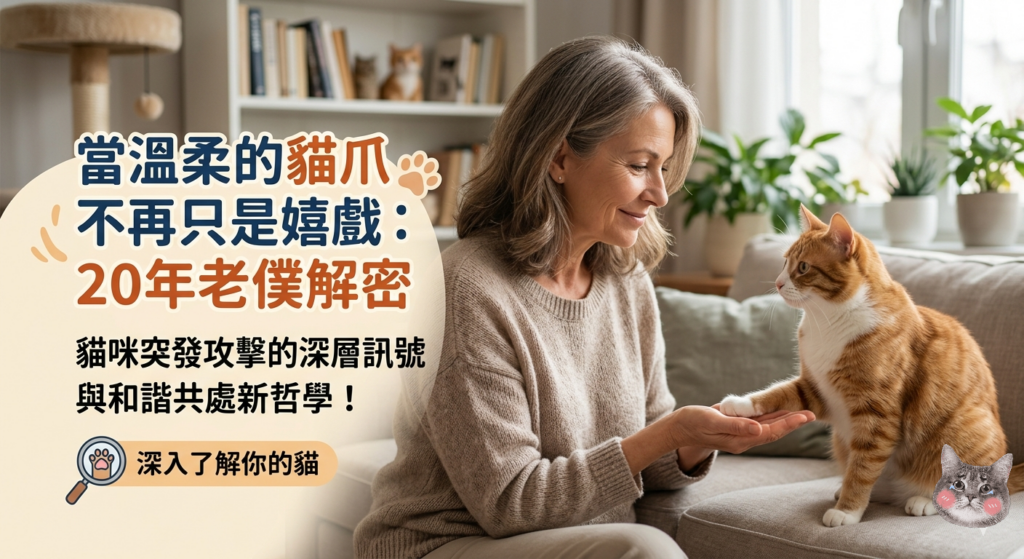
當溫柔的貓爪不再只是嬉戲:20年老僕解密貓咪突發攻擊的深層訊號與和諧共處新哲學
When Gentle Paws Are No Longer Just Play: A 20-Year Servant Unveils the Deep Signals of Sudden Feline Aggression and a New Philosophy of Harmonious Coexistence
清晨的陽光透過窗簾縫隙,在木地板上灑下溫暖的光暈。我慣性地伸出手,想輕撫枕邊那團溫熱的、毛茸茸的身影。牠,我的老貓「小黑」,總是會用牠特有的方式回應:或許是輕柔的磨蹭,或許是細聲的呼嚕。然而,今天不同了。當我的指尖剛觸及牠的背脊,一股迅猛而意外的力量襲來,伴隨的是一聲低沉的嘶吼與尖銳的爪子。我感到一陣刺痛,手背上赫然出現幾道血痕,而小黑則弓著身子,眼神裡帶著我從未見過的警惕與一絲困惑。空氣中彷彿凝結了某種無形的張力,讓我瞬間愣在原地。
這不是第一次了,最近小黑會突然地攻擊我,或是家裡的另一隻年輕貓咪。牠不再是那個總是溫順依偎的小可愛,這讓我焦慮,也困惑。我的老伴看著我受傷的手,嘆了口氣,說:「牠是不是病了?還是討厭你了?」這句話像針一樣刺痛了我。我與貓咪共處二十載,自認對牠們的一顰一笑、一舉一動都瞭若指掌。但此刻,面對小黑這種突如其來的攻擊性,我第一次感覺到自己的無力與陌生。牠的眼神中,究竟隱藏了什麼?是痛苦?是恐懼?還是某種我們人類無法理解的求救訊號?那晚,我抱著受傷的手,卻感受到了更深的,是心靈上的創傷。我發誓,一定要找出答案,解開小黑行為背後的秘密,重建我們之間的信任橋樑。因為我知道,牠不是故意的,牠只是在用一種激烈的方式,傳達著我們尚未讀懂的訊息。
The morning sun filtered through the curtains, casting a warm glow on the wooden floor. Instinctively, I reached out to gently stroke the warm, furry presence beside me on the pillow. She, my old cat “Xiao Hei,” would usually respond in her unique way: perhaps a soft rub, or a quiet purr. Today, however, was different. The moment my fingertips brushed her back, a swift and unexpected force struck, accompanied by a low growl and sharp claws. I felt a stinging pain, and a few blood marks appeared on my hand. Xiao Hei, meanwhile, arched her back, her eyes reflecting a vigilance I had never seen before, mixed with a hint of confusion. The air seemed to be filled with an invisible tension, leaving me stunned.
This wasn’t the first time. Lately, Xiao Hei would suddenly attack me, or the other younger cat in the house. She was no longer the docile, cuddly darling. This made me anxious and confused. My partner looked at my injured hand and sighed, “Is she sick? Or does she hate you?” The words stung like a needle. I’ve lived with cats for twenty years, believing I understood their every glance, every movement. But at this moment, facing Xiao Hei’s sudden aggression, I felt powerless and bewildered for the first time. What was hidden in her eyes? Was it pain? Fear? Or some kind of distress signal that we humans couldn’t understand? That night, holding my injured hand, I felt a deeper, emotional wound. I vowed to find the answer, to unlock the secret behind Xiao Hei’s behavior, and rebuild the bridge of trust between us. Because I knew she wasn’t doing it on purpose; she was just using a drastic way to convey a message we hadn’t yet deciphered.
【深度行為解碼】
以小黑的例子,突如其來的攻擊,尤其是在輕撫後發生,我們首先應考慮其生理因素。隨著貓咪年紀增長,關節炎、牙痛、內部器官不適等慢性疼痛問題日益普遍。當貓咪身體某處疼痛,而我們無意間觸碰到敏感部位時,牠們會因本能的防禦機制而立即反擊。這種攻擊行為並非針對人,而是對疼痛刺激的反應。因此,全面性的獸醫檢查,包括血液、X光甚至超音波檢查,是首要且不可或缺的步驟。排除生理問題後,我們才能深入探討行為層面。
玩耍性攻擊在幼貓和年輕貓中很常見,但若成年貓仍有此行為,通常是因為早期社會化不足、玩耍方式錯誤,或者缺乏適當的狩獵遊戲出口。牠們可能將人類的手腳視為「獵物」,一旦過度興奮,便會失控。轉向性攻擊則是一種複雜的行為,當貓咪受到刺激(例如窗外有陌生貓咪、巨大的聲響),卻無法直接應對時,會將其挫敗感或恐懼感轉嫁到最近的目標(可能是另一個家庭成員或路過的寵物)身上。這種攻擊往往是無預警且劇烈的。
恐懼性攻擊則發生在貓咪感到威脅、無路可退時。牠們會出現弓背、毛髮豎立、哈氣、嘶吼等警告訊號,若這些訊號被忽視,攻擊便隨之而來。領地性攻擊則多發生在多貓家庭,或是有新成員(人或寵物)加入時,貓咪試圖維護自己的資源或空間。而老年貓在認知功能下降時,也可能出現不明原因的焦慮與攻擊行為,這類似於人類的失智症。總之,貓咪的每一次攻擊,都是在發出一個需要被解讀的訊號,理解這些行為背後的原始本能與觸發機制,是我們建立和諧共處的基石。
Feline aggression, from a behavioral perspective, never occurs without reason. It is a direct reflection of their internal state or physiological needs. We must first understand that feline aggression can be categorized into several types to effectively address the issue. The most common types include: **play aggression**, **redirected aggression**, **fear aggression**, **territorial aggression**, and most importantly, **pain/illness-induced aggression**.
In Xiao Hei’s case, sudden aggression, especially after being petted, should first lead us to consider physiological factors. As cats age, chronic pain issues like arthritis, dental pain, or internal organ discomfort become increasingly prevalent. When a cat experiences pain in a certain area, and we inadvertently touch that sensitive spot, they may immediately retaliate due to an instinctive defense mechanism. This aggression is not directed at the person but is a reaction to the painful stimulus. Therefore, a comprehensive veterinary examination, including blood tests, X-rays, and even ultrasound, is the primary and indispensable first step. Only after ruling out physiological problems can we delve into behavioral aspects.
Play aggression is common in kittens and young cats, but if an adult cat still exhibits this behavior, it’s usually due to insufficient early socialization, improper play methods, or a lack of appropriate outlets for hunting games. They might perceive human hands and feet as “prey,” and once overstimulated, they can lose control. Redirected aggression is a complex behavior where a cat, stimulated by something (e.g., a strange cat outside the window, a loud noise) and unable to directly address the stimulus, redirects its frustration or fear onto the nearest target (which could be another family member or a passing pet). This type of aggression is often unprovoked and intense.
Fear aggression occurs when a cat feels threatened and has no escape route. They will display warning signs such as an arched back, bristled fur, hissing, and growling. If these signals are ignored, aggression will follow. Territorial aggression often occurs in multi-cat households or when new members (human or pet) join, as the cat attempts to defend its resources or space. Moreover, older cats experiencing cognitive decline may also exhibit inexplicable anxiety and aggressive behaviors, similar to dementia in humans. In essence, every act of aggression by a cat is a signal that needs to be deciphered. Understanding the primal instincts and triggers behind these behaviors is the cornerstone of establishing harmonious coexistence.
【貓奴實戰心法】
**1. 建立安全的「避風港」**:
為貓咪創造多個高處、隱蔽的躲藏空間,例如高架貓窩、封閉式貓砂屋、或能讓牠們登高望遠的貓樹。這些空間能讓貓咪在感到壓力或受威脅時,有安全撤退的選項。特別對於多貓家庭,每個貓咪都應有自己專屬的資源(食碗、水碗、貓砂盆、休息區),避免因資源競爭而引發衝突。
**2. 檢視與調整互動方式**:
* **避免懲罰:** 任何形式的懲罰,包括吼叫、噴水,只會加劇貓咪的恐懼與壓力,破壞你們之間的信任。
* **讀懂貓咪訊號:** 學習辨識貓咪發出攻擊前的細微訊號,如尾巴抽動、耳朵向後壓、瞳孔放大、身體僵硬。一旦發現這些跡象,立即停止互動,給牠空間。
* **正確的玩耍:** 避免用手腳直接與貓咪玩耍,這會讓牠們將手腳視為獵物。使用逗貓棒、雷射筆等工具,引導牠們進行模擬狩獵的遊戲,讓牠們消耗精力。每天至少兩次,每次10-15分鐘的「專注遊戲時間」至關重要。
* **嗅覺安撫:** 使用費洛蒙噴劑或插座(例如Feliway),在貓咪常待的區域釋放合成費洛蒙,有助於緩解貓咪的焦慮。
**3. 環境豐富化 (Environmental Enrichment)**:
提供足夠的玩具、抓板、磨爪柱,定期輪換,保持新鮮感。垂直空間的利用(貓跳台、牆壁走道)也能增加貓咪的活動範圍與安全感。對於轉向性攻擊,找出並移除或阻隔刺激源(如窗外流浪貓、製造噪音的物品)。
**4. 漸進式減敏與反制約**:
如果攻擊行為是針對特定對象或情境(例如新來訪客),可透過漸進式減敏(慢慢讓貓咪接觸刺激源,並獎勵牠的冷靜反應)和反制約(將刺激源與正向經驗連結,如零食或遊戲)來改善。這需要極大的耐心與專業指導,必要時可尋求動物行為學家的協助。記住,目標是讓貓咪感到安全、被理解,而非被壓制。
Once we’ve confirmed that the cat’s aggressive behavior is not due to physical pain or illness, the next step is practical home behavior adjustment and environmental modification. This is a process that requires patience and consistency. Here are several key steps summarized from my 20 years of experience as a cat servant:
**1. Establish Safe “Havens”:**
Create multiple elevated and hidden spaces for your cat, such as elevated cat beds, enclosed litter boxes, or cat trees that allow them to survey their surroundings from above. These spaces provide a safe retreat option when cats feel stressed or threatened. Especially in multi-cat households, each cat should have its own dedicated resources (food bowls, water bowls, litter boxes, resting areas) to prevent conflicts arising from resource competition.
**2. Review and Adjust Interaction Methods:**
* **Avoid Punishment:** Any form of punishment, including yelling or spraying water, will only exacerbate the cat’s fear and stress, eroding trust between you.
* **Read Cat Signals:** Learn to identify subtle pre-aggression signals from your cat, such as tail twitching, flattened ears, dilated pupils, or a stiff body. Once these signs are observed, immediately stop interaction and give them space.
* **Correct Play:** Avoid using your hands and feet directly to play with your cat, as this will teach them to view your limbs as prey. Use wand toys, laser pointers, and other tools to engage them in simulated hunting games, allowing them to expend energy. At least twice a day, 10-15 minutes of “focused play time” is crucial.
* **Olfactory Comfort:** Use pheromone sprays or diffusers (e.g., Feliway) in areas where your cat frequently stays to release synthetic pheromones, which can help alleviate feline anxiety.
**3. Environmental Enrichment:**
Provide enough toys, scratching pads, and scratching posts, and rotate them regularly to keep things fresh. Utilizing vertical space (cat shelves, wall-mounted walkways) can also increase your cat’s activity range and sense of security. For redirected aggression, identify and remove or block the source of stimulation (e.g., stray cats outside the window, noise-producing items).
**4. Gradual Desensitization and Counter-Conditioning:**
If aggressive behavior is directed at a specific object or situation (e.g., new visitors), it can be improved through gradual desensitization (slowly exposing the cat to the stimulus and rewarding calm reactions) and counter-conditioning (linking the stimulus with positive experiences, such as treats or play). This requires immense patience and professional guidance; seeking help from a certified animal behaviorist may be necessary. Remember, the goal is to make your cat feel safe and understood, not suppressed.
【智商稅警示】
真正能解決問題的,往往是樸實卻有效的方法。我推薦兩種替代方案:
1. **高品質的費洛蒙產品**:例如Feliway品牌的室內插座擴散器或噴劑。雖然單價不低,但其釋放的合成貓咪費洛蒙,能有效模擬貓咪臉頰腺分泌的安定費洛蒙,科學證明有助於緩解貓咪壓力與攻擊行為。這是一種投資在貓咪心理健康的產品。建議購買其多貓專用版 https://www.amazon.com/dp/YOUR_PRODUCT_ID?tag=amberbrella-20。
2. **專業動物行為諮詢服務**:這筆費用或許看來高昂,但一位合格的CFA(Certified Feline Behaviorist)或AAAB(Associate Certified Applied Animal Behaviorist)能提供客製化的行為評估與訓練計畫。比起盲目嘗試無效產品,一次專業諮詢能更精準地找出問題根源並提供解決方案,避免走冤枉路。這才是最值得的投資。
When faced with feline aggressive behavior, many owners desperately try various expensive products claiming “instant results.” Among these, many electronic shock collars or sonic deterrents, marketed as “correcting” cat behavior, are absolute scams. These products are not only ineffective but also cause significant psychological trauma to cats, intensifying their fear and anxiety, leading to more severe behavioral issues. Absolutely never use any punitive products.
The truly effective solutions are often simple yet powerful methods. I recommend two alternative approaches:
1. **High-quality pheromone products**: Such as Feliway brand indoor diffusers or sprays. While not cheap, their synthetic feline pheromones effectively mimic the calming pheromones secreted by a cat’s facial glands, scientifically proven to help alleviate feline stress and aggressive behaviors. This is an investment in your cat’s mental well-being. It is recommended to purchase their multi-cat specific version https://www.amazon.com/dp/YOUR_PRODUCT_ID?tag=amberbrella-20.
2. **Professional animal behavior consultation services**: This cost might seem high, but a qualified CFA (Certified Feline Behaviorist) or AAAB (Associate Certified Applied Animal Behaviorist) can provide customized behavioral assessments and training plans. Rather than blindly trying ineffective products, a single professional consultation can more precisely identify the root cause and provide solutions, saving you from unnecessary detours. This is the most worthwhile investment.