
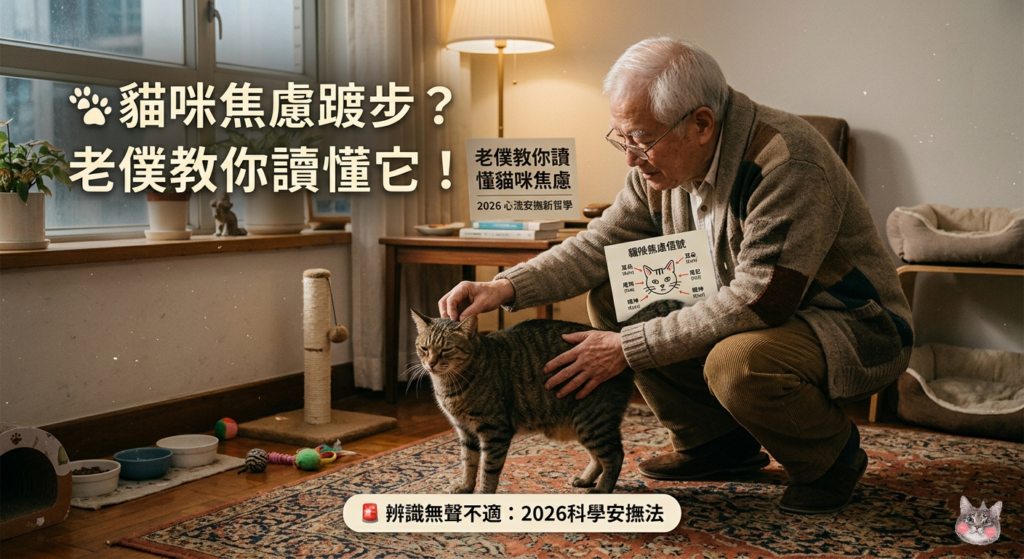
當貓咪的平靜被焦躁的踱步取代:20年老僕解密無聲不適的微訊號與2026心流安撫新哲學
When a Cat’s Calm is Replaced by Restless Pacing: A 20-Year Cat Servant Deciphers the Micro-Signals of Silent Discomfort and the 2026 Flow-State Calming New Philosophy
清晨,微光輕柔地灑落在窗台上,映照著家中最柔軟的身影——我的老伴,米克斯貓「小虎」。二十年的歲月,牠從一隻街頭浪子,蛻變成我生命中不可或缺的靈魂伴侶。牠的呼嚕聲曾是家中每日最溫暖的背景音樂,那種輕柔的震動,穿透我的指尖,直達心底。然而,近來,那熟悉的寧靜被一種全新的、令人心焦的節奏打破了。
我注意到小虎開始頻繁地在客廳裡來回踱步,眼神不再是往日的慵懶與信任,取而代之的是一種隱約的焦慮與不安。牠的步伐看似漫無目的,卻帶著一種規律的重複性。有時牠會突然停下來,耳朵朝向某個無聲的方向,然後又繼續牠那無盡的巡邏。最初我以為是老化帶來的認知障礙,或是窗外鳥兒的聲響讓牠好奇,但隨著時間推移,那種焦躁感越來越明顯,甚至在夜深人靜時也無法平息。牠不再像從前那樣依偎在我身邊,長夜裡,我偶爾醒來,總能聽到牠細碎的腳步聲在黑暗中徘徊。牠的食慾雖然沒有驟減,卻顯得有些心不在焉;梳理毛髮的頻率也下降了,連最愛的逗貓棒也引不起牠太大的興趣。
那種無聲的求救,像一根細細的針,扎在我這個老貓奴的心頭。二十年的相處,我深知貓咪是隱忍疼痛與不適的大師。牠們不會像狗一樣嚎叫,也不會像人類一樣開口訴苦。牠們的語言,藏在眼神裡,藏在姿態裡,藏在那每一個微不足道的行為變化中。我開始日夜觀察,試圖從牠細微的改變中拼湊出真相。那雙曾經清澈、如今略顯渾濁的琥珀色眼睛裡,究竟藏著什麼樣的訊息?是身體的病痛,是環境的壓力,還是心靈深處的孤寂?這份焦慮,不只屬於小虎,也深深地蔓延到了我的心間。我必須找出原因,為牠重建那份久違的,被焦躁偷走的平靜。
—
The first rays of dawn gently kissed the windowsill, illuminating the softest silhouette in my home—my old companion, the tabby cat “Xiao Hu” (Little Tiger). Twenty years had passed since he transitioned from a street wanderer to an indispensable soulmate in my life. His purrs were once the warmest daily soundtrack of our home, that gentle vibration penetrating my fingertips and reaching deep into my heart. However, recently, that familiar tranquility has been broken by a new, unsettling rhythm.
I noticed Xiao Hu began to pace frequently back and forth in the living room. His gaze was no longer the lazy, trusting look of yesteryear, replaced instead by a subtle anxiety and unease. His steps seemed aimless, yet carried a regular, repetitive quality. Sometimes he would suddenly stop, ears tilted towards some silent direction, only to resume his endless patrol. Initially, I thought it might be cognitive dysfunction brought on by old age, or perhaps the sound of birds outside the window piqued his curiosity. But as time went on, that feeling of restlessness became more pronounced, unable to subside even in the quiet of night. He no longer nestled beside me as he once did; on long nights, I occasionally awoke to the soft patter of his paws wandering in the darkness. His appetite hadn’t drastically decreased, but he seemed somewhat distracted; his grooming frequency also declined, and even his favorite wand toy no longer held much interest.
That silent plea, like a tiny needle, pricked the heart of this old cat servant. After two decades together, I deeply understand that cats are masters at hiding pain and discomfort. They won’t howl like dogs, nor will they voice their troubles like humans. Their language is hidden in their eyes, in their posture, in every subtle shift in their behavior. I began to observe day and night, trying to piece together the truth from his minute changes. What message was hidden within those once clear, now slightly clouded amber eyes? Was it physical ailment, environmental stress, or a loneliness deep within his soul? This anxiety didn’t just belong to Xiao Hu; it had deeply spread into my own heart. I had to find the cause, to help him rebuild that long-lost peace that restlessness had stolen.
【深度行為解碼】
深入探究,這種踱步行為可能由以下幾種深層原因觸發:
1. **生理性不適 (Physiological Discomfort)**:這是最需要優先排除的因素。
* **疼痛 (Pain)**:無論是關節炎、牙痛、內部器官不適(如腎臟病、膀胱炎),貓咪都可能因持續的疼痛感而無法安穩地休息。牠們會不斷移動身體,試圖找到一個能減輕疼痛的姿勢,或是透過活動來分散注意力。老貓尤其容易有慢性疼痛問題。
* **內分泌失調 (Endocrine Imbalances)**:甲狀腺功能亢進(Hyperthyroidism)是常見於老年貓的疾病,會導致新陳代謝加速,引起焦躁、體重下降、食慾增加但依然踱步等症狀。糖尿病、高血壓等慢性病也可能導致身體不適進而引發行為變化。
* **腸胃不適 (Gastrointestinal Upset)**:慢性便秘、腹瀉、發炎性腸道疾病(IBD)等,都會讓貓咪感到腹部不適,牠們可能藉由踱步來舒緩或表達痛苦。
2. **環境壓力與不安全感 (Environmental Stress & Insecurity)**:
* **領域感威脅 (Territorial Threat)**:家中環境的改變(新家具、搬家、新的寵物或成員)、窗外流浪貓的出現,都可能讓貓咪感受到領域被侵犯,進而產生不安和焦躁。
* **資源不足或衝突 (Insufficient Resources or Conflict)**:貓砂盆、食碗、水碗的數量不足或位置不佳,或是多貓家庭中資源分配不均,都可能導致貓咪為了尋找「安全」的資源點而來回踱步。
* **例行公事改變 (Changes in Routine)**:貓咪是習慣性動物,作息時間的突然改變、主人外出時間變長等,都可能讓牠們感到失序和焦慮。
3. **認知功能障礙 (Cognitive Dysfunction Syndrome, CDS)**:
* 尤其在老年貓中常見,類似人類的失智症。CDS的表現包括:方向感喪失(迷失在熟悉的地方)、睡眠-清醒週期紊亂(夜間踱步、嚎叫)、社交互動改變、學習和記憶力下降等。踱步是CDS貓咪常見的行為之一,牠們可能漫無目的地遊走,顯得困惑。
4. **行為需求未被滿足 (Unmet Behavioral Needs)**:
* **狩獵本能壓抑 (Suppressed Hunting Instinct)**:室內貓如果缺乏足夠的玩耍和狩獵模擬,可能累積過多能量和壓力,導致焦躁。
* **互動不足 (Lack of Interaction)**:雖然貓咪看似獨立,但缺乏主人足夠的陪伴和互動,也可能導致焦慮和尋求關注的行為。
理解這些深層原因,是我們為貓咪提供有效幫助的第一步。焦躁踱步是貓咪在用牠們的方式告訴你:「有些事情不對勁。」身為貓奴,我們需要仔細觀察,並與獸醫合作,抽絲剝繭,找出真正的原因。
—
A cat’s restless pacing is by no means a mere “whim” but rather a “micro-signal” from its body or mind. From a behavioral perspective, this is a typical manifestation of Displacement Behavior. When a cat is in a conflict situation (e.g., wanting to do something but feeling threatened, or having unmet physiological needs) or under chronic stress, they will release internal tension through repetitive, seemingly meaningless behaviors. Pacing is one of the common ways to externalize this internal conflict.
Delving deeper, this pacing behavior can be triggered by several underlying reasons:
1. **Physiological Discomfort**: This is the factor that needs to be ruled out first and foremost.
* **Pain**: Whether it’s arthritis, dental pain, internal organ discomfort (such as kidney disease, cystitis), cats may be unable to rest peacefully due to persistent pain. They will constantly move their bodies, trying to find a position that alleviates the pain, or distract themselves through activity. Older cats are particularly prone to chronic pain issues.
* **Endocrine Imbalances**: Hyperthyroidism is a common disease in senior cats, leading to an accelerated metabolism, causing symptoms like restlessness, weight loss, increased appetite but still pacing. Chronic diseases such as diabetes and high blood pressure can also cause physical discomfort, leading to behavioral changes.
* **Gastrointestinal Upset**: Chronic constipation, diarrhea, inflammatory bowel disease (IBD), etc., can all cause abdominal discomfort in cats. They may pace to relieve or express their pain.
2. **Environmental Stress & Insecurity**:
* **Territorial Threat**: Changes in the home environment (new furniture, moving, new pets or family members), or the appearance of stray cats outside the window, can make cats feel their territory is being invaded, leading to uneasiness and restlessness.
* **Insufficient Resources or Conflict**: An insufficient number or poor placement of litter boxes, food bowls, water bowls, or uneven distribution of resources in multi-cat households can cause cats to pace back and forth in search of a “safe” resource point.
* **Changes in Routine**: Cats are creatures of habit. Sudden changes in their schedule, longer periods of owner absence, etc., can make them feel disorganized and anxious.
3. **Cognitive Dysfunction Syndrome (CDS)**:
* Especially common in older cats, similar to human dementia. Symptoms of CDS include: disorientation (getting lost in familiar places), disturbed sleep-wake cycles (pacing, vocalizing at night), changes in social interaction, and decreased learning and memory. Pacing is a common behavior in cats with CDS; they may wander aimlessly, appearing confused.
4. **Unmet Behavioral Needs**:
* **Suppressed Hunting Instinct**: Indoor cats, if lacking sufficient play and hunting simulation, may accumulate excess energy and stress, leading to restlessness.
* **Lack of Interaction**: Although cats may seem independent, a lack of sufficient companionship and interaction from their owner can also lead to anxiety and attention-seeking behaviors.
Understanding these underlying reasons is the first step in providing effective help for our cats. Restless pacing is how cats tell you, “Something is not right.” As cat servants, we need to observe carefully and work with our veterinarian to meticulously uncover the true cause.
【貓奴實戰心法】
1. **獸醫全面檢查:排除生理因素為首要 (Veterinary Check-up: Rule Out Physiological Factors First)**
* **步驟1:記錄與觀察 (Record & Observe)**:在就醫前,詳細記錄貓咪踱步的頻率、時間、持續時間、伴隨行為(例如是否舔舐某部位、食慾變化、大小便狀況)。這份筆記是獸醫診斷的重要線索。
* **步驟2:完整健檢 (Comprehensive Health Exam)**:帶貓咪前往信任的獸醫診所,進行全面的身體檢查,包括血液常規、生化、尿液分析、甲狀腺功能檢測(針對老貓)、X光或超音波檢查(評估關節、內臟狀況)。務必向獸醫提及所有觀察到的行為變化。
2. **優化居家環境:打造「心流安全島」 (Optimize Home Environment: Create a “Flow-State Safety Island”)**
* **資源豐富化 (Resource Enrichment)**:
* **多處水碗與食碗 (Multiple Water & Food Stations)**:確保家中有多個潔淨的水碗(流動飲水器尤佳)和食碗,放置在安靜、安全且遠離貓砂盆的地方。
* **貓砂盆佈局 (Litter Box Layout)**:提供貓咪數量+1的貓砂盆,分佈在不同區域,保持極度清潔。考慮開放式貓砂盆,減少密閉空間的壓迫感。
* **垂直空間與藏匿點 (Vertical Space & Hiding Spots)**:
* 提供足夠的貓跳台、貓樹和高處休憩點,讓貓咪可以觀察環境而不被干擾。
* 設置隱蔽的紙箱、隧道或洞穴式貓窩,讓牠們有隨時可以躲藏、感到安全的空間。
* **氣味管理 (Scent Management)**:
* 使用貓費洛蒙噴劑或插電式擴散器(如Feliway),營造安心的氣味環境。
* 避免使用強烈化學清潔劑或香氛,以免刺激貓咪敏感的嗅覺。
3. **規律化作息與互動:重建「心流節奏」 (Regular Routine & Interaction: Re-establish “Flow-State Rhythm”)**
* **固定餵食與玩耍時間 (Fixed Feeding & Play Times)**:維持穩定的作息時間,讓貓咪對日常節奏有預期感,減少不確定性帶來的焦慮。
* **豐富化遊戲 (Enriched Play)**:每天至少兩次,每次10-15分鐘的互動式遊戲。使用逗貓棒模擬捕獵行為,讓貓咪有機會追逐、撲捉和「殺死」獵物。遊戲結束時,給予零食,強化「捕獲成功」的滿足感。
* **輕柔的觸摸與安撫 (Gentle Touch & Comfort)**:當貓咪主動靠近時,給予溫柔的撫摸、梳理,增強牠與主人的連結和安全感。注意觀察牠的肢體語言,若有不適立即停止。
4. **營養與補充品:支持身心平衡 (Nutrition & Supplements: Support Mind-Body Balance)**
* **高品質食物 (High-Quality Food)**:選擇高蛋白、低碳水化合物的濕糧,確保營養均衡。
* **補充品 (Supplements)**:在獸醫指導下,考慮添加Omega-3脂肪酸(幫助抗炎、支持腦部健康)、葡萄糖胺/軟骨素(針對關節疼痛)、或者L-色胺酸/酪蛋白水解物(幫助舒緩情緒)等。
透過上述多管齊下的方法,我們不僅能解決貓咪焦躁踱步的表象,更能深入挖掘其背後的身心需求,引導牠們重新找回內在的平靜與「心流安撫」的狀態。
—
Facing a cat’s restless pacing, my 20 years of experience tell me that this is a detective game requiring patience, meticulousness, and love. Below are the practical steps I took to restore Xiao Hu’s peace, and which I recommend all cat servants adopt as a “Flow-State Calming New Philosophy”:
1. **Veterinary Comprehensive Examination: Prioritize Ruling Out Physiological Factors**
* **Step 1: Record & Observe**: Before visiting the vet, meticulously document the frequency, timing, duration, and accompanying behaviors of your cat’s pacing (e.g., licking specific areas, changes in appetite, urination/defecation patterns). This detailed log is crucial for veterinary diagnosis.
* **Step 2: Comprehensive Health Exam**: Take your cat to a trusted veterinary clinic for a thorough physical examination, including complete blood count, biochemical profile, urinalysis, thyroid function test (especially for senior cats), and X-rays or ultrasound (to assess joints and internal organs). Be sure to mention all observed behavioral changes to the vet.
2. **Optimize Home Environment: Create a “Flow-State Safety Island”**
* **Resource Enrichment**:
* **Multiple Water & Food Stations**: Ensure there are multiple clean water bowls (flowing water fountains are often preferred) and food bowls in quiet, safe areas away from the litter box.
* **Litter Box Layout**: Provide one more litter box than the number of cats, distributed in different areas, and kept extremely clean. Consider open litter boxes to reduce the feeling of confinement.
* **Vertical Space & Hiding Spots**:
* Provide ample cat trees, cat perches, and elevated resting spots, allowing your cat to observe its surroundings undisturbed.
* Set up hidden cardboard boxes, tunnels, or cave-style cat beds, giving them spaces where they can hide and feel secure at any time.
* **Scent Management**:
* Use feline pheromone sprays or plug-in diffusers (like Feliway) to create a calming scent environment.
* Avoid using strong chemical cleaners or air fresheners, which can irritate a cat’s sensitive sense of smell.
3. **Regular Routine & Interaction: Re-establish “Flow-State Rhythm”**
* **Fixed Feeding & Play Times**: Maintain a stable daily routine, giving your cat a sense of predictability and reducing anxiety caused by uncertainty.
* **Enriched Play**: Engage in interactive play sessions at least twice a day, 10-15 minutes each time. Use wand toys to simulate hunting behavior, giving your cat the opportunity to chase, pounce, and “kill” prey. At the end of play, offer a treat to reinforce the satisfaction of a “successful hunt.”
* **Gentle Touch & Comfort**: When your cat approaches voluntarily, offer gentle petting and grooming to strengthen its bond with you and enhance its sense of security. Pay attention to its body language and stop immediately if it shows any signs of discomfort.
4. **Nutrition & Supplements: Support Mind-Body Balance**
* **High-Quality Food**: Choose high-protein, low-carbohydrate wet food to ensure balanced nutrition.
* **Supplements**: Under veterinary guidance, consider adding Omega-3 fatty acids (to help with inflammation, support brain health), glucosamine/chondroitin (for joint pain), or L-tryptophan/casein hydrolysate (to help calm emotions).
Through these multi-pronged approaches, we can not only address the superficial problem of a cat’s restless pacing but also delve deeper into its underlying physical and mental needs, guiding them back to inner peace and a state of “Flow-State Calming.”
【智商稅警示】
與其盲目消費,不如將資源投入真正有效的方案。我強力推薦兩個高CP值的替代方案:
1. **獸醫專業診斷與處方 (Professional Veterinary Diagnosis & Prescription)**:這是最根本且不可取代的投資。精準的生理檢查能找出潛在病因,獸醫開立的止痛藥、甲狀腺藥物或行為藥物(若有必要),才是真正能從根源解決問題的關鍵。這筆錢絕對花得值得。
2. **高品質的互動式玩具 (High-Quality Interactive Toys)**:投資一個耐用、能模擬捕獵行為的逗貓棒,如 https://www.amazon.com/dp/YOUR_PRODUCT_ID?tag=amberbrella-20 (例如:高品質的羽毛逗貓棒或可替換頭的魔術棒)。這類玩具能有效滿足貓咪的狩獵本能,釋放過剩能量,比任何昂貴的電子玩具或一次性小玩物都來得更有價值。透過每天規律且高質量的互動,遠比任何「鎮靜」產品來得更有效且健康。
—
In the process of addressing a cat’s restless pacing, many vendors will push expensive sedatives, specially designed “anti-anxiety toys,” or “emotional regulation devices” with unclear functions, all claiming “miraculous effects.” Be warned: most of these products are a waste of money, a “sucker’s tax”! The core to resolving feline behavioral issues lies in understanding and meeting their instinctive needs, not merely physical or chemical suppression. For example, many pheromone diffusers on the market that claim to “instantly calm” vary in effectiveness from cat to cat and usually require environmental and behavioral adjustments to work; used alone, they often have no noticeable effect. Similarly, some flashy toys that fail to simulate real hunting will quickly bore cats.
Instead of blind consumption, invest your resources in truly effective solutions. I strongly recommend two high-value, cost-effective alternatives:
1. **Professional Veterinary Diagnosis & Prescription**: This is the most fundamental and irreplaceable investment. Accurate physiological examinations can identify underlying medical causes. Pain medication, thyroid medication, or behavioral medication (if necessary) prescribed by a veterinarian are truly key to resolving issues at their root. This money is absolutely well spent.
2. **High-Quality Interactive Toys**: Invest in a durable wand toy that can simulate hunting behavior, such as https://www.amazon.com/dp/YOUR_PRODUCT_ID?tag=amberbrella-20 (e.g., a high-quality feather wand toy or a magic wand with interchangeable heads). Such toys effectively satisfy a cat’s hunting instincts and release excess energy, proving far more valuable than any expensive electronic toy or disposable trinket. Through daily, regular, and high-quality interaction, these are far more effective and healthier than any “calming” product.