
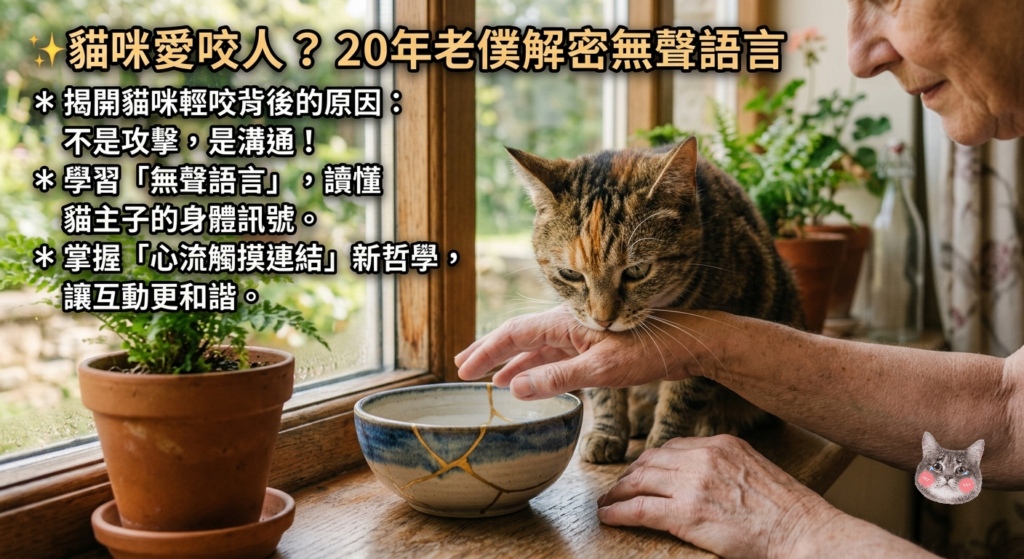
當溫柔撫摸變成突襲:20年老僕解密貓咪愛咬人的無聲語言與心流觸摸連結新哲學
When Gentle Petting Turns into an Ambush: A 20-Year Servant Deciphers the Silent Language of Cat Biting and the New Philosophy of FlowState Touch Connection
【老僕心聲】
清晨,陽光透過窗簾灑在老舊的木地板上,暖暖的,像牠的名字「金橘」一樣。牠輕巧地跳上我的胸膛,發出溫柔的呼嚕聲,溫熱的呼吸輕拂我的臉龐。我伸出手,輕輕撫摸牠柔軟的毛髮,從頭到背,感受那份綿密的信賴。然而,就在我沉浸於這份美好時,牠的身體突然僵硬,耳朵微側,隨即一轉頭,牙齒已毫不留情地輕咬了我的手背一下。不痛,但足以讓我的心一顫。「又來了,金橘。」我輕聲嘆息。這不是惡意,我知道,但那瞬間的困惑與些微的挫敗感,卻是每個被愛貓「咬一口」的貓奴,都曾品嚐過的複雜滋味。牠眼底的依賴與那份突如其來的「提醒」,總是讓我深思,到底我們之間,在溫柔的觸碰中,錯過了什麼樣的無聲對話?我花了二十年,才開始理解這份矛盾背後的真正原因。
English: Dawn, sunlight filtering through the curtains, painted the old wooden floor with warmth, just like her name, “Kumquat.” She gracefully leaped onto my chest, purring softly, her warm breath caressing my face. I reached out, gently stroking her soft fur, from head to back, feeling that dense trust. Yet, just as I was lost in this beauty, her body suddenly stiffened, ears slightly turned, and then, with a swift turn of her head, her teeth gently but unmistakably nipped my hand. It didn’t hurt, but it was enough to make my heart skip a beat. “There you go again, Kumquat,” I sighed softly. It wasn’t malice, I knew, but that momentary confusion and slight frustration are complex tastes every cat servant “bitten” by their beloved cat has experienced. The dependence in her eyes and that sudden “reminder” always make me ponder: what silent conversation did we miss during that gentle touch? It took me twenty years to truly begin understanding the real reasons behind this paradox.
清晨,陽光透過窗簾灑在老舊的木地板上,暖暖的,像牠的名字「金橘」一樣。牠輕巧地跳上我的胸膛,發出溫柔的呼嚕聲,溫熱的呼吸輕拂我的臉龐。我伸出手,輕輕撫摸牠柔軟的毛髮,從頭到背,感受那份綿密的信賴。然而,就在我沉浸於這份美好時,牠的身體突然僵硬,耳朵微側,隨即一轉頭,牙齒已毫不留情地輕咬了我的手背一下。不痛,但足以讓我的心一顫。「又來了,金橘。」我輕聲嘆息。這不是惡意,我知道,但那瞬間的困惑與些微的挫敗感,卻是每個被愛貓「咬一口」的貓奴,都曾品嚐過的複雜滋味。牠眼底的依賴與那份突如其來的「提醒」,總是讓我深思,到底我們之間,在溫柔的觸碰中,錯過了什麼樣的無聲對話?我花了二十年,才開始理解這份矛盾背後的真正原因。
English: Dawn, sunlight filtering through the curtains, painted the old wooden floor with warmth, just like her name, “Kumquat.” She gracefully leaped onto my chest, purring softly, her warm breath caressing my face. I reached out, gently stroking her soft fur, from head to back, feeling that dense trust. Yet, just as I was lost in this beauty, her body suddenly stiffened, ears slightly turned, and then, with a swift turn of her head, her teeth gently but unmistakably nipped my hand. It didn’t hurt, but it was enough to make my heart skip a beat. “There you go again, Kumquat,” I sighed softly. It wasn’t malice, I knew, but that momentary confusion and slight frustration are complex tastes every cat servant “bitten” by their beloved cat has experienced. The dependence in her eyes and that sudden “reminder” always make me ponder: what silent conversation did we miss during that gentle touch? It took me twenty years to truly begin understanding the real reasons behind this paradox.
【深度行為解碼】
貓咪在撫摸時的輕咬行為,遠非單純的「不喜歡」或「玩鬧」,它是一系列複雜的生理、心理與行為本能的綜合表現,我們稱之為「撫摸誘導的攻擊行為」(Petting-Induced Aggression)。其核心源於貓咪的狩獵本能與對身體控制權的極高重視。家貓雖然馴化,但仍保留了獨居獵手的基因。長時間、重複、缺乏變化的撫摸,尤其是在特定身體部位(如腹部、尾巴根部),可能在貓咪大腦中觸發「過度刺激」(Overstimulation)。這種刺激超越了牠們能承受的愉悅閥值,從而轉化為壓力。耳朵微側、尾巴抽動、身體僵硬、瞳孔放大、低沉的咆哮,這些都是牠們在用無聲語言發出的警告信號。當這些信號被忽視,牠們便會升級為輕咬或抓撓,試圖「中止」牠們感到不適的互動。此外,有些貓咪可能曾有過不愉快的撫摸經驗,或者因疼痛(如關節炎、牙痛)而對觸碰產生敏感,使得牠們對於撫摸的反應更加激進。理解這些潛在因素,是建立更深層次「心流觸摸連結」的第一步。
English: A cat’s gentle biting during petting is far from simple “dislike” or “playfulness”; it’s a complex manifestation of physiological, psychological, and behavioral instincts, known as “Petting-Induced Aggression.” Its core stems from the cat’s hunting instincts and their high regard for bodily autonomy. Despite domestication, domestic cats retain the genes of solitary hunters. Prolonged, repetitive, and unvaried petting, especially on certain body parts (like the belly or base of the tail), can trigger “overstimulation” in the cat’s brain. This stimulation surpasses their threshold for pleasure and transforms into stress. Slightly turned ears, tail twitching, body stiffening, dilated pupils, and low growls are all silent warning signals they emit. When these signals are ignored, they escalate to nipping or scratching, attempting to “terminate” the interaction they find uncomfortable. Furthermore, some cats may have had unpleasant petting experiences in the past, or developed sensitivity to touch due to pain (e.g., arthritis, dental pain), making their reaction to petting more aggressive. Understanding these underlying factors is the first step toward establishing a deeper “FlowState Touch Connection.”
English: A cat’s gentle biting during petting is far from simple “dislike” or “playfulness”; it’s a complex manifestation of physiological, psychological, and behavioral instincts, known as “Petting-Induced Aggression.” Its core stems from the cat’s hunting instincts and their high regard for bodily autonomy. Despite domestication, domestic cats retain the genes of solitary hunters. Prolonged, repetitive, and unvaried petting, especially on certain body parts (like the belly or base of the tail), can trigger “overstimulation” in the cat’s brain. This stimulation surpasses their threshold for pleasure and transforms into stress. Slightly turned ears, tail twitching, body stiffening, dilated pupils, and low growls are all silent warning signals they emit. When these signals are ignored, they escalate to nipping or scratching, attempting to “terminate” the interaction they find uncomfortable. Furthermore, some cats may have had unpleasant petting experiences in the past, or developed sensitivity to touch due to pain (e.g., arthritis, dental pain), making their reaction to petting more aggressive. Understanding these underlying factors is the first step toward establishing a deeper “FlowState Touch Connection.”
【貓奴實戰心法】
要建立與貓咪之間無壓力的「心流觸摸連結」,核心是尊重牠們的「自主權」與「溝通」。
1. **觀察其「觸摸地圖」**:每隻貓都有其偏好的撫摸區域和禁區。通常,頭部、臉頰、下巴是安全區,而腹部、尾巴根部則常是危險區。從安全區開始,觀察牠們的反應。
2. **學習「綠燈、黃燈、紅燈」信號**:
* **綠燈(允許)**:呼嚕、身體放鬆、輕輕摩擦、耳朵前傾。此時可以繼續。
* **黃燈(警告)**:尾巴輕微抽動、耳朵微側、停止呼嚕、瞳孔放大。此時應立即停止撫摸,讓牠休息。
* **紅燈(即將攻擊)**:尾巴用力拍打、身體僵硬、低吼、毛髮豎起。此時請立即停止並緩慢收回手,避免刺激。
3. **少量多次原則**:每次撫摸時間不宜過長,尤其是在初期。幾秒鐘的溫柔撫摸,然後抽手,讓牠主動靠近。建立「由牠主導」的互動模式。
4. **提供撤退空間**:確保貓咪在感到不適時,隨時有可以離開的通道或高處。
5. **環境豐富化**:足夠的玩具、貓抓板、高處平台,能消耗牠們的精力,減少壓力來源。
6. **替代性互動**:當貓咪出現黃燈信號時,可嘗試用逗貓棒或雷射筆轉移其注意力,將「撫摸壓力」轉化為「狩獵遊戲」,結束撫摸行為。
7. **定期健康檢查**:排除潛在的疼痛因素,例如牙齒問題或關節炎,這可能是牠對觸摸敏感的原因。
透過這些實戰心法,你將能讀懂貓咪的無聲語言,與牠建立起更深層、更互相尊重的觸摸連結。
English: To establish a stress-free “FlowState Touch Connection” with your cat, the core lies in respecting their “autonomy” and “communication.”
1. **Observe Their “Touch Map”**: Each cat has preferred petting areas and no-go zones. Typically, the head, cheeks, and chin are safe zones, while the belly and base of the tail are often danger zones. Start from safe zones and observe their reactions.
2. **Learn “Green Light, Yellow Light, Red Light” Signals**:
* **Green Light (Allowed)**: Purring, relaxed body, gentle rubbing, ears forward. You can continue.
* **Yellow Light (Warning)**: Slight tail twitch, ears slightly turned, stopped purring, dilated pupils. Stop petting immediately and let them rest.
* **Red Light (Imminent Attack)**: Tail thumping forcefully, stiff body, low growl, fur bristling. Stop immediately and slowly withdraw your hand to avoid further stimulation.
3. **Small, Frequent Doses Principle**: Petting sessions should not be too long, especially initially. A few seconds of gentle petting, then withdraw your hand, allowing them to approach voluntarily. Establish a “cat-initiated” interaction model.
4. **Provide Escape Routes**: Ensure your cat always has an exit path or high place to retreat to if they feel uncomfortable.
5. **Environmental Enrichment**: Sufficient toys, scratching posts, and high perches can expend their energy and reduce sources of stress.
6. **Alternative Interactions**: When your cat shows yellow light signals, try diverting their attention with a wand toy or laser pointer, transforming “petting stress” into a “hunting game,” thereby ending the petting session.
7. **Regular Health Checks**: Rule out potential pain factors, such as dental issues or arthritis, which could be the cause of their touch sensitivity.
Through these practical tips, you will be able to read your cat’s silent language and build a deeper, more mutually respectful touch connection with them.
1. **觀察其「觸摸地圖」**:每隻貓都有其偏好的撫摸區域和禁區。通常,頭部、臉頰、下巴是安全區,而腹部、尾巴根部則常是危險區。從安全區開始,觀察牠們的反應。
2. **學習「綠燈、黃燈、紅燈」信號**:
* **綠燈(允許)**:呼嚕、身體放鬆、輕輕摩擦、耳朵前傾。此時可以繼續。
* **黃燈(警告)**:尾巴輕微抽動、耳朵微側、停止呼嚕、瞳孔放大。此時應立即停止撫摸,讓牠休息。
* **紅燈(即將攻擊)**:尾巴用力拍打、身體僵硬、低吼、毛髮豎起。此時請立即停止並緩慢收回手,避免刺激。
3. **少量多次原則**:每次撫摸時間不宜過長,尤其是在初期。幾秒鐘的溫柔撫摸,然後抽手,讓牠主動靠近。建立「由牠主導」的互動模式。
4. **提供撤退空間**:確保貓咪在感到不適時,隨時有可以離開的通道或高處。
5. **環境豐富化**:足夠的玩具、貓抓板、高處平台,能消耗牠們的精力,減少壓力來源。
6. **替代性互動**:當貓咪出現黃燈信號時,可嘗試用逗貓棒或雷射筆轉移其注意力,將「撫摸壓力」轉化為「狩獵遊戲」,結束撫摸行為。
7. **定期健康檢查**:排除潛在的疼痛因素,例如牙齒問題或關節炎,這可能是牠對觸摸敏感的原因。
透過這些實戰心法,你將能讀懂貓咪的無聲語言,與牠建立起更深層、更互相尊重的觸摸連結。
English: To establish a stress-free “FlowState Touch Connection” with your cat, the core lies in respecting their “autonomy” and “communication.”
1. **Observe Their “Touch Map”**: Each cat has preferred petting areas and no-go zones. Typically, the head, cheeks, and chin are safe zones, while the belly and base of the tail are often danger zones. Start from safe zones and observe their reactions.
2. **Learn “Green Light, Yellow Light, Red Light” Signals**:
* **Green Light (Allowed)**: Purring, relaxed body, gentle rubbing, ears forward. You can continue.
* **Yellow Light (Warning)**: Slight tail twitch, ears slightly turned, stopped purring, dilated pupils. Stop petting immediately and let them rest.
* **Red Light (Imminent Attack)**: Tail thumping forcefully, stiff body, low growl, fur bristling. Stop immediately and slowly withdraw your hand to avoid further stimulation.
3. **Small, Frequent Doses Principle**: Petting sessions should not be too long, especially initially. A few seconds of gentle petting, then withdraw your hand, allowing them to approach voluntarily. Establish a “cat-initiated” interaction model.
4. **Provide Escape Routes**: Ensure your cat always has an exit path or high place to retreat to if they feel uncomfortable.
5. **Environmental Enrichment**: Sufficient toys, scratching posts, and high perches can expend their energy and reduce sources of stress.
6. **Alternative Interactions**: When your cat shows yellow light signals, try diverting their attention with a wand toy or laser pointer, transforming “petting stress” into a “hunting game,” thereby ending the petting session.
7. **Regular Health Checks**: Rule out potential pain factors, such as dental issues or arthritis, which could be the cause of their touch sensitivity.
Through these practical tips, you will be able to read your cat’s silent language and build a deeper, more mutually respectful touch connection with them.
【智商稅警示】
許多市售的「防咬手套」或「訓練噴霧」其實都是智商稅。這些產品治標不治本,甚至可能破壞你與貓咪之間的信任關係。防咬手套讓貓咪無法感受到你的撫摸力道,而訓練噴霧的懲罰性特質,可能讓牠將「被撫摸」與「不愉快」連結。真正有效的投資是:一套品質優良的**貓咪行為學書籍或線上課程** https://www.amazon.com/dp/YOUR_PRODUCT_ID?tag=amberbrella-20,深入理解牠們的行為模式。其次,是**定期的獸醫檢查**,確保沒有潛在的疼痛問題影響其行為。了解與預防,遠勝於被動防禦。
English: Many commercially available “anti-bite gloves” or “training sprays” are actually an IQ tax. These products treat symptoms, not causes, and may even damage the trust between you and your cat. Anti-bite gloves prevent your cat from feeling your petting pressure, while the punitive nature of training sprays can make them associate “being petted” with “unpleasantness.” The truly effective investments are: a high-quality **cat behavior book or online course** https://www.amazon.com/dp/YOUR_PRODUCT_ID?tag=amberbrella-20 to deeply understand their behavior patterns. Secondly, **regular veterinary check-ups** to ensure no underlying pain issues are affecting their behavior. Understanding and prevention far outweigh passive defense.
English: Many commercially available “anti-bite gloves” or “training sprays” are actually an IQ tax. These products treat symptoms, not causes, and may even damage the trust between you and your cat. Anti-bite gloves prevent your cat from feeling your petting pressure, while the punitive nature of training sprays can make them associate “being petted” with “unpleasantness.” The truly effective investments are: a high-quality **cat behavior book or online course** https://www.amazon.com/dp/YOUR_PRODUCT_ID?tag=amberbrella-20 to deeply understand their behavior patterns. Secondly, **regular veterinary check-ups** to ensure no underlying pain issues are affecting their behavior. Understanding and prevention far outweigh passive defense.